
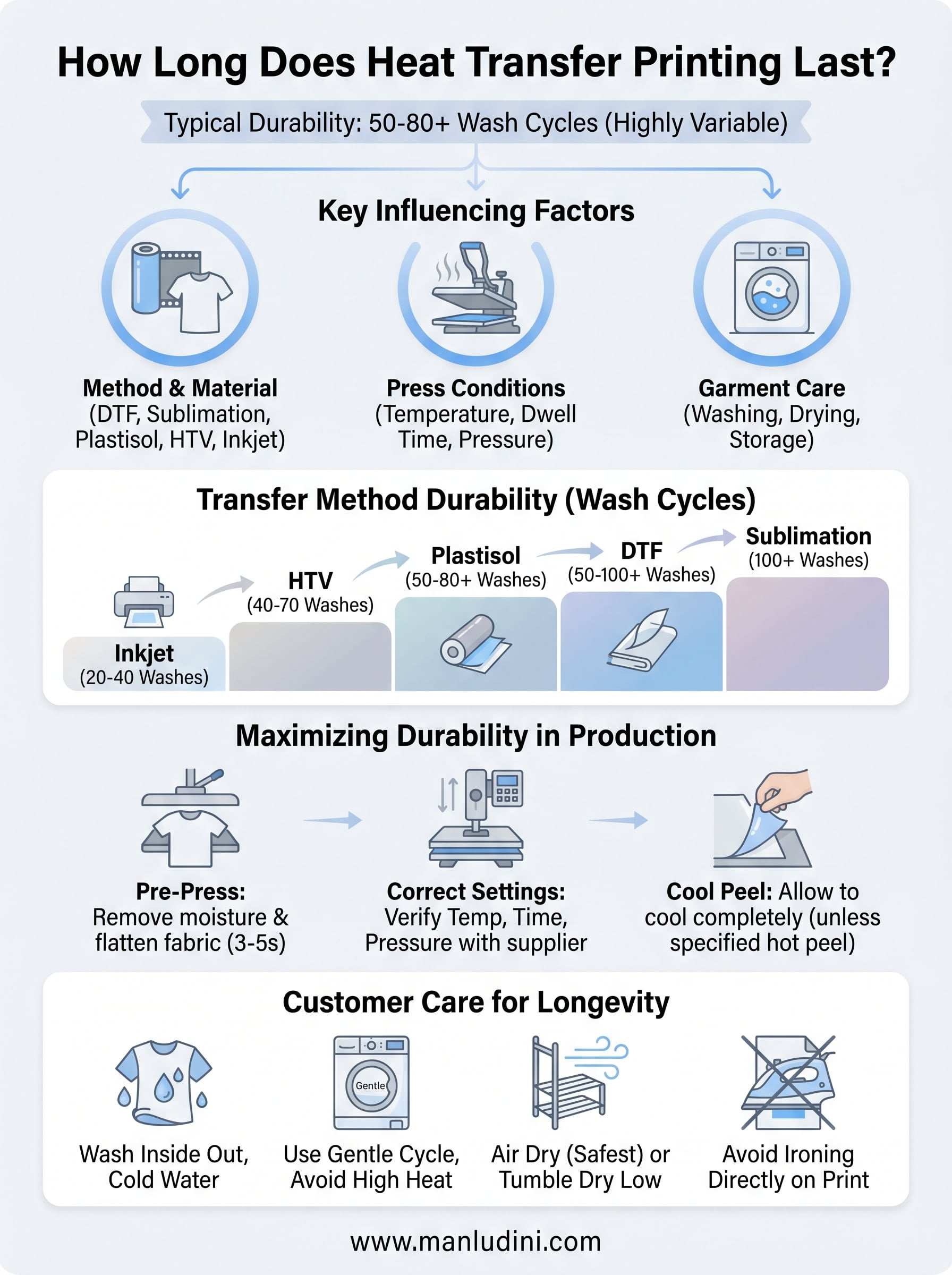
Heat transfer printing is one of the most common decoration methods in apparel production, and one of the first things brands ask us about at Manludini is how long does heat transfer printing last on finished garments. It's a fair question, especially when you're investing in a full production run and your customers expect prints that hold up over time. The short answer: a quality heat transfer print typically lasts between 50 and 80+ wash cycles, depending on several key variables.
But that number isn't fixed. The type of transfer material, the fabric it's applied to, the press settings used during production, and even how the end customer washes the garment all play a role. As a garment manufacturer supporting brands through sampling and bulk production, we've seen firsthand how small decisions during development directly affect print durability down the line.
This guide breaks down the real lifespan of heat transfer prints, what affects their longevity, and practical steps you can take, both during production and after, to get the most out of every print.
What counts as heat transfer printing
Heat transfer printing is a decoration process where a design is first created on a carrier sheet or film, then applied to fabric using heat and pressure from a press. The heat activates an adhesive layer that bonds the design to the garment surface. Understanding exactly which method went into your product matters a lot when you're asking how long does heat transfer printing last, because each transfer type behaves very differently under repeated wear and washing.
Plastisol and inkjet transfers
Plastisol transfers are printed with PVC-based inks onto release paper, then heat-pressed directly onto the garment. They produce opaque, vibrant prints and perform well on cotton and cotton-blend fabrics. Inkjet transfers use a similar carrier-sheet approach but rely on water-based inks printed from a standard inkjet printer onto transfer paper. These are common for short sample runs but tend to have shorter lifespans than plastisol or film-based alternatives.
DTF, sublimation, and heat transfer vinyl
DTF (Direct to Film) printing involves printing onto a PET film, applying a hot-melt adhesive powder, then curing and pressing the result onto fabric. It bonds to almost any fabric type and has become one of the most durable heat transfer options in production today. Sublimation transfers use heat to convert dye into a gas that bonds directly with polyester fibers, which makes them extremely wash-resistant, though they only work on light-colored, high-polyester fabrics. Heat transfer vinyl (HTV) is a cut vinyl film pressed onto garments, typically used for names, numbers, and simple graphic shapes.
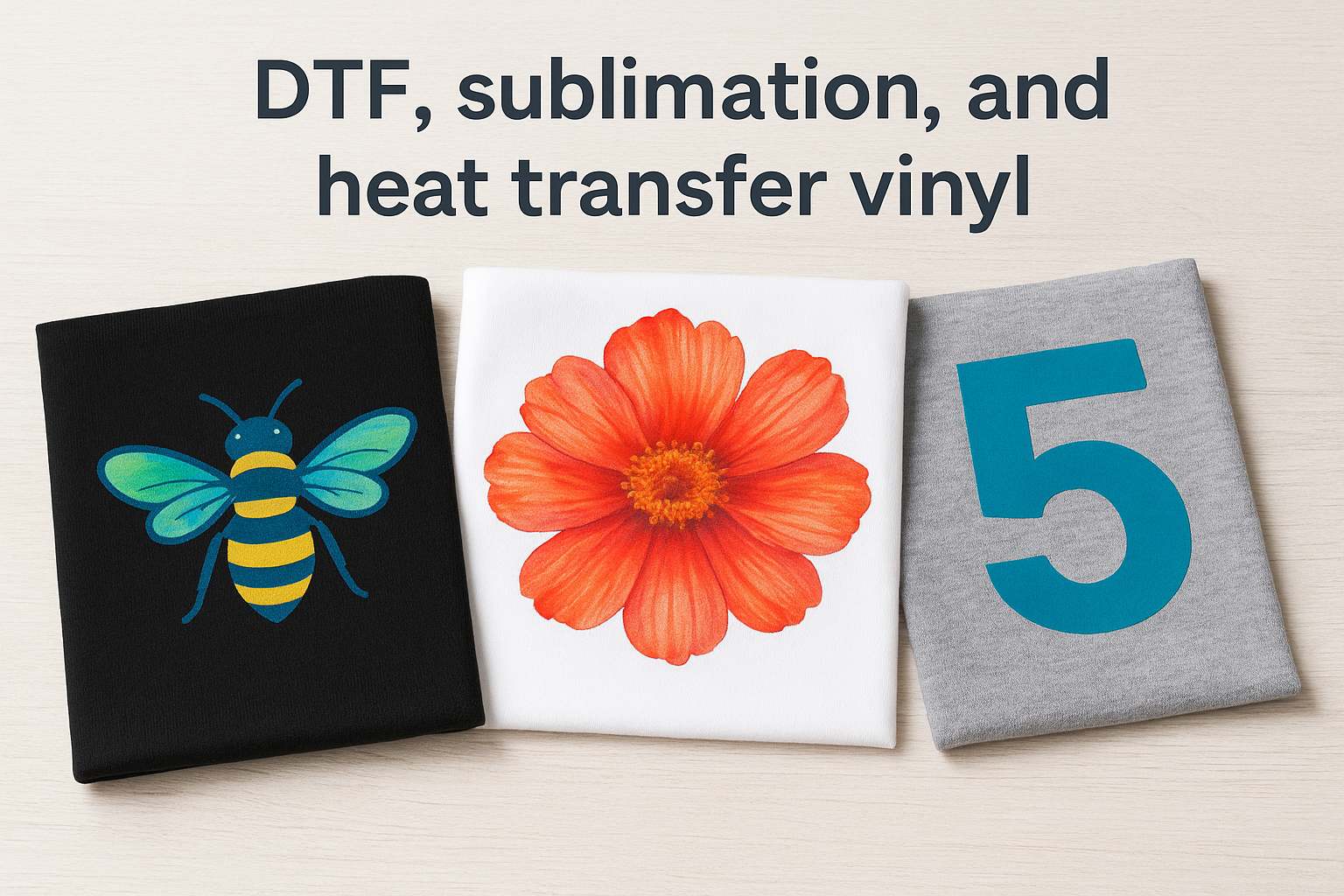
The transfer method you select during sampling directly determines how durable your final production prints will be, so confirm the exact type before committing to a bulk run.
| Method | Typical Substrate | Durability Range |
|---|---|---|
| Plastisol | Cotton, blends | 50-80+ washes |
| Inkjet | Cotton, light fabrics | 20-40 washes |
| DTF | Most fabrics | 50-100+ washes |
| Sublimation | Polyester | 100+ washes |
| HTV | Cotton, blends | 40-70 washes |
Why heat transfer prints fail early
Most early print failures come down to preventable mistakes made during application or production, not inherent flaws in the transfer method itself. Understanding where things go wrong helps you make better decisions during sampling, so the answer to how long does heat transfer printing last doesn't end up being far less than expected.
Incorrect press settings
Temperature, pressure, and dwell time are the three variables that determine whether a transfer bonds properly to the fabric. If the press runs too cool, the adhesive won't activate fully. If dwell time is too short, the bond stays weak. Even a few seconds off can reduce durability significantly, causing prints to peel or crack after just a handful of washes.
Always run a wash test on pressed samples before approving any transfer for bulk production.
Wrong fabric and surface prep
Fabric composition and surface condition directly affect adhesion. Highly textured fabrics, moisture-wicking synthetics, and fabrics with silicone finishes resist bonding. Garments that weren't pre-pressed to remove moisture and wrinkles before application also develop adhesion problems early. Stretchy materials like spandex blends can crack prints over time because the fabric moves but the transfer layer doesn't flex at the same rate.
How long heat transfer printing lasts by method
Knowing how long does heat transfer printing last for each specific method helps you make smarter sourcing decisions before bulk production starts. The lifespan ranges below assume proper application and standard home washing, both of which the next sections cover in detail.
Inkjet and HTV transfers
Inkjet transfers typically last between 20 and 40 wash cycles under normal conditions. They work for sampling and short runs, but the adhesive bond weakens faster than film-based methods. HTV (heat transfer vinyl) holds up a bit better, averaging around 40 to 70 washes, though simple shapes and solid graphics give it the best chance at longevity.
If your brand plans to sell garments with a long-term quality promise, inkjet transfers are not the right production choice.
DTF, plastisol, and sublimation transfers
DTF transfers are among the most durable options available today, routinely reaching 50 to 100+ wash cycles across a wide range of fabrics. Plastisol transfers perform similarly on cotton and cotton blends, lasting 50 to 80+ washes when pressed correctly. Sublimation stands apart for polyester garments, where the dye bonds at a molecular level and can exceed 100 washes without visible degradation.
How to press heat transfers for maximum durability
Pressing conditions determine how long does heat transfer printing last more than almost any other production variable. Even the best transfer material will fail quickly if your press settings are wrong. Before starting any run, confirm the manufacturer's recommended temperature, pressure, and dwell time for your specific transfer and fabric combination.
Set the right temperature and dwell time
Temperature and dwell time work together to fully activate the adhesive between the transfer and the fabric. Too low a temperature leaves the bond incomplete; too high can scorch fabric or cause bubbling. Most standard heat transfers press between 350°F and 375°F (175°C to 190°C) for 10 to 15 seconds, but always verify against your transfer supplier's spec sheet before production.
Run a wash test on pressed samples before committing to a bulk production run.
Pre-press and post-press steps
Pre-pressing your garment for 3 to 5 seconds removes moisture and wrinkles that block full adhesion. After applying the transfer, let the garment cool completely before peeling the carrier sheet, unless the transfer is specified as a hot peel. Skipping either step shortens print lifespan significantly.
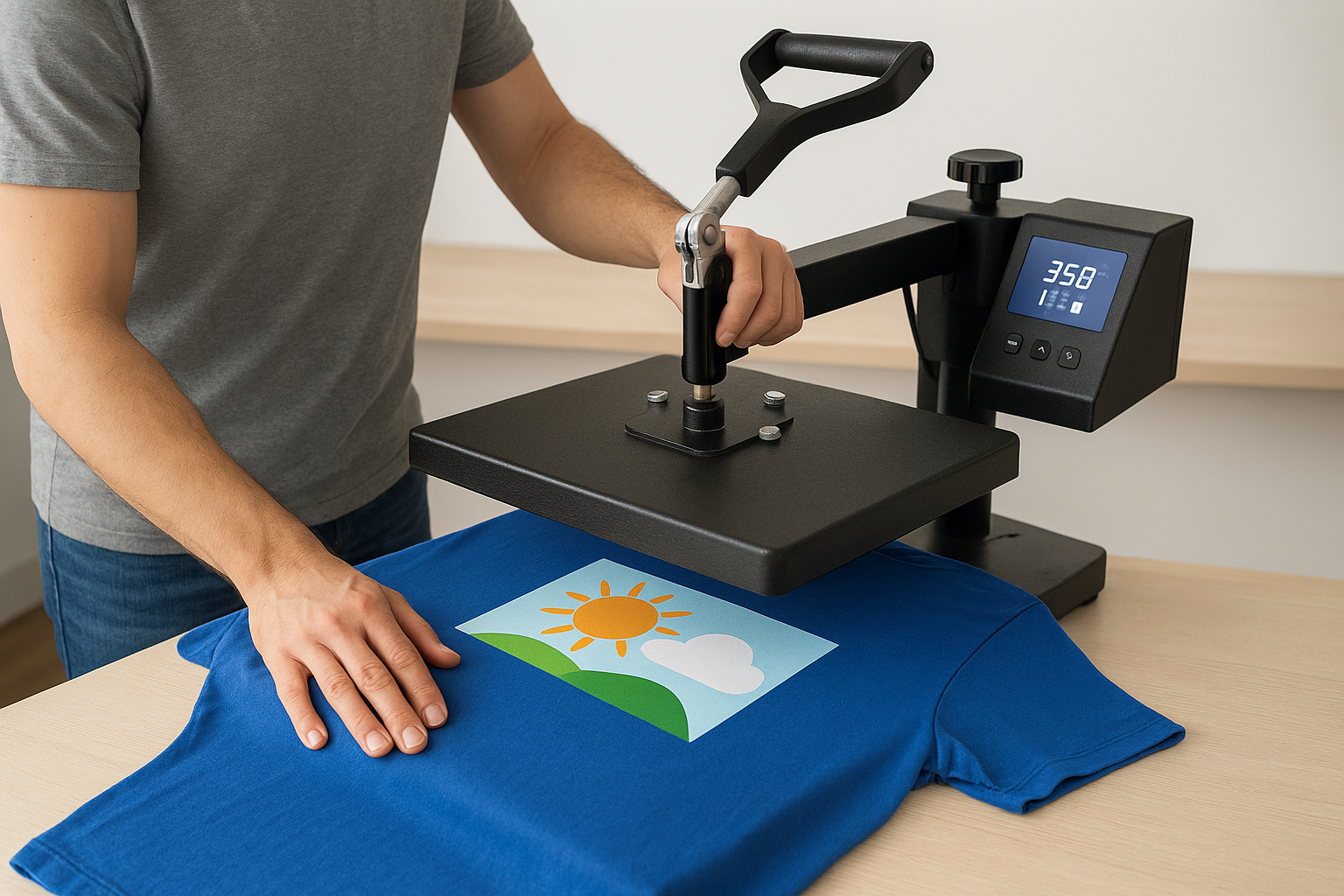
- Pre-press 3 to 5 seconds to remove moisture and flatten fabric
- Apply the transfer at the correct temperature and dwell time
- Allow full cooling before peeling the carrier sheet
How to wash, dry, and store printed garments
How long does heat transfer printing last often comes down to how the end customer handles the garment after it leaves production. You can't control every wash cycle, but you can communicate the right care instructions through labels and packaging inserts to protect prints over time.
Washing and drying
Always wash printed garments inside out in cold water using a gentle cycle. High heat and aggressive agitation break down the adhesive bond faster than almost anything else. Tumble drying on low or medium heat is acceptable for most transfer types, but air drying remains the safest choice for consistently extending print life across many wash cycles.
Avoid ironing directly over any heat transfer print; if pressing is needed, use a pressing cloth or iron the garment inside out to protect the transfer layer.
Storage
Folding garments flat rather than hanging them protects print edges from cracking over time. Keep finished pieces in a cool, dry space away from direct sunlight, which can fade colors and weaken the adhesive layer even before the customer wears the garment for the first time.
Stack garments with printed sides facing inward when packing for shipping or longer storage periods. This simple step prevents surface abrasion that can dull or lift transfer edges before the garment even reaches your customer.
Key takeaways for longer-lasting prints
How long does heat transfer printing last comes down to decisions made at every stage of production: method selection, press settings, fabric preparation, and care instructions. DTF and sublimation transfers lead on durability, while inkjet transfers work better for samples rather than production runs your customers expect to last through regular wear.
Your pressing conditions matter more than most brands realize. Temperature, dwell time, and pre-pressing each play a direct role in how well the adhesive bonds to the fabric. Running a wash test on pressed samples before bulk approval is the single most reliable step you can take to catch adhesion problems early.
Protecting prints after production means giving your customers the right care guidance. Cold water washing and air drying extend print life significantly over time. If you want a manufacturing partner who helps you make the right decoration and production decisions from sampling through bulk, contact Manludini before your next production run.
0 comments