
Choosing between an embroidered patch vs woven patch might seem like a small detail, but it directly affects how your brand looks and feels on a finished garment. Each type handles design detail, texture, and thickness differently, and picking the wrong one can undercut the quality you're trying to communicate.
At Manludini, we work with brands through every stage of garment production, from sampling to bulk manufacturing. That includes helping clients choose the right trims, labels, and patches that match their design intent. It's a decision that comes up often, and the answer isn't always obvious without understanding what each patch type actually does best.
This article breaks down the real differences between embroidered and woven patches, covering detail capability, thickness, texture, durability, and cost, so you can make a confident decision for your next collection or product run.
What embroidered patches are
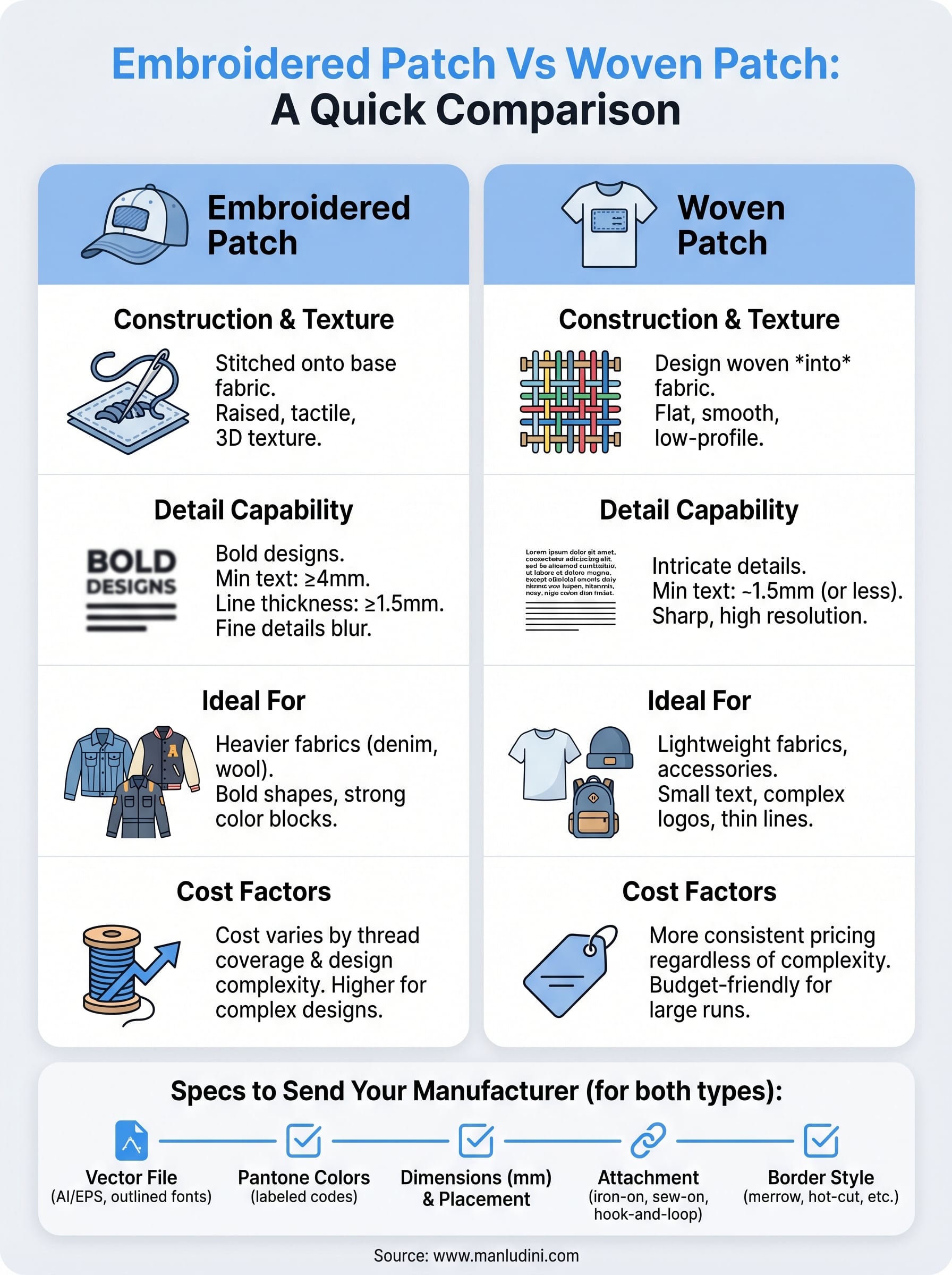
Embroidered patches are made by stitching thread onto a base fabric, usually twill or felt, using a computerized embroidery machine that follows a digitized design file. The stitching builds up in layers, creating the raised, textured surface you recognize on baseball caps, varsity jackets, and workwear. That three-dimensional look is entirely a product of thread density and stitch direction, not printing or weaving.
How the construction affects detail
The stitching process has real limits on fine detail. Because each design element is built from thread, very small text or thin lines tend to blur or lose sharpness once stitched. When you're weighing an embroidered patch vs woven patch, this detail limitation is one of the first practical differences worth understanding before you finalize your artwork. Most manufacturers recommend the following as baseline guidelines:
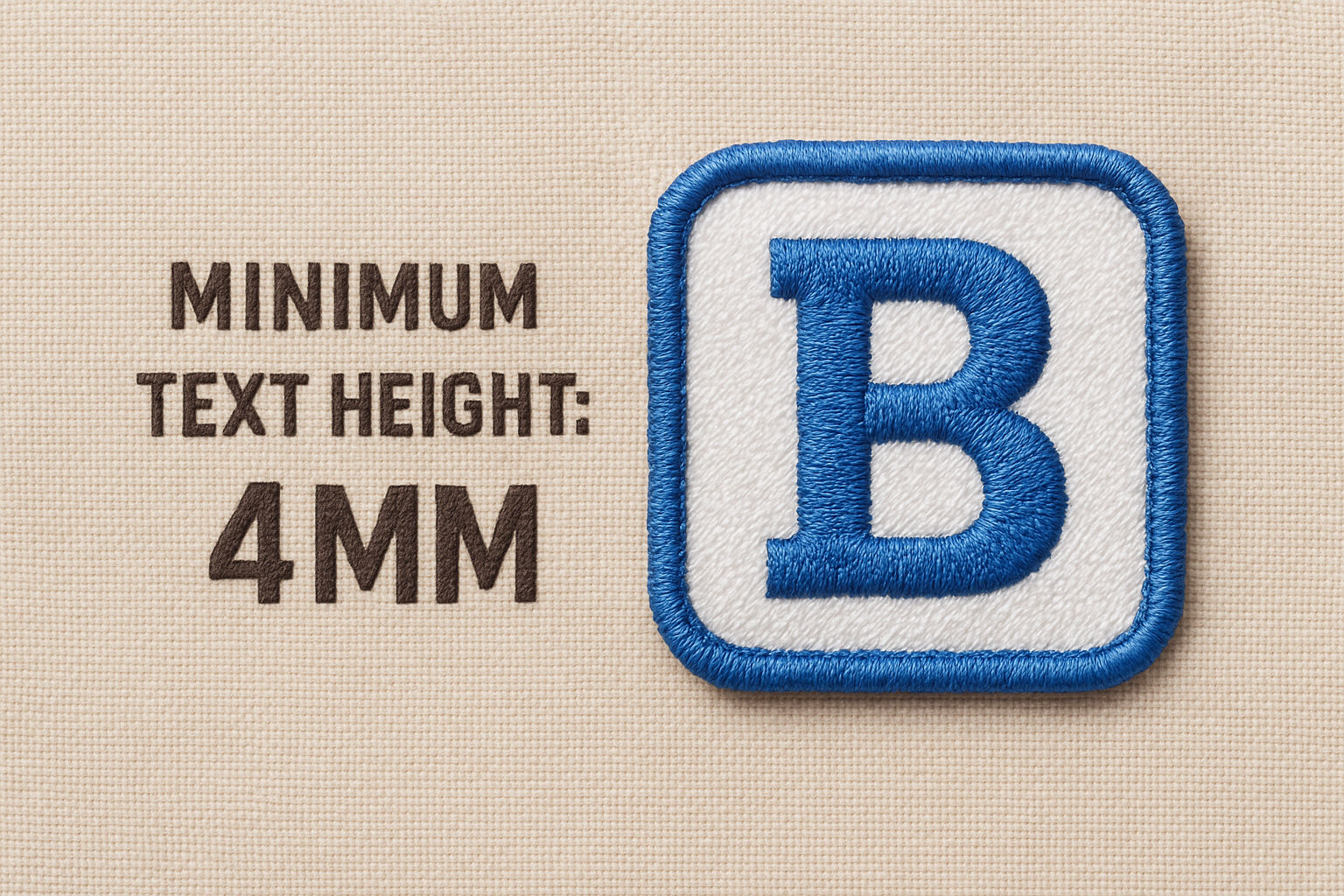
- Minimum text height: 4mm or larger
- Line thickness: no finer than 1.5mm
- Color gradients: avoid soft transitions; use solid color blocks instead
- Photographic detail: not suitable for embroidery
If your logo includes small text or very thin line work, an embroidered patch will likely soften or drop those details entirely during production.
What embroidered patches do well
Where embroidered patches genuinely perform is in bold, high-contrast designs with clear shapes and strong color blocks. The raised texture gives the patch a premium, tactile quality that reads as substantial on heavy fabrics like denim, canvas, or wool.
Thread coverage percentage, meaning how much of the base fabric is covered by stitching, directly affects your unit cost. Simpler designs with lower coverage cost less per piece, so your budget goes further when your logo relies on clean outlines and strong visual contrast rather than intricate fill work. The finished patch also holds up well through repeated washing and regular wear.
What woven patches are
Woven patches are produced on a jacquard loom, where colored threads are interlocked during the weaving process itself to form the design. There is no separate embroidery step; the pattern is built directly into the fabric as it's made. This produces a flat, smooth surface with a much thinner profile than an embroidered patch.
Why woven patches handle fine detail better
When you compare an embroidered patch vs woven patch side by side, the biggest visible difference is detail resolution. Because woven threads lie flat and interlock at a finer scale, they can reproduce small text, thin lines, and intricate artwork that embroidery simply cannot. Minimum text height for a woven patch can go down to 1.5mm or lower, making them a reliable choice for logos with complex wordmarks or detailed graphics.
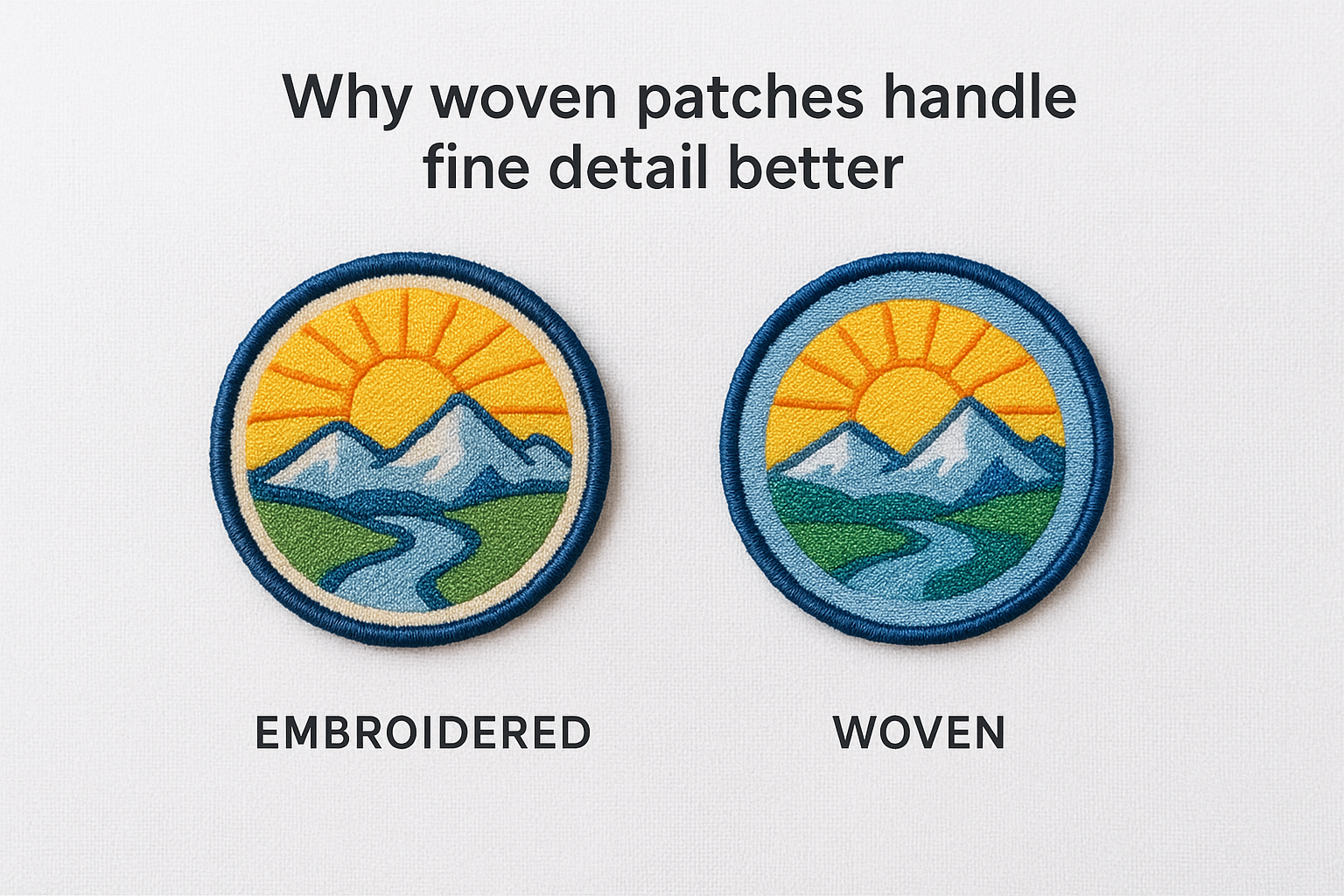
If your design includes fine lines, small typography, or multi-color gradients, a woven patch will preserve those elements far more accurately than embroidery.
The trade-off is surface texture. Woven patches lack the raised, tactile feel of embroidered ones, giving them a more understated, label-like appearance on the finished garment. For brands that want a clean, refined look rather than a bold three-dimensional effect, that quality is often exactly what they're after.
How they compare in real use
When you put an embroidered patch vs woven patch side by side on a finished garment, the difference goes beyond just looks. Embroidered patches add weight and dimension to heavier fabrics, making them a natural fit for outerwear, varsity-style pieces, or branded workwear where a bold, tactile effect is part of the brand identity. Woven patches sit flat and thin, which works better on lightweight fabrics, bags, or accessories where bulk would distort the material.
Where each patch type fits your production
Durability is strong on both types with proper backing and correct attachment, but embroidered patches can show thread wear or fraying at the edges if construction quality is low. Woven patches hold their surface detail longer since the design is built directly into the fabric structure itself, not layered on top.
If your production involves lightweight garments or accessories, a woven patch will almost always sit cleaner and last longer without pulling the base fabric.
Cost also separates the two types in practice. Embroidered patches generally run higher per unit on complex designs because greater thread coverage requires more machine time. Woven patches tend to carry more consistent pricing across design complexity, which makes budgeting easier on larger production runs.
How to choose for your design and budget
Your choice between an embroidered patch vs woven patch comes down to two things: what your artwork actually requires and what your budget allows per unit. Start with your design file and be honest about what it contains before you commit to either option.
Match the patch type to your artwork
If your logo uses bold shapes and strong color blocks, embroidery gives you a tactile, dimensional result that suits heavier garments well. If your design includes small text under 3mm or thin line work, woven is the right direction because embroidery will lose those details during production.
When in doubt, send your artwork to your manufacturer before finalizing the patch type. Catching detail issues at this stage saves you a costly sample revision later.
Factor in your production volume and budget
Larger production runs make woven patches more cost-effective because pricing stays consistent regardless of how complex your design is. Embroidered patches increase in unit cost when designs carry high thread coverage, so a detailed logo at volume will push your spend up faster than a woven equivalent would.
For smaller runs with clean, bold logos, embroidery can deliver better value since the setup is straightforward and the finished result carries strong visual weight on retail garments.
Specs to send your manufacturer
Once you've settled your choice in the embroidered patch vs woven patch comparison, you need to send your manufacturer a complete spec sheet before sampling begins. Incomplete specs lead to revisions, delays, and wasted sample costs.
Design file requirements
Send your manufacturer a vector artwork file (AI or EPS format) with all fonts outlined and colors labeled using Pantone codes. Avoid sending JPEGs or low-resolution PNGs, since the factory will interpret colors and shapes differently without a clean vector source.
Pantone codes give your manufacturer an exact color reference, which prevents costly shade mismatches between your approval sample and bulk production.
Size and attachment details
Your spec sheet should also confirm the finished patch dimensions in millimeters and the attachment method you want, whether iron-on backing, sew-on edges, or hook-and-loop. Include these key details in every patch spec you send:
- Patch width and height in mm
- Border style (merrow, hot-cut, or laser-cut)
- Backing type
- Placement on the garment with measurements from a fixed reference point
These production details directly affect how the patch sits on your final garment, so leaving any of them out guarantees a revision round before sampling can begin.
Final pick for your patch
The embroidered patch vs woven patch decision comes down to one simple filter: what your design actually demands. If your artwork uses bold shapes, strong contrast, and solid color blocks, go with embroidery. If your design carries fine text, thin lines, or detailed graphics, woven is the right call. Neither option is universally better; the right patch is the one that matches your artwork and sits cleanly on your specific garment.
Your production volume and budget should confirm that choice, not override it. Getting the patch type wrong at sampling costs you time and revision fees that could go toward production instead. Send your full spec sheet before samples begin, and ask your manufacturer to flag any design elements that might not translate well into your chosen patch type.
If you're ready to move forward, contact the Manludini team to start developing your custom patches with a manufacturer that handles production details from sampling through to bulk.
0 comments