
Choosing the different types of fabric for clothes in your collection isn't just a design decision, it directly affects how your garments fit, feel, and hold up after repeated wear. Every fabric brings its own set of properties to the table: weight, drape, stretch, breathability, and care requirements. Get it wrong, and you're dealing with returns, complaints, or samples that miss the mark entirely.
At Manludini, we work with fashion brands and startups through every stage of production, from sourcing the right materials to delivering finished garments ready for export. Fabric selection is one of the first conversations we have with our clients because it shapes everything that follows: sampling, construction, finishing, and cost.
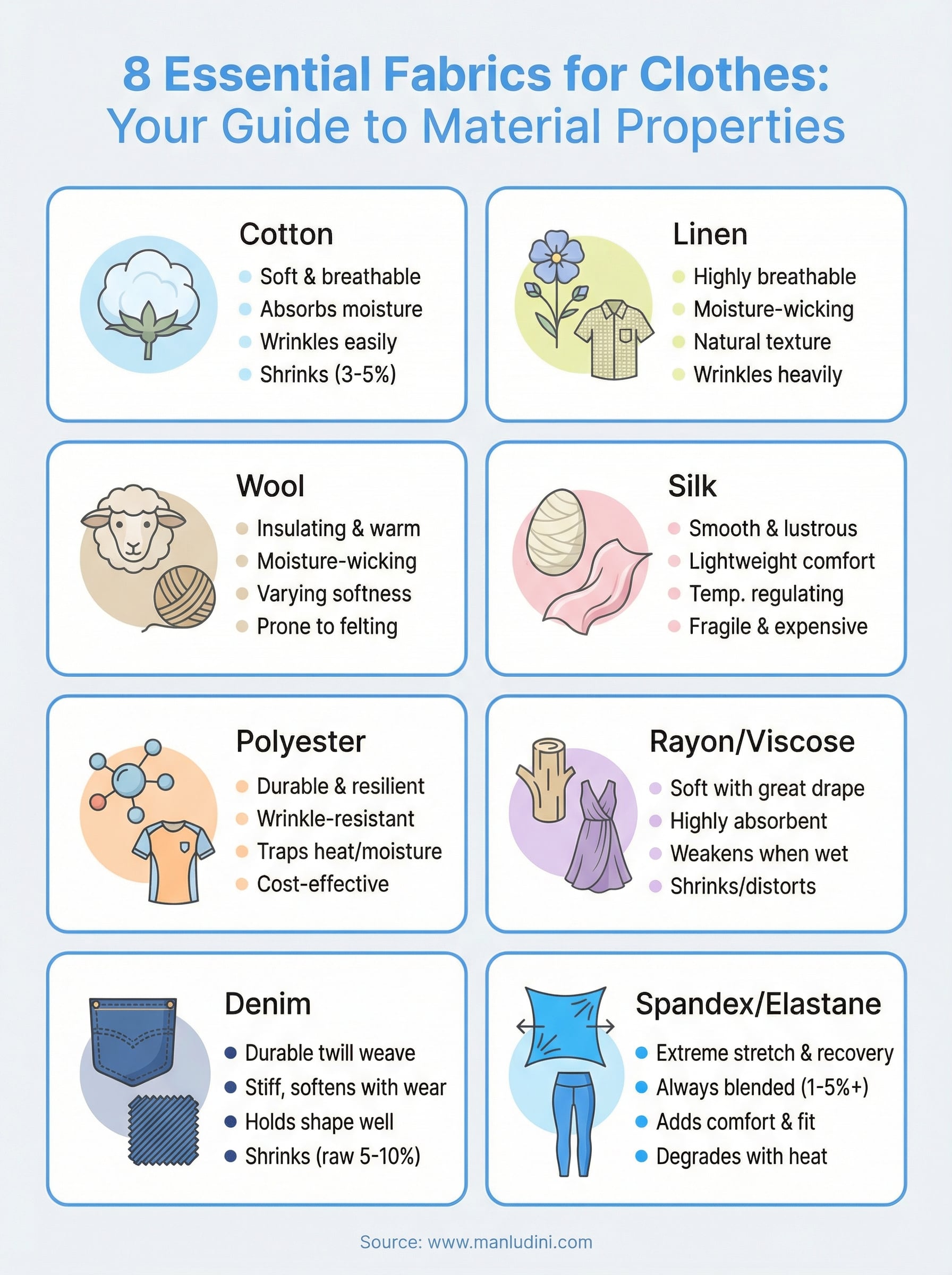
This guide breaks down 8 common fabric types used in clothing, covering what each one is, how it behaves, and where it works best. Whether you're building your first collection or expanding into new product categories, understanding these materials will help you make sharper sourcing decisions from the start.
1. Cotton
Cotton is the most widely used natural fiber in apparel, and for good reason. It's versatile, affordable, and works across a wide range of garment types and price points. If you're building a first collection or expanding your basics line, cotton is usually the first material most brands gravitate toward.
What it is and how it's made
Cotton comes from the fluffy seed pods of the Gossypium plant, harvested and then ginned, carded, and spun into yarn. Quality depends heavily on fiber length, known as staple length: longer staples like Egyptian or Pima cotton produce smoother, stronger fabric, while shorter staples are used in more affordable everyday garments. The construction of the yarn, whether open-end spun or ring-spun, also affects how the finished fabric feels.
How it feels and performs
Cotton is soft against the skin, breathable, and absorbs moisture well, making it comfortable to wear in warmer climates. It does wrinkle easily and can lose its shape over time without the right construction or fiber blend. Pre-shrunk or ring-spun cotton generally holds up better through repeated washing and keeps a cleaner hand feel longer.
Best uses in clothing
Cotton works across a broad range of categories. The most common applications include:
- T-shirts and basics: jersey and single-knit cotton are the standard
- Shirts and blouses: poplin and broadcloth offer a cleaner, crisper finish
- Pants and shorts: twill and canvas weights add structure and body
- Loungewear: French terry and fleece cotton blends for comfort
Common blends and weights to know
Cotton-polyester blends (CVC or poly-cotton) are the most common blends in production because they reduce cost, improve durability, and limit shrinkage. Fabric weight, measured in GSM, typically runs from 120-140 GSM for lightweight tees up to 280-300 GSM for heavier fleece styles.
Always specify GSM and cotton percentage in your tech pack upfront to avoid weight inconsistencies between your sample and bulk production runs.
Care, shrinkage, and production notes
100% cotton shrinks, often between 3-5% after the first wash if it hasn't been pre-shrunk. From a production standpoint, cotton cuts and sews cleanly, but you need to account for shrinkage tolerances in your sizing specs to avoid fit problems when bulk orders land.
2. Linen
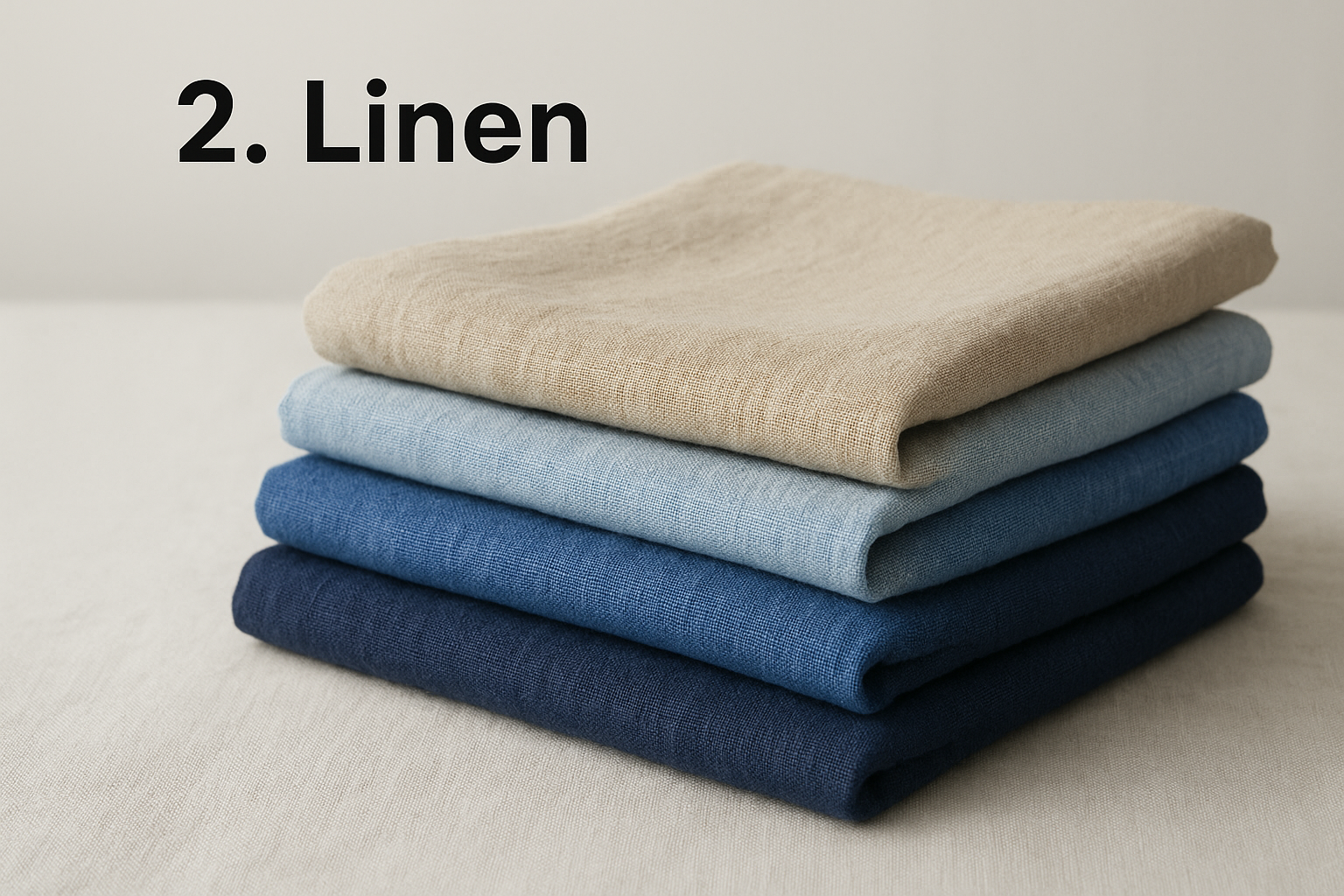
Linen is one of the oldest fabrics in the world and one of the most practical different types of fabric for clothes when you're building seasonal or warm-weather collections. It brings a natural, lived-in character that synthetic fabrics simply can't replicate.
What it is and how it's made
Linen comes from the stalks of the flax plant, which are retted (soaked to loosen fibers), then scutched and hackled to separate the long fibers used in weaving. Belgian and Irish linen are historically considered premium grades, though most commercial linen production today comes from China and Eastern Europe.
How it feels and performs
Linen is highly breathable and moisture-wicking, which makes it one of the best natural options for warm climates. It feels slightly textured and stiff at first but softens with each wash. The downside is that linen wrinkles significantly, and that's often part of its aesthetic appeal rather than a flaw.
If your target customer expects a structured, wrinkle-free look, factor in linen's natural creasing before committing to it for tailored silhouettes.
Best uses in clothing
Linen works well in shirts, trousers, shorts, and dresses for spring and summer collections. It's a strong choice for resort wear and casual tailoring where texture adds visual interest.
Common blends and weights to know
Linen-cotton blends improve softness and reduce wrinkling without losing breathability. Weights typically range from 140 to 200 GSM for shirts and lightweight trousers.
Care, shrinkage, and production notes
Linen shrinks 3-4% after initial washing, so build that into your pattern grading. It can also fray at cut edges, so your factory should finish seams carefully during construction.
3. Wool
Wool stands apart from most different types of fabric for clothes because it performs across a wide temperature range and adds a level of structure and texture that few natural fibers can match. For brands building outerwear, tailored pieces, or cold-weather collections, wool is worth understanding in detail.
What it is and how it's made
Wool comes from the fleece of sheep, though specialty wools like cashmere, merino, and alpaca come from goats and alpacas respectively. The fiber is sheared, cleaned, and spun into yarn, with fiber fineness measured in microns: lower micron counts produce softer, finer fabric while higher counts result in coarser, more durable textiles.
How it feels and performs
Wool is naturally insulating and moisture-wicking, keeping you warm even when wet, which makes it one of the better performers in cold or unpredictable climates. Coarser wools can feel scratchy against the skin, while fine merino wool (under 18.5 microns) sits comfortably next to skin without irritation.
Merino is worth specifying by name in your tech pack if softness and next-to-skin comfort are priorities for your collection.
Best uses in clothing
Wool works well in suits, blazers, overcoats, knitwear, and trousers. Heavier weights suit structured outerwear while lighter woolen fabrics work in tailored trousers and jackets.
Common blends and weights to know
Wool-polyester blends reduce cost and improve wrinkle resistance. Fabric weights range from 200 GSM for lightweight suiting up to 600 GSM or more for heavy overcoating.
Care, shrinkage, and production notes
Wool is prone to felting and shrinkage if machine washed or exposed to high heat. Your factory should use pre-shrunk or machine-washable treated wool where care instructions matter to your end customer.
4. Silk
Among different types of fabric for clothes, silk stands out for its natural sheen and smooth hand feel. It also carries the highest price tag of any fabric on this list, which makes understanding where and how to use it essential before committing to a collection.
What it is and how it's made
Silk comes from the cocoons of silkworms, primarily the Bombyx mori species. The cocoons are carefully unraveled in a process called reeling, producing long continuous filaments that are then twisted into yarn. China produces the majority of the world's silk, with India and Vietnam as secondary sources.
How it feels and performs
Few fabrics match silk's combination of lightweight comfort and natural temperature regulation. It keeps you cool in warm weather and provides warmth in cooler conditions, and its natural sheen catches light in a way no synthetic replicates. However, silk is sensitive to sweat, sunlight, and abrasion, which limits its practicality in high-wear categories.
If your customer expects garments that hold up through regular use, silk is better suited to occasion wear or light blouses than daily basics.
Best uses in clothing
Silk performs best in blouses, dresses, linings, scarves, and eveningwear where its drape and visual quality justify the cost. It is a poor choice for workwear or activewear given its fragility.
Common blends and weights to know
Blending silk with polyester reduces cost significantly while preserving some drape. Weights typically range from 8 to 30 momme, with heavier momme counts offering better durability for structured garments.
Care, shrinkage, and production notes
Silk requires dry cleaning or very gentle hand washing to avoid damage. From a production standpoint, it shifts during cutting and sewing, so your factory needs experienced operators to handle it without distorting seams.
5. Polyester
Polyester is the most produced synthetic fiber in the world, and it appears across nearly every category of different types of fabric for clothes. It's not glamorous, but it's practical, cost-effective, and performs in ways natural fibers often can't match.
What it is and how it's made
Polyester comes from petroleum-based chemicals through a process called polymerization. The polymer is melted and extruded through fine spinnerets into yarn. Filament polyester produces smooth, shiny fabric, while staple polyester is cut into shorter fibers that blend well with natural materials.
How it feels and performs
Polyester is lightweight, durable, and resistant to wrinkling and shrinking, which makes it easy to work with in bulk production. The main tradeoff is that it traps heat and moisture, making it less comfortable than natural fibers in warm conditions. Moisture-wicking finishes help, but breathability remains a limitation.
If breathability matters for your garment category, a poly-cotton blend will perform better than 100% polyester fabric.
Best uses in clothing
Polyester works well in activewear, outerwear shells, linings, and performance garments where durability and shape retention are the priority over breathability.
Common blends and weights to know
Poly-cotton blends are among the most common in production, typically running from 60/40 to 50/50 ratios. Weights range from around 100 GSM for lightweight performance tops up to 300 GSM for heavier outerwear.
Care, shrinkage, and production notes
Polyester holds its shape well and resists shrinkage, which simplifies your sizing tolerances in bulk. It melts under high heat, so your factory needs to use lower iron temperatures when finishing to avoid surface damage.
6. Rayon and viscose
Rayon and viscose are often used interchangeably, and for practical purposes they refer to the same fiber. Both are semi-synthetic materials that sit in an interesting middle ground between natural and synthetic different types of fabric for clothes, borrowing softness from natural cellulose while using a chemical manufacturing process to create the final fiber.
What it is and how it's made
Rayon (called viscose in most markets outside the US) comes from dissolved wood pulp or bamboo cellulose pushed through spinnerets to form fibers. The process involves chemicals like sodium hydroxide and carbon disulfide, which makes rayon less eco-friendly than its natural feel suggests.
How it feels and performs
Rayon is soft, lightweight, and drapes exceptionally well, which makes it a popular choice for flowy silhouettes. It absorbs moisture readily, but it also weakens significantly when wet, which affects both wear performance and handling during production.
Rayon loses up to 50% of its tensile strength when wet, so your factory needs to handle it carefully during cutting and sewing to avoid distortion.
Best uses in clothing
Rayon works well in blouses, dresses, skirts, and casual linings where a soft hand feel and fluid drape matter more than durability or structure.
Common blends and weights to know
Rayon-polyester blends improve durability while keeping the soft feel intact. Weights typically range from 120 to 180 GSM for most standard apparel applications.
Care, shrinkage, and production notes
Rayon shrinks and distorts easily with heat and water, so your care labels should recommend gentle washing or dry cleaning. Build 3-5% shrinkage tolerances into your patterns before bulk production starts.
7. Denim
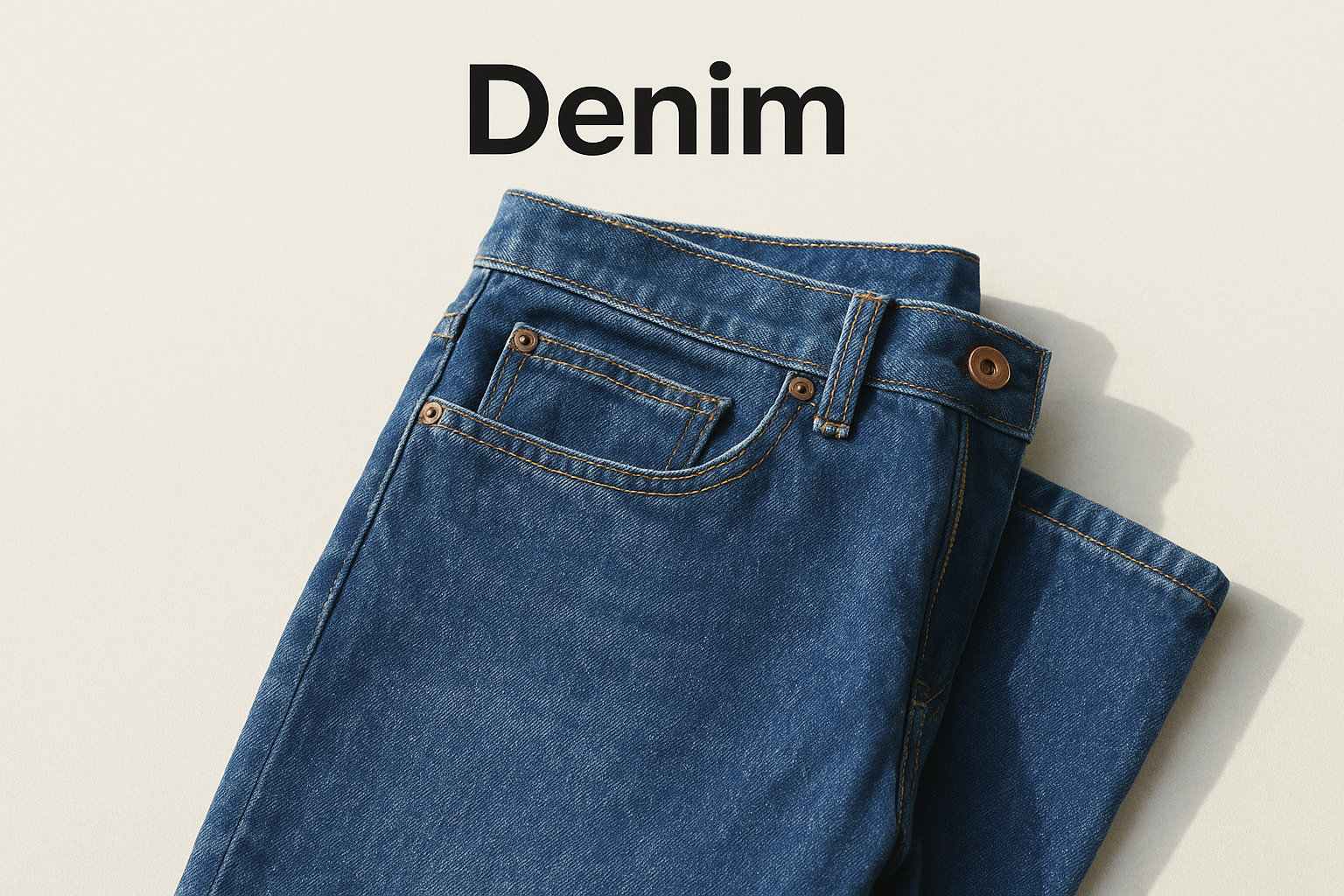
Denim is one of the most recognizable different types of fabric for clothes across markets at every price point. It's a cotton twill weave built for durability, and it works well across bottoms, outerwear, and workwear-inspired styles in both budget and premium collections.
What it is and how it's made
Denim uses a twill construction, where the weft thread passes under two or more warp threads to create a diagonal rib pattern. The classic blue color comes from indigo dyeing the warp threads while leaving the weft undyed, which produces the fading effect that develops naturally with wear and washing.
How it feels and performs
Raw denim starts stiff and structured, softening gradually through wear and repeated washing. It resists abrasion well and holds up under everyday stress, making it one of the more durable options available for your line.
Heavier denim weights hold their shape better through repeated washing, which reduces fit inconsistencies between your sample and what your customers experience.
Best uses in clothing
Denim works across a solid range of garment types:
- Jeans and trousers: 10-14 oz weights are standard
- Jackets and overshirts: 8-10 oz adds structure without excess bulk
- Shorts and skirts: lighter 6-8 oz weights allow easier movement
Common blends and weights to know
Denim-elastane blends (typically 1-3% elastane) add stretch without sacrificing structure. Weights run from 6 oz for lighter tops up to 14 oz for rigid jeans.
Care, shrinkage, and production notes
Raw denim shrinks 5-10% after the first wash, so build that tolerance into your patterns before bulk cutting starts. Specify pre-washed or sanforized denim to minimize shrinkage risk in your finished garments.
8. Spandex and elastane
Spandex and elastane refer to the same synthetic fiber, just under different trade names. As one of the different types of fabric for clothes that rarely appears on its own, it's almost always blended in small percentages with other materials to deliver stretch and recovery without compromising the look or structure of the base fabric.
What it is and how it's made
Spandex is a fully synthetic fiber made from polyurethane, produced through a dry spinning process. The resulting fiber can stretch to four to seven times its original length and return to its original shape, which makes it unlike any natural fiber on this list.
How it feels and performs
On its own, spandex feels smooth and slightly rubbery. Blended into woven or knit fabrics, it becomes nearly undetectable while adding meaningful stretch and shape retention. The performance benefit is consistent: garments hold their fit longer and recover better after wear.
Even a 2% spandex content in a fabric blend can significantly change how a garment moves and fits on the body.
Best uses in clothing
Spandex improves performance across a wide range of categories, including activewear, swimwear, fitted dresses, leggings, and stretch denim. Any garment that needs to move with the body benefits from even a small percentage added to the base fabric.
Common blends and weights to know
Cotton-spandex and polyester-spandex are the most common combinations in production. Spandex content typically runs from 1-5%, with activewear and swimwear blends reaching higher percentages for maximum stretch.
Care, shrinkage, and production notes
Spandex degrades under high heat, so your factory should avoid hot pressing directly on stretch fabrics. Your care labels should recommend low-temperature washing and air drying to preserve the fiber's elasticity over time.
Next steps for choosing fabric
Now that you understand the different types of fabric for clothes and what each one brings to your collection, the next step is matching those properties to your specific garment specs and customer expectations. Fabric choice affects everything downstream: sampling accuracy, construction, finishing options, cost, and how your final product performs in your customer's hands.
Start by locking down your garment categories and key performance requirements before you approach any manufacturer. Knowing whether you need breathability, structure, stretch, or durability helps narrow your options quickly and avoids costly sampling revisions later. Writing those requirements into your tech pack from the beginning saves significant time and money.
If you're ready to move from fabric research into actual production, work with the Manludini team to bring your collection to life. We help brands source the right materials and develop accurate samples that reflect your design intent, so your first bulk run starts from a solid foundation with fewer surprises.
0 comments