
Every finished garment starts with a series of decisions, where to get the fabric, who cuts and sews it, how trims and labels come together, and which factory can actually deliver on time. That entire chain of decisions falls under what is apparel sourcing, and understanding it clearly can mean the difference between a smooth production run and a costly mess. Whether you're launching your first collection or scaling an existing line, sourcing is where your product takes shape long before it hits a shelf or a website.
At its core, apparel sourcing covers everything from finding the right materials and factories to negotiating costs, managing timelines, and controlling quality. It's not just about picking the cheapest supplier, it's about building a reliable production pipeline that matches your brand's standards. For small and mid-sized brands especially, the sourcing stage is where most problems either get prevented or created. A wrong fabric choice, an unclear tech pack, or a miscommunication with a factory can set a collection back by weeks.
At Manludini, we work directly with fashion brands on sample development, bulk manufacturing, and everything in between, so sourcing isn't theory for us, it's daily work. This article breaks down the full apparel sourcing process, what it actually costs, how to find and evaluate suppliers, and where most brands run into trouble. If you're trying to move from concept to finished product with fewer surprises, this is a solid place to start.
What apparel sourcing includes and what it does not
Sourcing gets used as a catch-all term in the fashion industry, but it has a real scope. Knowing what belongs inside that scope and what sits outside it helps you build a cleaner production plan and avoid dumping every supply chain problem into one bucket. When brands come to us having already worked with other factories, one of the most common issues we see is that they treated sourcing as a single task rather than a coordinated set of decisions, each of which affects the others.
What falls under apparel sourcing
Understanding what is apparel sourcing fully means recognizing that it covers both materials and manufacturing, not one or the other. You're essentially building a supply chain from raw inputs to finished goods, and every link in that chain requires active management. Fabric selection affects trim compatibility. Factory choice affects sample quality. Sampling affects your bulk order timeline. These parts don't operate in isolation, and a decision made early in one area will show up as a constraint somewhere else down the line.
Here's a breakdown of what apparel sourcing typically includes:
| Sourcing Activity | What It Involves |
|---|---|
| Fabric sourcing | Selecting and procuring wovens, knits, technical fabrics, or specialty textiles |
| Trim and component sourcing | Buttons, zippers, threads, labels, hangtags, interlinings |
| Factory identification | Researching and vetting manufacturers for capability, capacity, and reliability |
| Sample development | Proto samples, fit samples, and pre-production samples |
| Costing and negotiation | Requesting quotes, reviewing FOB pricing, agreeing on payment terms |
| Production scheduling | Confirming lead times, capacity, and delivery windows |
| Quality control | Inspection at key production stages before shipment |
| Compliance and documentation | Checking suppliers meet your market's legal and ethical standards |
Getting all of these activities aligned with each other, rather than managing them separately, is what separates brands that hit their timelines from those that consistently don't.
What apparel sourcing does not include
Sourcing is not the same as product design, and conflating the two causes real problems. Design happens before sourcing starts. By the time you're reaching out to fabric mills or factories, you should already have a clear direction for what the garment looks like, what it needs to do, and who it's for. Sourcing translates that vision into materials and production capacity, but it does not create the direction itself. Arriving at sourcing without that clarity forces factories to guess, and guessing leads to samples you can't use.
Logistics and distribution also fall outside the sourcing scope. Moving finished goods from the factory to your warehouse, managing customs clearance, or fulfilling orders to customers are separate operations. Some factories offer export support or help with shipping documentation, which is useful, but that's a service layered on top of sourcing, not sourcing itself.
Retail pricing, brand positioning, and marketing strategy sit even further outside this scope. Those decisions obviously influence which price points your cost of goods needs to hit, and that feeds back into sourcing targets, but they are not sourcing activities. Keeping these phases distinct in your planning helps you assign the right people, timelines, and budgets to each one without confusion or overlap.
Why apparel sourcing matters for fashion brands
Understanding what is apparel sourcing in full gives you a clearer picture of why it sits at the center of how a fashion brand operates. Every decision you make during sourcing, whether fabric choice, factory selection, or sample timing, directly shapes your product quality, production cost, and delivery schedule. Brands that treat sourcing as a secondary concern almost always pay for it later through delays, margin erosion, or inconsistent products.
The sourcing stage is where your cost structure gets set, and changing it later in production costs far more than getting it right the first time.
Your margins get decided before production starts
By the time your factory starts cutting fabric, your cost of goods is mostly locked in. The price you negotiated for fabric, trims, and manufacturing determines what gross margin you can realistically work with. If you sourced too fast or accepted the first quote you received, you may already be working with margins too tight to absorb any production issue or returns rate.
Here are the main sourcing decisions that lock in your cost structure early:
- Fabric weight and construction (affects yardage and cost per unit)
- Factory pricing model (CMT vs. full-package)
- MOQ commitments and how they tie up cash flow
- Payment terms agreed upon before sampling begins
Your production consistency depends on supplier relationships
Brands that build reliable, ongoing relationships with their suppliers see measurably better results in bulk production. When a factory understands your standards from previous seasons, the communication gap shrinks, sample iterations decrease, and your bulk output reflects the quality you actually need. Consistency doesn't come from contracts alone, it comes from working with manufacturers who already know your product.
Switching factories frequently to chase lower unit prices is one of the most common sourcing mistakes small brands make. Each new factory requires a full re-learning curve, which means more sample rounds, more time, and more upfront development costs. Protecting supplier relationships that already work is often worth more than the savings you might gain from switching.
How the apparel sourcing process works step by step
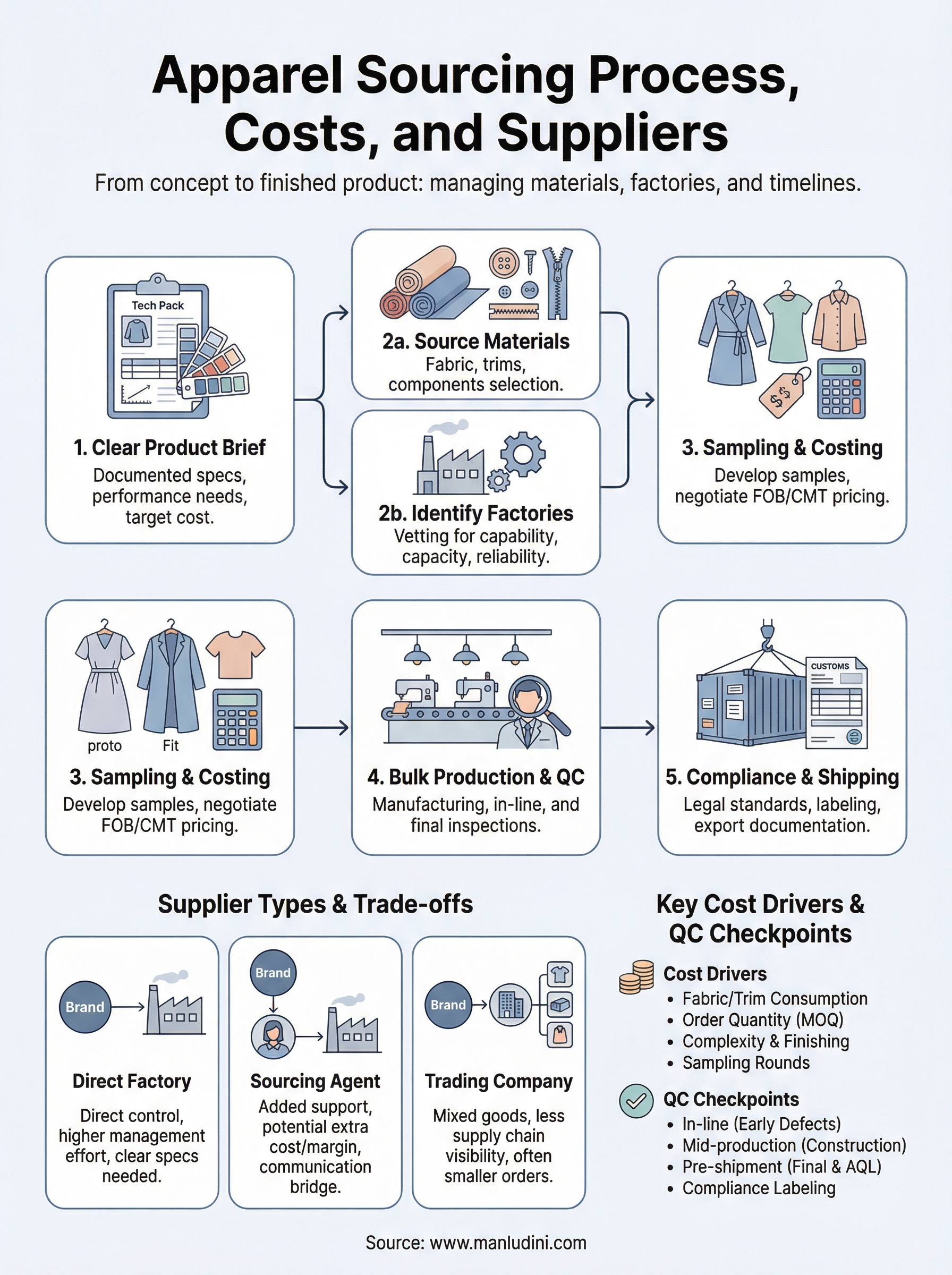
Most sourcing problems don't start at the factory, they start before you contact anyone. Understanding what is apparel sourcing as a sequential process, rather than a set of parallel tasks, helps you avoid the most common production setbacks. Each step feeds into the next, and skipping ahead without completing the previous one creates gaps that factories can't fill for you.
Start with a clear product brief
Before you reach out to any fabric mill or manufacturer, you need a documented product brief that covers what you're making, what it needs to perform, and what your target cost allows. This can take the form of a tech pack, a reference sample with annotations, or a design brief supported by swatches and measurements. Without this, factory quotes will be inconsistent, and samples will rarely come back correct on the first round.
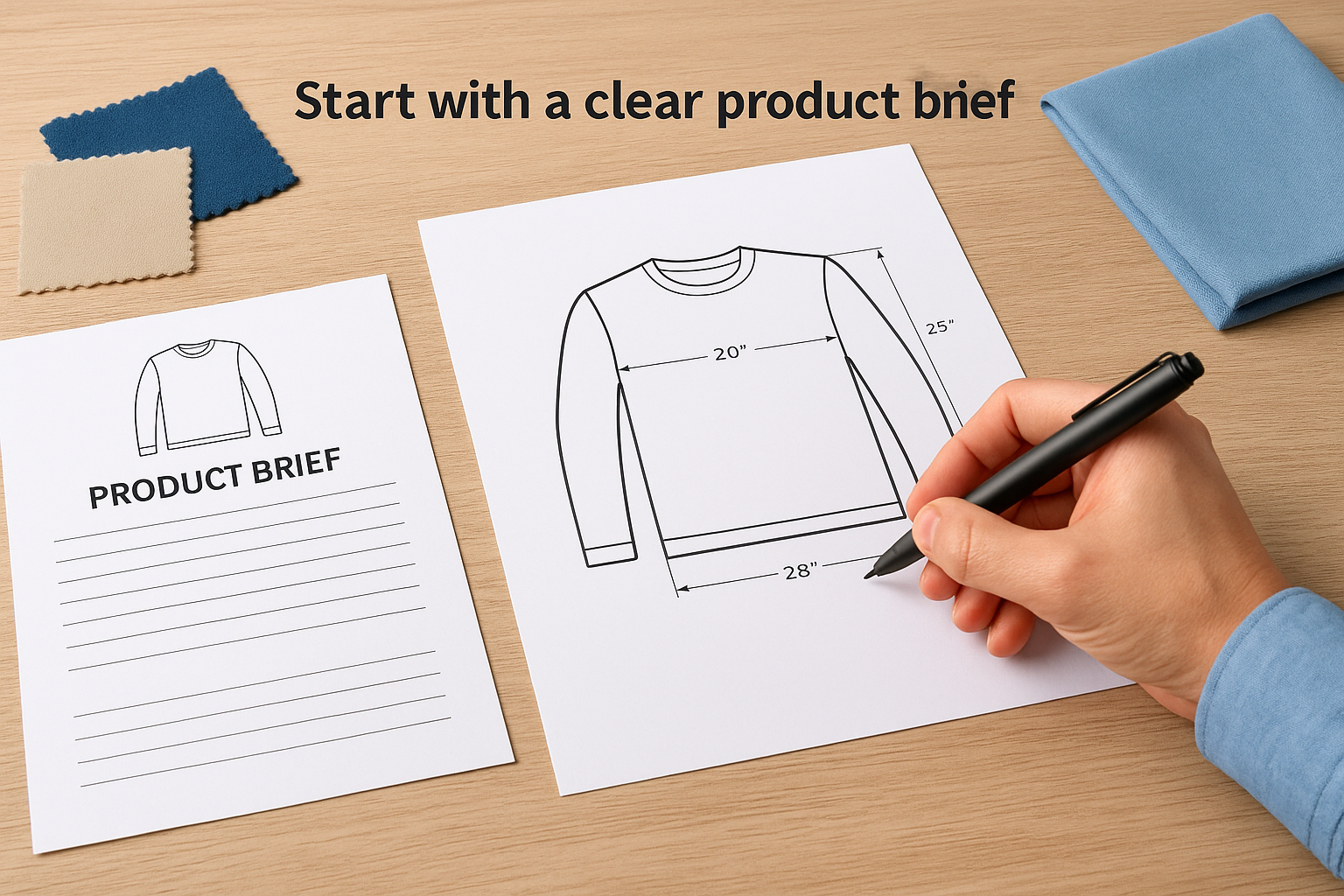
A tech pack is not optional if you want predictable results. It's the one document that puts you and your factory on the same page before any material gets cut.
Source materials and identify factories in parallel
Once your brief is solid, fabric and trim sourcing and factory identification can happen at the same time. You're looking for fabrics that match your construction and performance requirements, while also researching factories with the right equipment and experience for your garment type. At this stage, sharing your fabric direction with potential factories helps them give you more accurate costing, since material specifications directly affect production complexity and unit price.
Run sampling before committing to bulk
After selecting a factory and confirming your materials, you move into sample development. A typical sampling sequence runs from a proto sample to a fit sample, then a pre-production sample before bulk cutting begins. Each round gives you a checkpoint to catch construction issues, fit problems, or material inconsistencies while corrections are still relatively inexpensive. Rushing through sampling to save time almost always results in bulk production issues that cost far more to fix.
Once your pre-production sample is approved, you confirm your order quantities, lock in your production schedule, and move into bulk manufacturing with a clear quality benchmark already in hand.
Supplier types and sourcing channels
One of the most practical aspects of understanding what is apparel sourcing is knowing who you're actually buying from. Not all suppliers operate the same way, and the type you choose directly affects your pricing, communication, lead times, and level of control over production. Picking the wrong supplier type for your stage of business can create friction that slows your entire timeline down.
Manufacturers, agents, and trading companies
When you source directly from a factory or manufacturer, you deal with the people who actually cut and sew your garments. This gives you more direct control over quality, timing, and production adjustments, but it also requires more hands-on management and clear documentation on your side. Sourcing agents and trading companies sit between you and the factory, handling communication, sample coordination, and sometimes quality control in exchange for a margin or service fee.

Working directly with a factory gives you more transparency, but an experienced agent can reduce the management burden if your team is small or you're new to overseas production.
Each option carries trade-offs depending on your order size, your experience level, and how much time you can dedicate to supplier management:
| Supplier Type | Best For | Watch Out For |
|---|---|---|
| Direct factory | Brands with clear specs and larger orders | Requires strong documentation and active follow-up |
| Sourcing agent | Brands new to overseas production | Added margin and potential communication gaps |
| Trading company | Smaller orders with mixed product needs | Less visibility into the actual production source |
Where to find and evaluate suppliers
Trade shows and industry directories are two of the most reliable ways to build an initial supplier list. Events like Canton Fair or Texworld put you in direct contact with manufacturers and mills, which helps you assess capability before committing to samples. For brands working remotely, online platforms and verified supplier databases can serve as a starting point, though they require careful vetting before you trust any factory with a real order.
When evaluating a potential supplier, ask for reference samples and production references from comparable clients. A factory that responds thoroughly and quickly during the inquiry stage is far more likely to communicate reliably once production is actually underway.
Apparel sourcing costs and common pricing terms
Cost is one of the most misunderstood parts of what is apparel sourcing for brands entering production for the first time. You're not just paying for labor. Your total sourcing cost includes materials, sampling, manufacturing, finishing, and any intermediary fees that apply depending on your supplier setup. Getting clear on how costs break down before you request quotes puts you in a much stronger position to evaluate what you're actually being offered.
FOB, CMT, and full-package pricing
The pricing model your factory uses shapes how much cost visibility you have over your production. Most brands encounter at least two or three of these terms when requesting quotes, and mixing them up creates real budget surprises.
| Pricing Term | What It Means | Who Controls What |
|---|---|---|
| CMT (Cut, Make, Trim) | You supply the fabric and trims; the factory provides labor | You manage materials procurement |
| FOB (Free On Board) | Factory price includes materials, production, and delivery to the port of origin | Factory manages most of the supply chain |
| Full-package | Factory handles fabric sourcing, trim procurement, production, and QC | Factory controls the full pipeline |
CMT pricing gives you more control over your material choices but also puts the sourcing burden on you. FOB is more common for brands working with overseas manufacturers, since it rolls more of the coordination into a single price point.
FOB pricing feels simpler, but you still need to verify exactly what it includes before accepting any quote, since FOB terms can vary by factory.
What drives your cost per unit
Your unit cost is a product of several overlapping variables, not just the labor rate at a given factory. Understanding which factors carry the most weight helps you make smarter trade-offs during supplier negotiations.
The main drivers include:
- Fabric cost and yardage consumption per garment, which fluctuates with weight, width, and construction
- Order quantity, since higher volume typically unlocks lower unit pricing through economies of scale
- Trim and finishing complexity, including embroidery, special washes, or multiple label placements
- Sample rounds, which add cost if your tech pack is unclear and requires multiple revisions before bulk
Managing these variables actively, rather than accepting a quote at face value, is how you protect your margins before production begins.
Quality control and compliance in sourcing
Quality control is one area of what is apparel sourcing that brands consistently underinvest in until something goes wrong. By the time your bulk order ships, fixing a widespread construction defect or a mislabeled garment costs far more than the inspection that would have caught it earlier. Building quality checkpoints directly into your sourcing timeline, rather than treating QC as a final-stage activity, is the clearest way to protect both your margins and your brand reputation.
Inspection checkpoints during production
Running inspections only at final shipment leaves you with very little room to correct anything. Three key inspection points give you real visibility into your production quality: during cutting and early sewing (in-line), at the mid-production stage, and again at the final pre-shipment stage. Each checkpoint catches different categories of defects, from fabric flaws and construction inconsistencies early on to finishing issues and measurement deviations before the goods leave the factory.
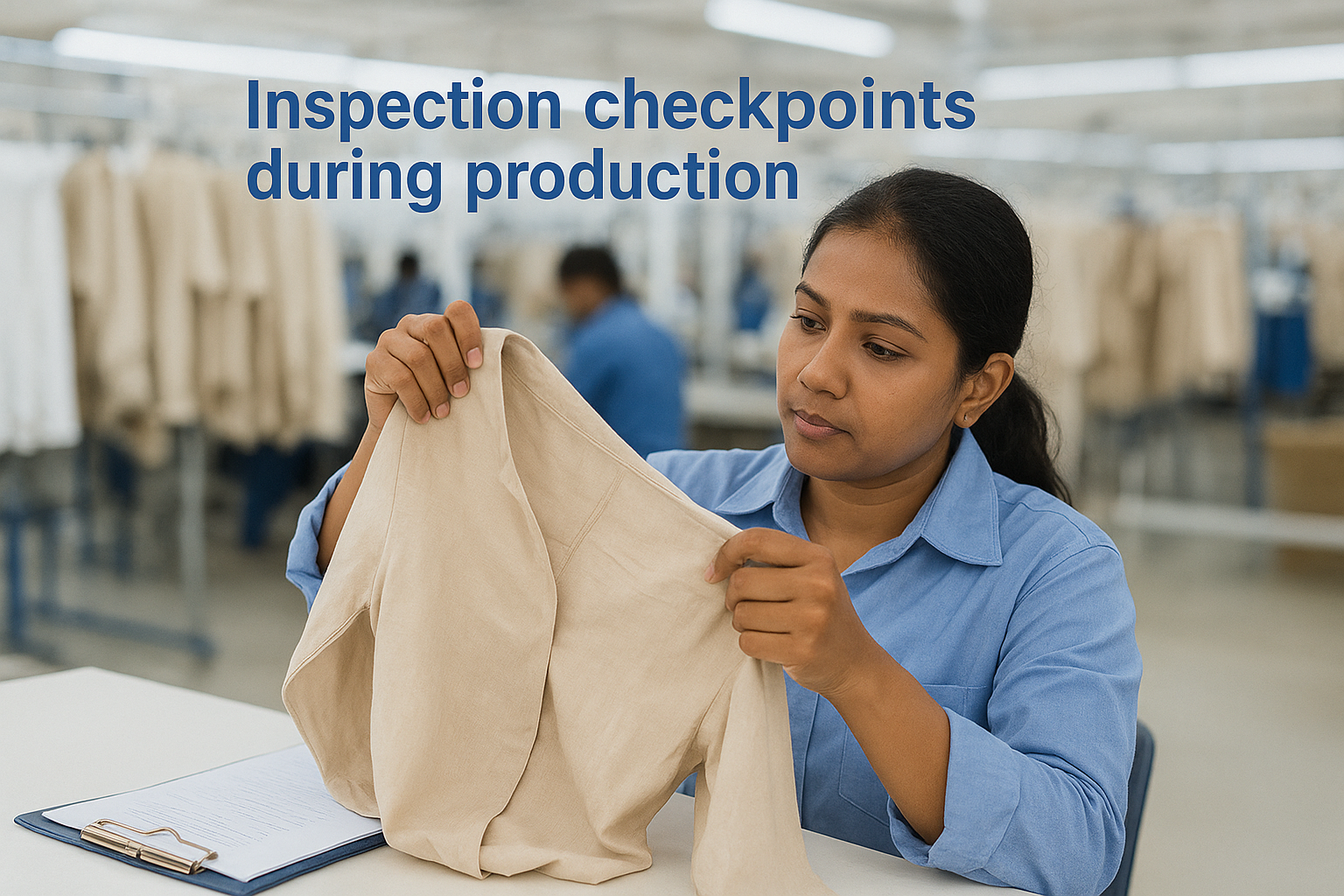
Catching a seam defect at the in-line stage costs a fraction of what it costs to remake units or issue refunds after delivery.
A common framework for final inspection is AQL (Acceptable Quality Level), which sets a statistical sampling threshold for defect rates across your shipment. Most garment buyers use AQL 2.5 for major defects and AQL 4.0 for minor ones, though your target market and product category may call for tighter tolerances.
Compliance and labeling requirements
Compliance covers the legal and ethical standards your finished product needs to meet before it can be sold in your target market. In the US, this includes fiber content labeling, country of origin labeling, and care instruction labels, all regulated by the FTC and CPSC. Brands selling into the EU or other regulated markets face their own sets of requirements, including chemical restrictions under REACH.
Your factory needs to know these requirements before production starts, not after. Providing a clear compliance brief alongside your tech pack ensures that labels are correct, restricted substances are avoided in your materials, and documentation is in place for customs clearance. Treating compliance as a sourcing input rather than an afterthought keeps your goods from getting held at the border or pulled from shelves after the bulk has already landed.
Common sourcing risks and how to avoid them
Every part of what is apparel sourcing carries some level of risk, but most sourcing failures follow the same predictable patterns. The brands that avoid them are not necessarily more experienced, they're simply more deliberate about documentation, supplier vetting, and timeline management before problems have a chance to compound.
Unclear documentation leading to wrong samples
When a factory misinterprets your specifications, the result shows up as a sample that misses your intent entirely. This wastes development time and often pushes your production calendar back by weeks. A detailed tech pack with annotated measurements, material callouts, and construction notes is the most direct way to prevent this. If you're working from a reference garment instead of a tech pack, annotate it thoroughly and confirm that the factory has reviewed every detail before cutting the proto.
Vague briefs produce vague samples. The more specific your documentation going in, the fewer sample rounds you need to get to an approved result.
Miscommunication also happens when feedback on samples is verbal or informal rather than written. Sending marked-up photos alongside a written correction list gives the factory a clear reference to work from, and it creates a paper trail you can point to if the same issue reappears in bulk.
Supplier reliability and capacity problems
A factory may quote you a lead time they cannot realistically deliver, especially if they are already carrying multiple large orders. Checking factory capacity before confirming your production schedule is a step many brands skip, and it's one of the most common reasons orders arrive late. Ask directly about their current order load and request a written production timeline with milestone dates.
Reliability issues also appear when brands rely on a single supplier for all materials and production with no backup option. If your fabric mill delays a shipment, your entire production run stalls. Keeping at least one alternative supplier identified for key materials gives you a practical contingency without requiring you to rebuild your sourcing pipeline from scratch.
- Confirm factory capacity in writing before locking in your production dates
- Identify backup options for your primary fabric and trim suppliers
- Set internal approval deadlines that leave room for at least one revision round
- Document all sample feedback in writing rather than relying on verbal instructions
Next steps for a smoother production run
Now that you understand what is apparel sourcing and how each stage connects to the next, the practical step is to apply this framework to your own situation. Start by reviewing your current documentation: do you have a solid tech pack, a clear compliance brief, and an identified set of suppliers for your core materials? If any of those pieces are missing, that's where to focus first. Brands that build a strong sourcing foundation at the start consistently see fewer delays, lower development costs, and better quality output when bulk production begins.
Your production timeline, cost structure, and supplier relationships all trace back to decisions made early in the sourcing process. Getting those decisions right takes a manufacturing partner that communicates clearly and follows through. If you're ready to move from concept to production, work with Manludini and we'll walk through your project from the first sample to final shipment.
0 comments