
If you've ever searched what is a clothing manufacturer, you probably got a generic dictionary-style answer that didn't help much. The reality is more nuanced. Clothing manufacturers aren't all the same, some cut and sew fabric you send them, others handle everything from sourcing materials to shipping finished garments. The difference matters, especially when you're choosing who to trust with your production.
The two most common models are CMT (Cut, Make, Trim) and FPP (Full Production Package). Each one works differently, costs differently, and fits different stages of a brand's growth. Understanding which model applies to your situation can save you months of back-and-forth and thousands in wasted samples.
At Manludini, we work with fashion brands through both approaches, from sample development based on a tech pack to full bulk production with fabric sourcing, trims, labeling, and packaging included. This article breaks down exactly how clothing manufacturers operate, what separates CMT from FPP, and how to decide which path fits your brand.
What a clothing manufacturer actually does
A clothing manufacturer is a business that converts raw materials, like fabric, thread, and trim, into finished garments at scale. When you ask what is a clothing manufacturer, the short answer is: a factory or production partner that handles some or all of the steps between a design concept and a finished product ready to sell. But the real answer depends heavily on how much the manufacturer manages versus how much you bring to the table.
From raw materials to finished garments
Most manufacturers follow a core production sequence: they receive or source fabric, cut the panels according to patterns, sew the pieces together, add finishing details like buttons or zippers, and then inspect the final garments before packing. Each step requires skilled workers, specific machinery, and coordinated quality control. Some factories handle every stage in-house, while others outsource specific processes like washing, printing, or embroidery to specialized facilities nearby.
The more steps a manufacturer controls directly, the more visibility you get over quality and lead times.
More than just sewing
A good manufacturer does more than operate sewing machines. They help you refine your samples, flag issues in your tech pack, suggest fabric alternatives when your first choice isn't available, and coordinate trims like labels, hangtags, and packaging. Your production partner also handles communication across multiple departments, from the cutting room to the finishing line, so nothing falls through the gaps mid-production.
Many factories also manage export documentation and quality inspections, which matters when you're sourcing overseas and need goods to clear customs without delays. The more experienced the factory, the more they function as a production partner rather than just a vendor executing instructions.
CMT vs FPP manufacturing models
Once you understand what is a clothing manufacturer, the next step is knowing which production model fits your brand. The two main options, CMT and FPP, determine how much responsibility you carry versus how much the factory takes on.
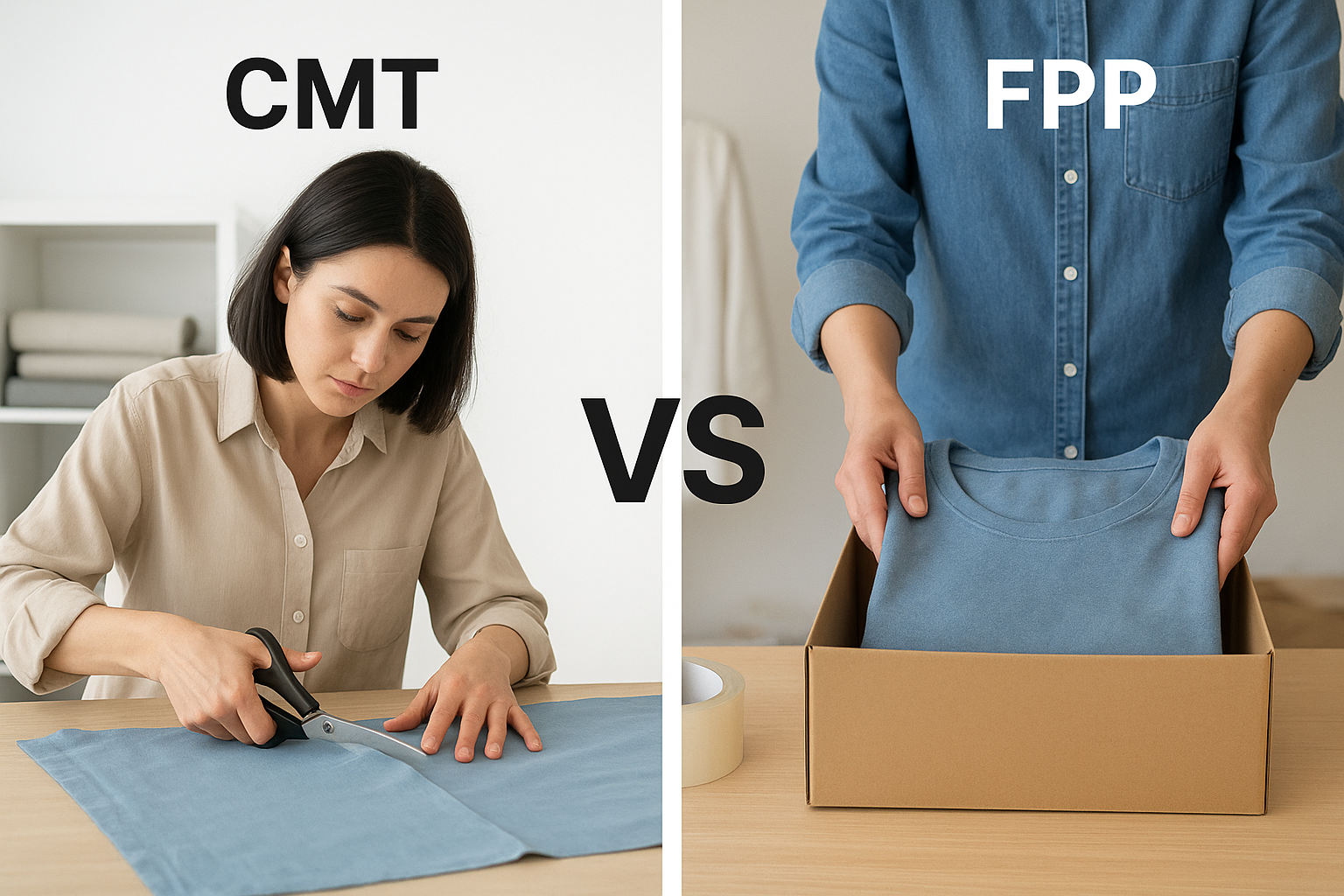
CMT: You supply the materials
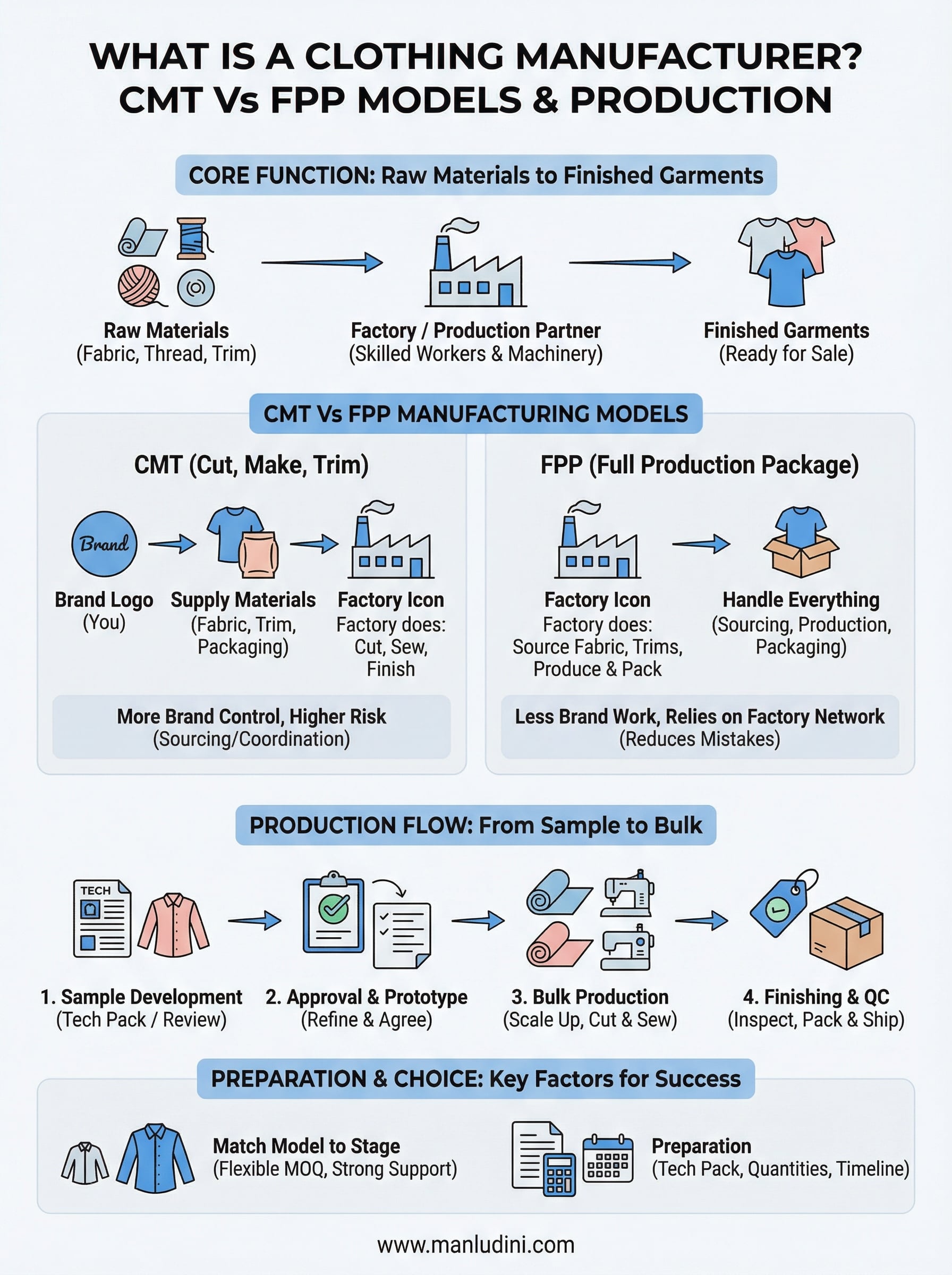
In a CMT (Cut, Make, Trim) arrangement, you source and send the fabric, and the factory cuts, sews, and finishes the garment. You control material selection and cost, but you also carry more risk. Sourcing fabric internationally adds lead time and coordination work on your end, so CMT works best when you already have reliable material suppliers in place.
FPP: The factory handles everything
FPP (Full Production Package) shifts most of the sourcing responsibility to the manufacturer. They procure the fabric, trims, and packaging, then produce and deliver finished garments. You spend less time coordinating suppliers, but you rely on the factory's sourcing network to maintain quality.
If you're new to production or working with tight timelines, FPP often reduces costly mistakes.
Both models exist on a spectrum, and many factories, including Manludini, offer flexible arrangements that combine elements of both depending on where your brand is in its development.
How apparel production works from sample to bulk
Understanding what is a clothing manufacturer becomes clearer once you see how production actually unfolds. Most manufacturers follow a structured sequence that starts with a single sample and ends with bulk garments packed and ready to ship. Each stage builds on the last, so problems caught early cost you far less than problems discovered at the end of the line.
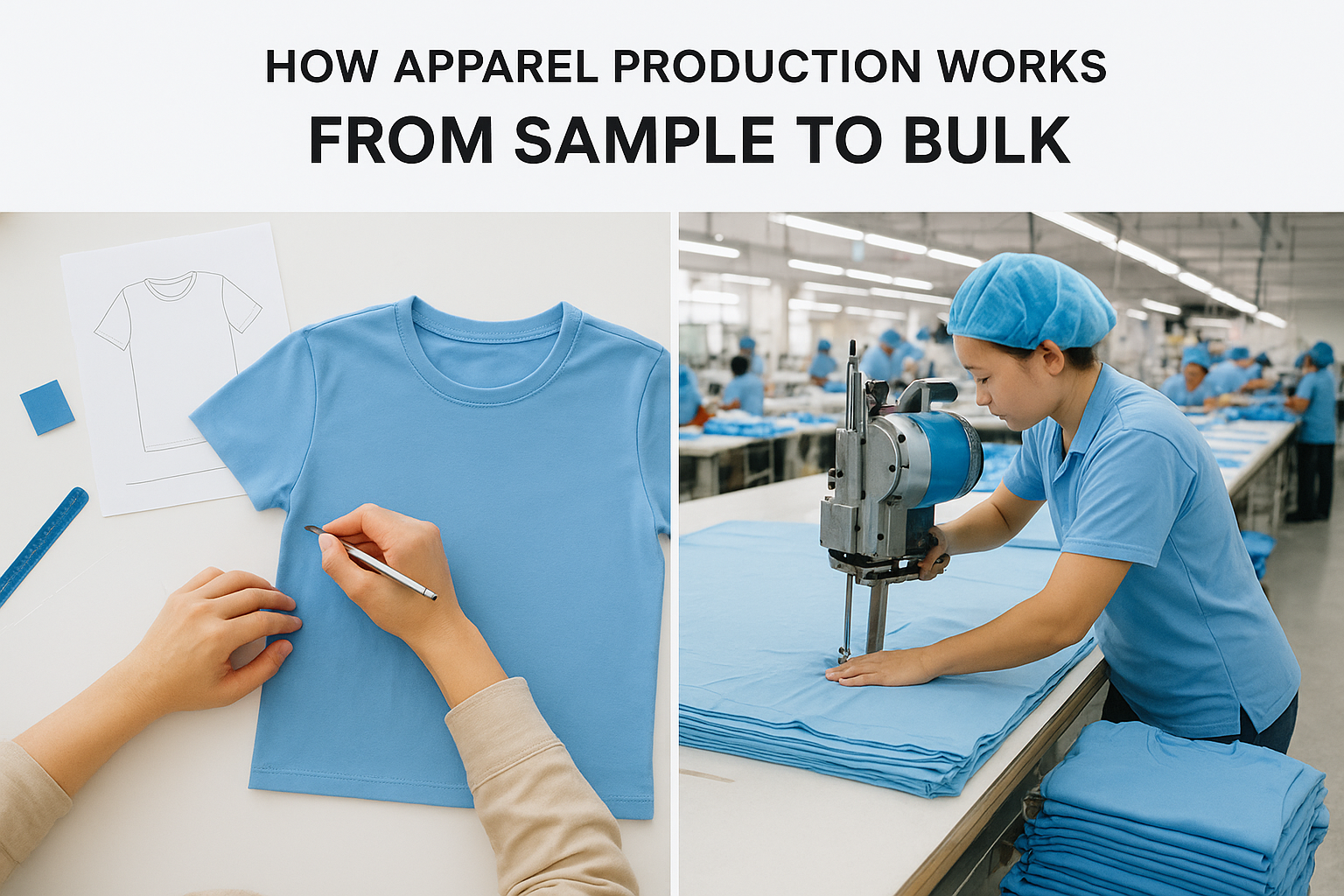
From first sample to approved prototype
Your factory starts by reviewing your tech pack or reference garment and building a first sample. You review it, mark corrections, and send feedback. Most styles go through two to three sample rounds before both sides agree the fit, construction, and details are right. Skipping this stage or rushing through it is one of the most common reasons bulk orders come back wrong.
Approved samples become the physical standard your factory references throughout bulk production.
From prototype to bulk production
Once the sample is approved, the factory scales up production by cutting full fabric quantities, running bulk sewing lines, and coordinating finishing processes. Quality control checks happen mid-production and again before packing, so defects get caught before goods leave the factory. This is also when your labels, hangtags, and packaging get added to the finished garments.
How to choose the right manufacturer for your brand
Knowing what is a clothing manufacturer gives you a foundation, but choosing the right one for your brand takes more deliberate thinking. The decision comes down to your production volume, how complete your tech pack is, and how much sourcing coordination you want to manage yourself. Not every factory fits every brand, and the wrong match wastes time and money fast.
Match the model to your stage
If you're testing a new style with a small run, you need a factory that offers flexible MOQ options and strong sample development support. Rushing into a large factory that prefers high-volume, bulk-only orders will slow you down and push your costs up before you've even validated the product.
Your manufacturing model should match where your brand is right now, not where you hope to be in two years.
Evaluate communication and responsiveness
Direct factory communication matters more than most buyers realize until they're deep into production and something goes wrong. Look for a partner who responds clearly, flags problems early, and understands your product category well. A factory that asks the right questions during sampling usually handles bulk production with the same level of attention.
What to prepare before you contact a factory
Once you understand what is a clothing manufacturer and which model suits your brand, the next step is showing up to that first conversation ready. Factories assess potential clients just as much as you assess them, and arriving with clear information signals that you're serious. Disorganized inquiries with no reference materials slow the process and sometimes discourage factories from prioritizing your project.
The more detail you bring upfront, the faster a factory can give you accurate pricing and timelines.
Have your tech pack or reference ready
Your tech pack is the single most useful document you can bring to a factory. It defines the garment's construction, measurements, fabric type, and finishing details in one place. If you don't have a formal tech pack yet, a physical reference sample or detailed photos with written notes will work as a starting point.
At minimum, prepare the following before you reach out:
- Sketches or photos of the garment
- Fabric type and preferred materials
- Target measurements or a size range
- Any special trims, labels, or packaging requirements
Know your quantities and timeline
Factories build pricing and capacity around order volumes and delivery windows, so knowing your approximate quantities before reaching out saves time. You don't need exact numbers yet, but you should have a realistic range ready.
Your target delivery date matters just as much. Sharing it early lets the factory confirm whether your timeline fits their production schedule before you go any further.
Key takeaways and next steps
Understanding what is a clothing manufacturer goes beyond knowing that factories make clothes. The model your manufacturer uses, CMT or FPP, shapes how much sourcing work lands on your plate and how much control you keep over materials. Your sample process determines whether your bulk order hits the mark, and the preparation you bring to your first factory conversation sets the tone for everything that follows.
Choosing the right production partner means matching their capabilities to your current stage, not your ideal future scenario. A factory that communicates clearly, handles sampling seriously, and understands your product category will save you far more time and money than one that simply quotes the lowest price.
If you're ready to move forward with a manufacturer who covers everything from sample development to bulk production, labeling, and packaging, get in touch with Manludini and share what you're working on.
0 comments