
Choosing between heat transfer vs screen printing affects everything from your per-unit cost to how your designs hold up after dozens of washes. Both methods have clear strengths, but they serve different purposes, and picking the wrong one can mean wasted budget or underwhelming results on your finished garments.
At Manludini, we work with fashion brands and startups through every stage of production, including printing and finishing decisions that directly impact how a product looks, feels, and lasts. We've seen firsthand how the right printing method can elevate a collection, and how the wrong choice creates problems that show up only after bulk production is already underway.
This article breaks down the real differences between heat transfer and screen printing across cost, durability, and print quality. By the end, you'll have a clear understanding of which method fits your project's volume, design complexity, and budget, so you can move forward with confidence at the production stage.
Why print method choice impacts production
Your printing method isn't just a finishing detail. It's a production decision that affects cost, lead time, and the long-term quality of your garments. Making the right call early saves you from reprinting samples or receiving bulk orders that don't match your expectations. Most brands treat printing as an afterthought, but it belongs in your planning process from the start.
Order volume shapes your cost structure
The number of units you're producing has a direct impact on which method makes financial sense. Screen printing requires setup costs for each color in your design, including burning screens, mixing inks, and running test prints before your actual production run begins. Those upfront costs spread across a large order, making screen printing more cost-efficient at higher quantities, typically 50 units or more per design.
Heat transfer, by contrast, carries lower or near-zero setup costs, which means small runs and one-off samples stay affordable. If you're launching a capsule collection with five styles and 20 units each, heat transfer keeps your budget in check without locking you into large minimums you can't fill.
The print method you choose at the sampling stage often sets the standard for your bulk run, so treat it as a core production decision, not a last-minute detail.
Design complexity limits your method options
Not every design works equally well across both printing methods. Screen printing excels with bold, flat graphics that use a limited number of colors, because each color requires its own screen and adds to your production time and cost. Photographic prints or designs with gradients and fine detail become expensive and difficult to execute cleanly with screens.
Heat transfer handles complex artwork more easily, including full-color images and detailed illustrations, because the design transfers as a complete image rather than being built up layer by layer. When you're evaluating heat transfer vs screen printing for a design-heavy collection, this flexibility often becomes the deciding factor. Understanding how your artwork translates into each method helps you avoid costly revisions mid-production and keeps your timeline on track.
How heat transfer printing works
Heat transfer printing uses heat and pressure to apply a pre-printed design onto a garment. A design is first printed onto a special transfer film or paper, then a heat press bonds it to the fabric surface. The result is a finished print that sits on top of the material rather than soaking into it, which gives you sharp color reproduction and a smooth surface feel depending on the transfer type you use.
The transfer process step by step
The process starts with your artwork being printed onto a carrier sheet using either digital inkjet or laser printing, depending on the transfer type. The printed sheet goes face-down onto your garment, and a heat press applies a specific temperature and pressure for a set number of seconds. When you peel away the carrier, the ink bonds to the fabric.
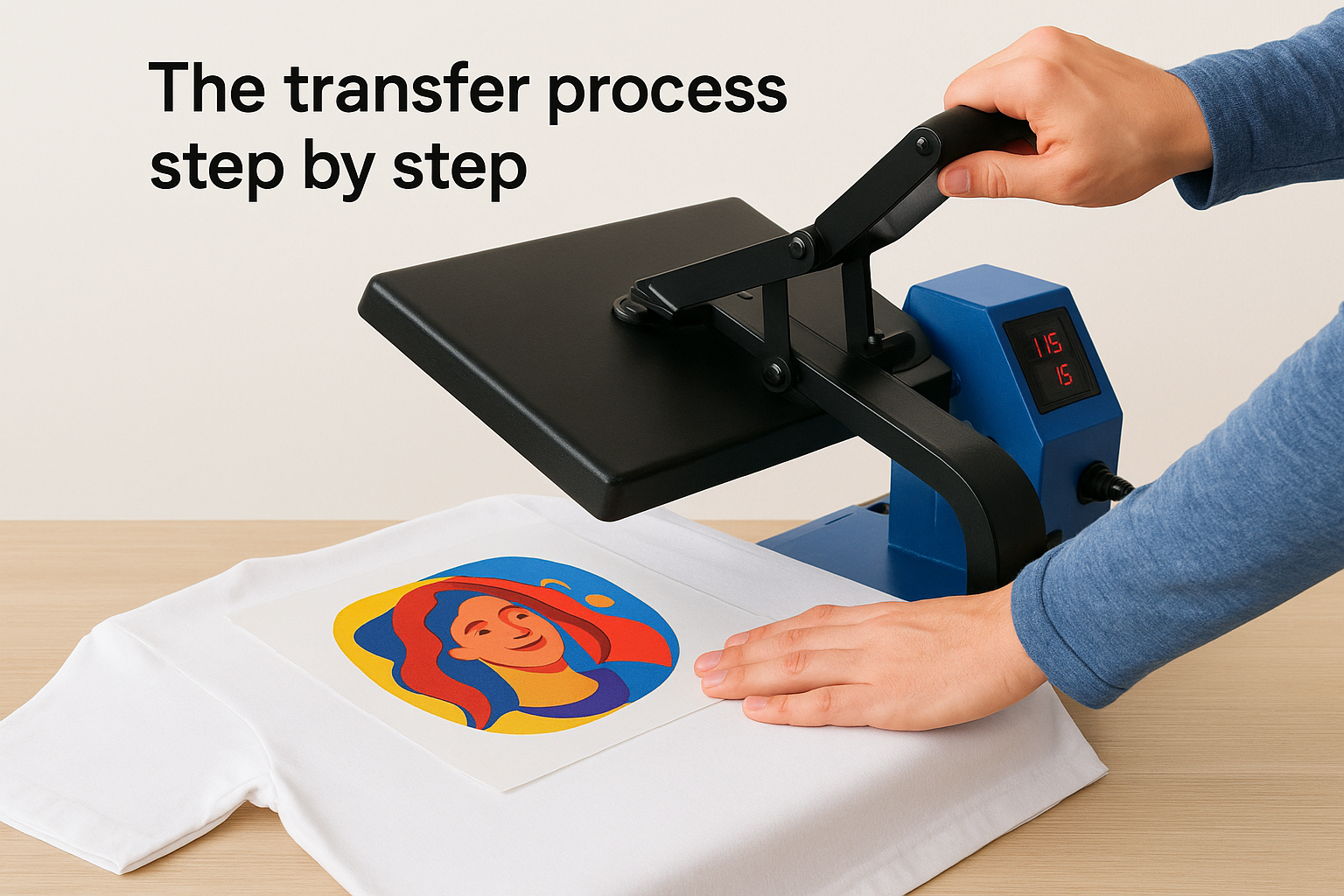
Getting the temperature and dwell time right is critical because too much heat can damage the fabric, and too little means the transfer won't bond properly.
Peel type matters here. Cold peel transfers give you a softer finish and are removed once the material cools, while hot peel transfers are removed immediately after pressing and typically produce a slightly glossier look.
Where heat transfer has an edge
When you compare heat transfer vs screen printing on short runs and complex designs, heat transfer wins on setup simplicity. There are no screens to burn, no color separation fees, and no minimum order requirements tied to upfront production costs. That makes it a practical first step for startups testing a design before committing to larger volumes.
How screen printing works
Screen printing pushes ink directly through a mesh screen onto your garment, building up color layer by layer. Each color in your design requires a separate screen, which is why this method works best when your artwork uses a small number of distinct, flat colors.
The screen printing process step by step
Before any garment gets printed, your artwork goes through color separation, where each color gets assigned to its own film positive. A technician then coats a mesh screen with a light-sensitive emulsion, exposes it to UV light using the film, and washes out the unexposed areas to create a stencil for that color. During production, ink is pushed across the screen with a squeegee, pressing it through the open mesh onto the fabric below.
Each additional color adds another screen, more setup time, and higher upfront costs, so keep that in mind when designing for screen printing.
Each layer of ink cures under heat before the next color is applied, and the final garment passes through a conveyor dryer to lock the ink permanently into the fabric fibers.
Where screen printing has an edge
When you compare heat transfer vs screen printing on high-volume runs with bold, simple designs, screen printing delivers superior color vibrancy and durability. The ink bonds into the fabric rather than sitting on top of it, which means your print holds up through repeated washing without cracking or peeling. For brands producing large quantities of the same design, the upfront setup cost spreads across more units, which significantly lowers your cost per piece.
Heat transfer vs screen printing: cost and quality
When you compare heat transfer vs screen printing directly on cost and quality, the gap between them becomes clear once you factor in your order size and design requirements. Neither method wins across the board, but each one has a specific range where it delivers the best value for your budget.
Cost breakdown by volume
Setup costs are where the two methods split most sharply. Screen printing charges you per color and per screen, which can push your upfront investment to $50 or more before a single garment gets printed. Heat transfer carries little to no setup cost, making it the lower-risk option for smaller production runs.
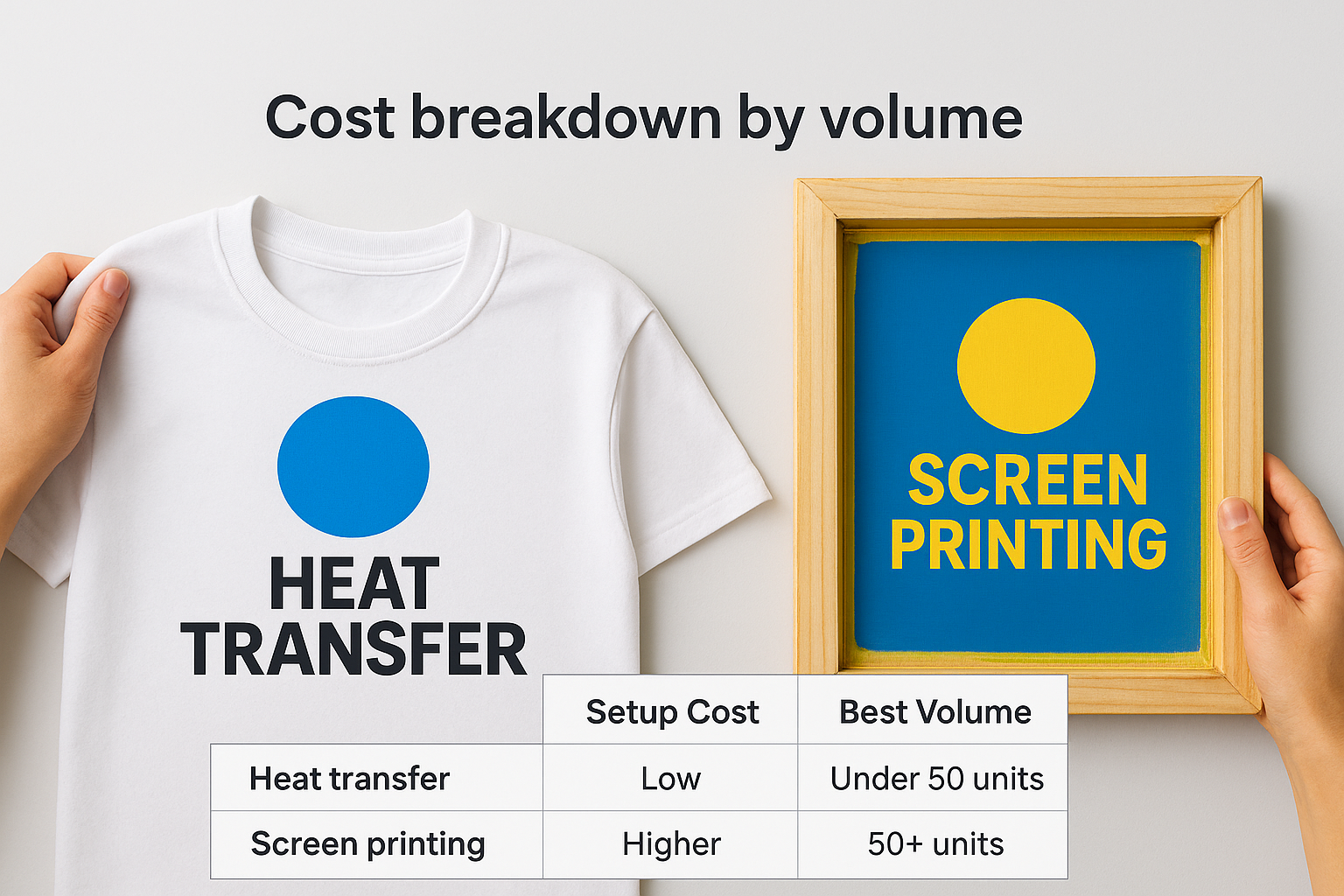
Once your order volume crosses roughly 50 units per design, screen printing's per-unit cost drops fast and often beats heat transfer on total spend.
| Method | Setup Cost | Best Volume | Cost Per Unit Trend |
|---|---|---|---|
| Heat transfer | Low | Under 50 units | Stays relatively flat |
| Screen printing | Higher | 50+ units | Drops as volume increases |
Print quality and durability
Quality differences come down to how the ink bonds with your fabric. Screen printing ink absorbs into the fibers, which means the print resists cracking and fading through repeated washes far better than most heat transfer options. Heat transfer sits on top of the fabric surface, and cheaper transfer films can peel or crack after heavy use.
That said, premium heat transfer materials, including DTF transfers, have improved significantly and now hold up well for most everyday apparel needs.
How to choose the right method for your run
Deciding between heat transfer vs screen printing comes down to three factors: your order volume, your design complexity, and how the finished garment will be used. Once you answer those three questions honestly, the right method becomes clear without any guesswork.
Match the method to your volume and design
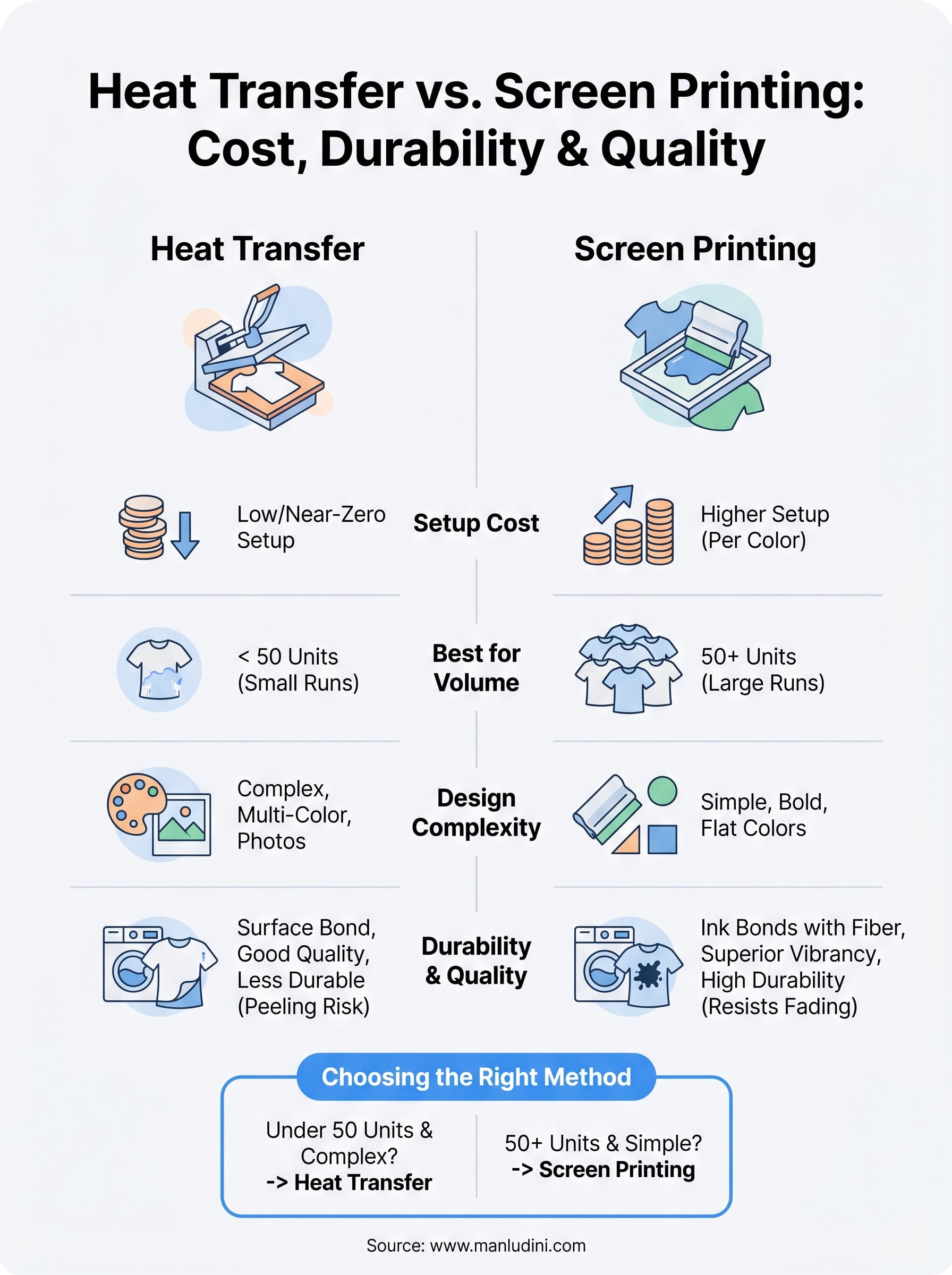
Small runs under 50 units with complex, multi-color artwork point directly to heat transfer. You avoid setup costs, get accurate color reproduction, and move quickly without waiting for screen preparation. Larger runs of 50 units or more with bold, flat graphics point to screen printing, where the upfront setup cost spreads across enough units to lower your cost per piece significantly.
| Situation | Recommended Method |
|---|---|
| Under 50 units, complex design | Heat transfer |
| 50+ units, simple flat colors | Screen printing |
| Testing a new design before bulk | Heat transfer |
| Repeat production run | Screen printing |
Factor in fabric type and wash durability
Fabric composition also shapes which method holds up best on your garments. Screen printing bonds ink directly into the fibers, making it the stronger choice for heavy-use items like workwear, uniforms, or any garment that goes through frequent washing cycles. Heat transfer works well across a wider range of fabric types, including polyester and performance fabrics where screen printing inks sometimes struggle to adhere cleanly.
If your garment faces heavy washing cycles regularly, screen printing's durability advantage is hard to overlook at any volume.
Next steps for your custom apparel
Now that you understand the core differences in heat transfer vs screen printing, you can make a smarter production decision before your first sample goes into development. The right method depends on your order volume, artwork complexity, and how your garments will be used, and getting that call right early prevents costly mistakes later in your production run.
Bringing a printing decision into your planning process early also gives your manufacturing partner more room to source the right materials, coordinate finishing details, and keep your timeline realistic. Clear production decisions made at the start translate directly into fewer revisions and more predictable results by the time bulk production is complete.
If you're ready to move your project forward, connect with the Manludini team to discuss your design specifications and order volume so we can help you build a production plan that fits your brand.
0 comments