
The fabric you choose defines everything about your garment, how it drapes, how it holds up after washing, and whether your customer reaches for it again. But before any of that matters, you need to figure out how to find fabric suppliers who can actually deliver the right material, at the right price, in the quantities you need. That step alone stops a lot of brands in their tracks.
Whether you're developing your first collection or expanding an existing line, sourcing fabric is one of the most hands-on parts of production. It takes research, communication, and a good sense of what your product actually demands. There's no shortcut that replaces doing the work, but there are smarter ways to approach it.
At Manludini, we help brands navigate the full production process, from sample development through bulk manufacturing, and fabric sourcing is a question that comes up in nearly every project we support. This guide breaks down the practical steps for finding and evaluating fabric suppliers, so you can build a supply chain that matches your brand's needs from day one.
What counts as a fabric supplier
When you start figuring out how to find fabric suppliers, one of the first things that trips people up is realizing "fabric supplier" isn't a single category. The term covers several distinct types of businesses, each operating at a different point in the supply chain, with different minimums, pricing structures, and ways of working. Knowing which type you're dealing with before you make contact helps you set the right expectations and saves you from wasted conversations.
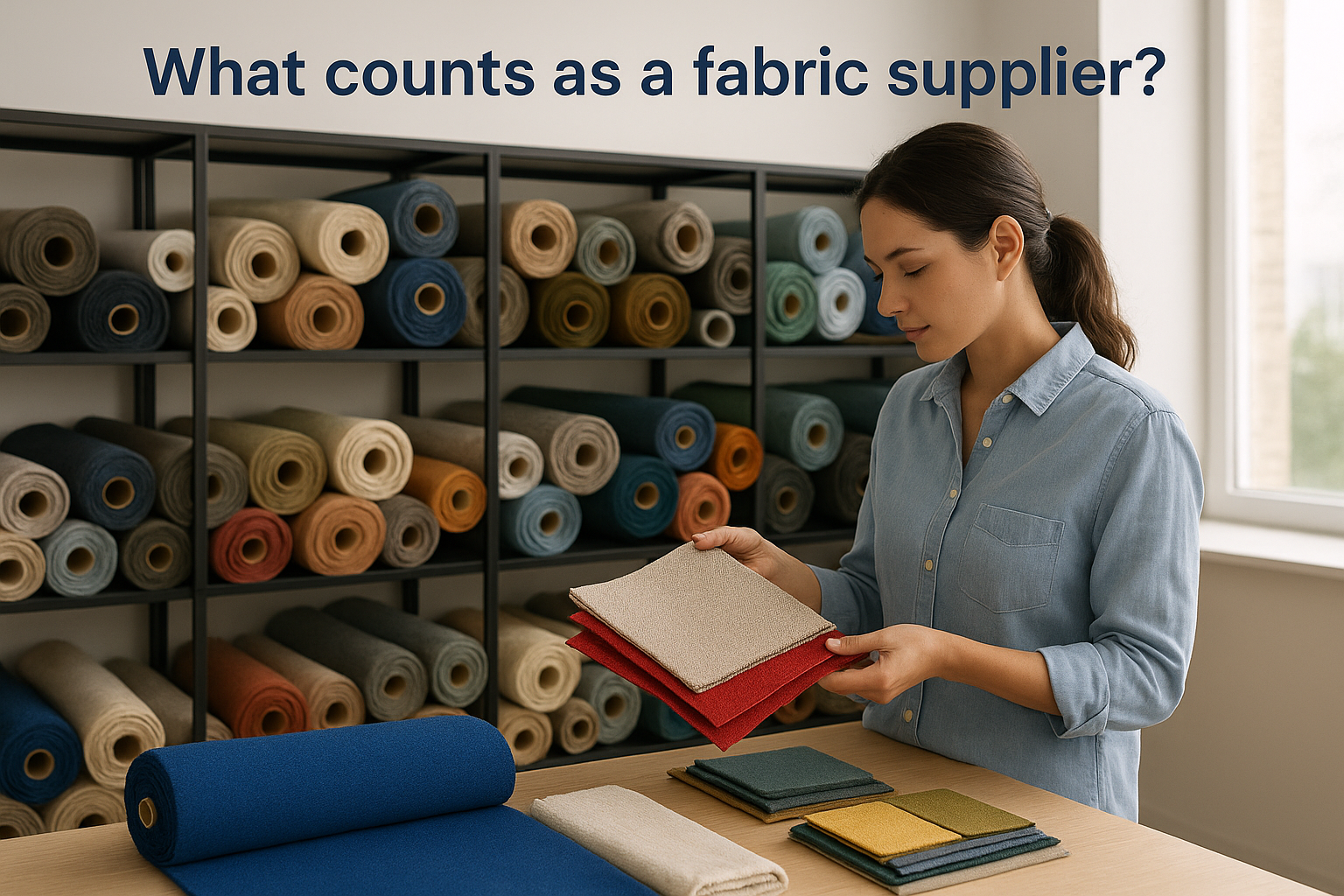
Mills and weavers
Textile mills and weaving facilities are where fabric is actually produced. They take raw fiber, whether cotton, polyester, wool, or a blend, and turn it into finished cloth through spinning, weaving, or knitting. Sourcing directly from a mill means cutting out intermediaries, which often translates to better pricing on large orders and more control over fabric specifications like weight, construction, and finish.
The trade-off is that mills typically work with high minimum order quantities. Many require you to commit to hundreds or even thousands of meters per colorway per fabric. For a startup or a brand in early development, that volume is a real barrier. Mills work best for brands that already know their exact specifications and can commit to consistent reorders at scale.
Wholesale distributors and jobbers
Fabric distributors and wholesale suppliers buy large quantities from mills and resell at smaller quantities to brands, designers, and manufacturers. They stock a wide range of fabrics from multiple sources, so you can often find several options in one place without committing to enormous minimums.
If you're a smaller brand or just starting out, a distributor is often the most practical entry point for fabric sourcing because the minimums are manageable and the selection is broad.
Jobbers are a specific type of distributor that deal in excess inventory, discontinued fabric runs, or overstock from mills and brands. Prices are usually lower, but selection is unpredictable and you can't always reorder the same fabric once it's gone. Jobbers work well for one-off projects or test runs, but you should not rely on them for a core product line where consistency matters.
Sourcing agents and trading companies
Sourcing agents act as intermediaries between your brand and overseas mills or suppliers, typically in manufacturing hubs like China, India, Bangladesh, or Turkey. They handle communication, sample coordination, and sometimes quality control on your behalf. Trading companies work similarly but usually hold inventory or maintain established relationships with specific factories.
Working through an agent or trading company adds a layer of cost, but it can be worth it when you're navigating overseas sourcing for the first time and don't have existing supplier relationships. A good agent already knows which mills specialize in specific fabric types, understands local lead times and logistics, and can flag problems before they turn into expensive delays.
Here's a quick comparison to help you see where each supplier type fits your situation:
| Supplier Type | Best For | Typical MOQ | Price Point |
|---|---|---|---|
| Mill / Weaver | Large or repeat orders | High (500m+) | Lowest per meter |
| Wholesale Distributor | Mid-size brands, variety | Medium (50–200m) | Moderate |
| Jobber | Test runs, one-off projects | Low (varies) | Low, but inconsistent |
| Sourcing Agent | Overseas sourcing, first-time buyers | Depends on mill | Varies + agent fee |
Understanding which supplier type fits your current stage is the foundation for everything that comes after. A brand ordering 10,000 units has different sourcing needs than one testing 200 units of a new style, and the supplier type you target should reflect that gap.
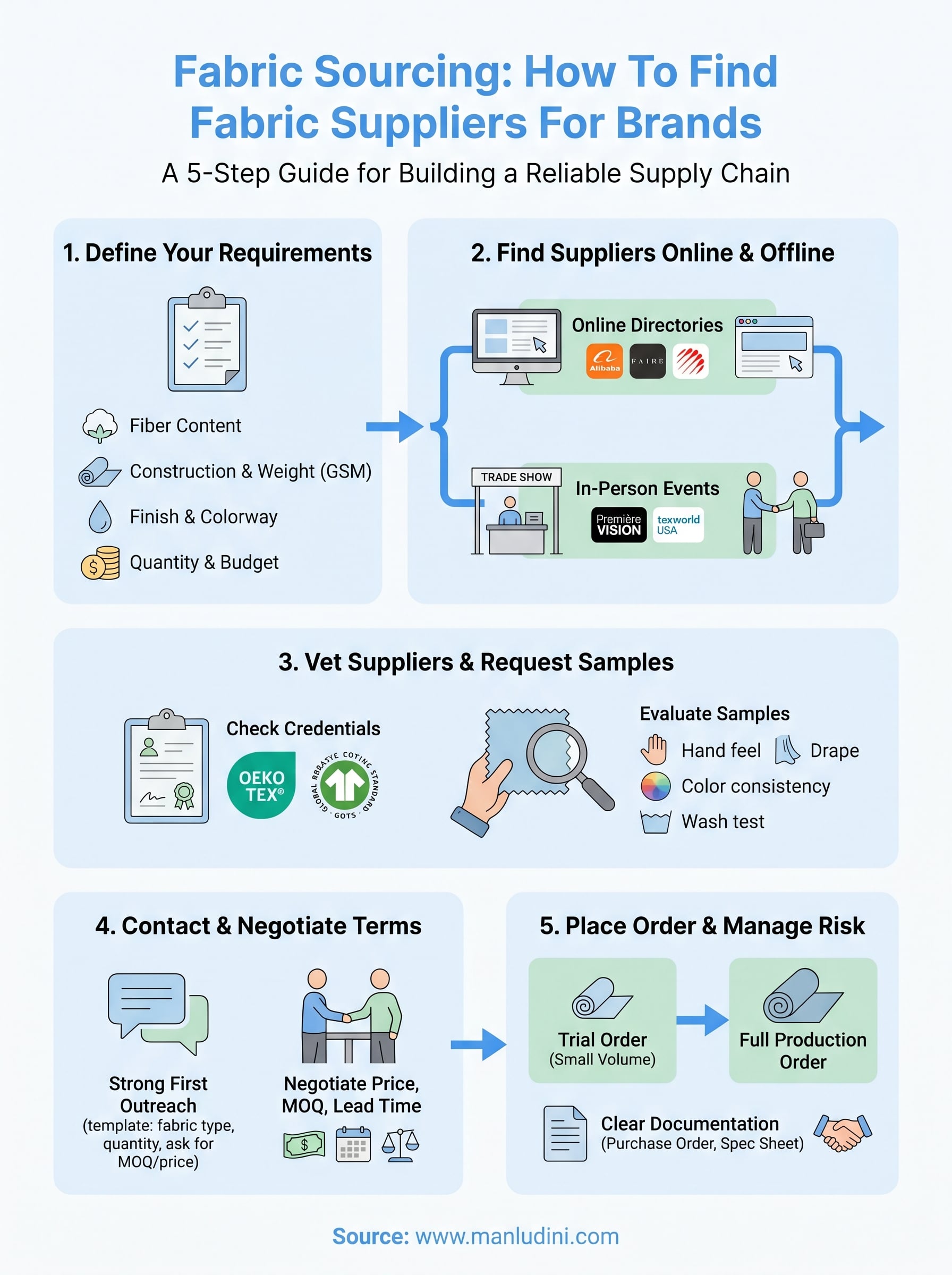
Step 1. Define your fabric requirements
Before you contact anyone, you need to know what you're actually looking for. Going into supplier conversations without clear requirements is one of the most common mistakes brands make early on. Suppliers will ask you specific questions about fiber content, weight, finish, and quantity from the very first email, and vague answers slow down the whole process or signal that you're not ready to buy.
Know your fabric specs
Your fabric specification is the starting point for every supplier conversation you'll have. Without it, you can't compare quotes accurately, evaluate samples fairly, or communicate clearly when something is wrong. Think of it as your brief: the more specific it is, the easier it becomes to filter out suppliers who can't meet your needs.
Getting your specs in order before you start reaching out is what separates efficient sourcing from weeks of back-and-forth that goes nowhere.
At minimum, define the following before making contact:
- Fiber content: 100% cotton, polyester-cotton blend, 95% rayon / 5% spandex, etc.
- Fabric construction: woven, knit, jersey, twill, poplin, fleece, etc.
- Weight (GSM): for example, 180 GSM for a mid-weight jersey or 280 GSM for a heavyweight fleece
- Finish or treatment: brushed, enzyme-washed, water-repellent, anti-pill, etc.
- Width: typically 57/58 inches or 60 inches for most woven fabrics
- Colorway: solid, yarn-dyed, printed, or available to dye to your specification
If you have a reference fabric you like, note its specs directly from the fabric or from the care label on an existing garment. That gives you a concrete benchmark to share with any supplier you approach.
Set your quantity and budget targets
Quantity and price targets go hand in hand, and you need to nail down both before you start thinking about how to find fabric suppliers who match your scale. Suppliers qualify buyers based on order volume, so knowing your numbers upfront gets you faster and more relevant responses rather than generic catalogs and stalling.
Define your expected order quantity in meters, your maximum acceptable price per meter, and whether you need the fabric on a recurring basis or just for a single production run. A recurring need changes the conversation entirely, because consistency and reorder reliability become just as important as the initial price you negotiate.
Step 2. Find suppliers online and offline
Once your fabric specs and quantity targets are clear, you can start the actual search. The channels you use to find suppliers depend heavily on where you're sourcing from and how much groundwork you've already done. Most brands find their best supplier relationships by combining at least two approaches, using online directories to build a starting list and then validating those options through direct contact or in-person verification.
Online directories and trade platforms
Online sourcing platforms are the fastest way to build an initial supplier list, especially if you're sourcing from overseas markets. Several well-established directories let you filter by fabric type, country of origin, and MOQ, which cuts down the early research time significantly.
The goal at this stage is to build a shortlist of realistic candidates, not to find the perfect supplier immediately.
Here are the most commonly used platforms to start your search on how to find fabric suppliers:
- Alibaba: The largest B2B sourcing platform for overseas suppliers, primarily from China. Filter by "Verified Supplier" or "Trade Assurance" to reduce risk.
- Global Sources: Similar to Alibaba but with stronger emphasis on verified manufacturers. Useful for sourcing from Asia with a slightly higher barrier to entry for suppliers.
- Faire: Better suited to domestic and European wholesale distributors. More relevant for US or EU brands sourcing smaller quantities.
- TextileExchange.org: Not a marketplace, but a useful starting point for suppliers with sustainability certifications like GOTS or recycled content credentials.
When you search any platform, use your fabric specifications as your search terms rather than generic terms like "fabric supplier." Searching "280 GSM cotton fleece supplier" will return more relevant results than searching "fabric wholesale."
Trade shows and in-person sourcing
Trade shows give you direct access to mills, distributors, and agents in one place, with fabric samples you can actually touch and evaluate on the spot. This matters more than it sounds, because fabric handle and drape rarely translate through photos or online descriptions.

Key shows worth putting on your radar include Première Vision in Paris, which covers premium textiles globally, and Texworld USA in New York, which is more accessible for brands working with mid-range budgets and looking to connect with suppliers across multiple categories. Both run twice yearly and attract suppliers across every major fabric type and region.
Attending even one trade show gives you a clearer sense of the market than months of online searching alone.
Step 3. Vet suppliers and request samples
Finding a supplier's listing is only part of the work. Before you commit to any order, you need to verify that the supplier can actually deliver what they're promising and that their fabric quality holds up to your product's requirements. Skipping this step is how brands end up with thousands of meters of fabric that doesn't match what they approved.
Check supplier credentials
Verifying a supplier's legitimacy should be your first move before you ask for samples or share any detailed specifications. On platforms like Alibaba, look for verified badges, trade assurance enrollment, and transaction history. If you're sourcing directly from a mill or distributor, ask for their business registration documents, any relevant certifications such as OEKO-TEX Standard 100 for chemical safety or GOTS for organic content, and references from existing clients.
A supplier who hesitates to share basic documentation or refuses to provide client references is a supplier you should walk away from without looking back.
Checking how they communicate is also a form of vetting. Pay attention to response time, how clearly they answer your questions, and whether they push back with useful input or simply agree with everything you say. A supplier who asks good clarifying questions is usually more reliable than one who confirms your order without engaging with your specs.
Request and evaluate samples
Once a supplier passes your initial credential check, request a fabric sample before committing to anything. Most legitimate mills and distributors will send a sample cut, sometimes for a small fee or with the cost applied to your first order. Be specific when you make the request: ask for a sample that matches your target GSM, fiber content, and finish. A generic swatch pulled from their showroom tells you very little about what your actual production run will look like.
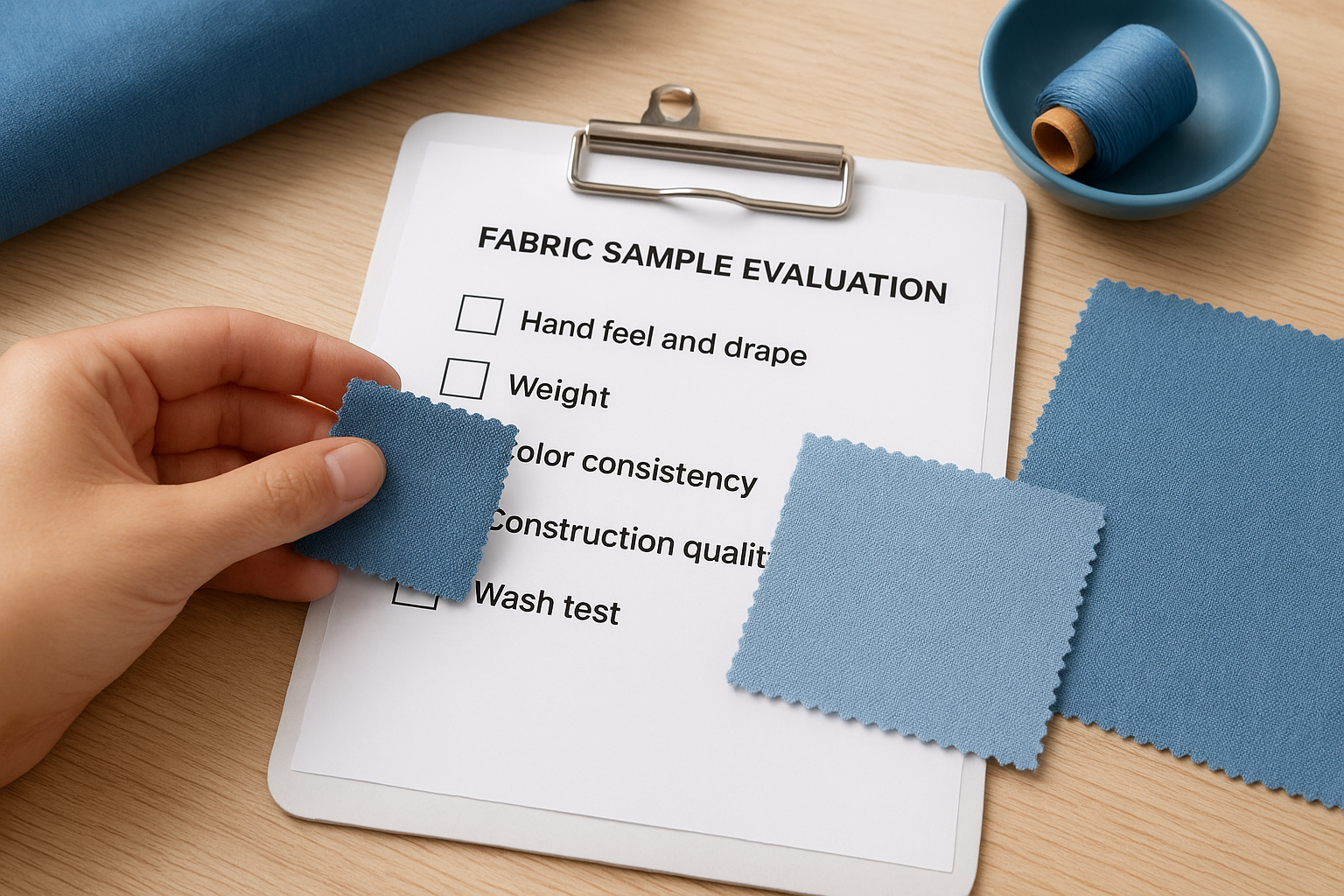
When the sample arrives, evaluate it against a clear checklist rather than relying on a general impression. Check the following:
- Hand feel and drape: Does it match what your product actually requires?
- Weight: Measure the GSM yourself if possible, rather than taking the supplier's word for it
- Color consistency: Look for streaking, uneven dyeing, or shading differences across the swatch
- Construction quality: Check for dropped stitches, uneven weave, or loose threads
- Wash test: Run it through a standard cycle and check for shrinkage, color bleeding, and pilling
This evaluation step is a non-negotiable part of how to find fabric suppliers who can genuinely support your production long-term, not just close an initial sale.
Step 4. Contact suppliers and negotiate terms
Once you have a shortlist of vetted suppliers with samples you've approved, it's time to make direct contact and work out the terms of your first order. How you approach this conversation sets the tone for the entire working relationship, so treating it as a business discussion rather than a casual inquiry makes a real difference. Suppliers respond better to buyers who communicate clearly and come prepared with specific numbers and requirements from the start.
Write a strong first outreach message
Your first message to a supplier needs to do three things: establish that you're a serious buyer, state your fabric specifications clearly, and ask a focused set of questions that move the conversation forward. Vague introductions waste time on both sides and often result in suppliers deprioritizing your inquiry in favor of more prepared buyers.
A supplier who receives a detailed, professional inquiry is far more likely to respond quickly and treat you as a priority.
Here's a straightforward outreach template you can adapt when figuring out how to find fabric suppliers who are the right fit:
Subject: Fabric Inquiry – [Fabric Type] – [Your Brand Name]
Hi [Supplier Name or Team],
My name is [Name] from [Brand Name]. We're a [brief description, e.g., women's apparel brand based in the US] currently developing a new collection and need a reliable supplier for the following fabric:
- Fabric type: [e.g., 280 GSM cotton fleece, brushed interior]
- Fiber content: [e.g., 80% cotton / 20% polyester]
- Width: [e.g., 60 inches]
- Color: [e.g., solid, dyed to Pantone reference]
- Estimated quantity: [e.g., 500 meters per color, 3 colorways]
Could you confirm availability, your MOQ, price per meter at this volume, and standard lead time for production and shipping? We'd also like to request a sample before placing an order. Please let us know your sample process and any associated cost.
[Your Name] [Brand Name | Contact Info]
Negotiate price, MOQ, and lead time
Price, minimum order quantity, and lead time are the three variables you should address in every supplier negotiation. Suppliers typically have more flexibility on MOQ and lead time than they initially present, especially if you signal that repeat orders are part of your plan. Committing to a second order upfront often unlocks better pricing or reduced minimums on the first run.
When negotiating, focus on total value rather than pushing for the lowest unit price alone. A supplier offering slightly higher fabric costs but consistent quality and reliable delivery will save you far more than a cheaper source that ships late or sends uneven batches.
Step 5. Place your first order and manage risk
Approving a sample and agreeing on terms does not mean the risk disappears. Your first production order is still a test, and treating it that way protects you from the most common sourcing mistakes brands make when moving from development into production. Even reliable suppliers can have issues on a first run, so building in safeguards before you commit gives you real options if something goes wrong.
Start with a trial order
A trial order is a reduced-volume first purchase designed to confirm that a supplier can deliver at production scale what they sent you as a sample. Rather than placing your full projected quantity upfront, order a portion of it, typically around 20 to 30 percent of your total need, and inspect the delivery carefully before committing to the remainder.
The gap between sample quality and bulk production quality is where most sourcing problems reveal themselves, so closing that gap on a small order saves you from expensive surprises later.
When your trial order arrives, compare it directly against your approved sample on every dimension from your earlier evaluation checklist: GSM, color consistency, construction, and wash performance. If it matches, you have a confirmed production benchmark to reference on every future order. If it doesn't, you have documented evidence to raise with the supplier before you're overcommitted.
Protect yourself with clear documentation
Every order should be backed by a purchase order and a written fabric specification sheet, not just an agreement made over email or messaging apps. Your purchase order should state the fabric type, GSM, fiber content, colorway, width, quantity in meters, price per meter, total order value, delivery date, and the destination port or address.
Attach your approved sample details to the purchase order as a reference standard. This gives you a concrete baseline if there's a dispute about whether the delivered fabric matches what you agreed on. For overseas orders, also confirm payment terms and the shipping method in writing, typically you'll work with either FOB (freight on board) or CIF (cost, insurance, freight) terms depending on your logistics setup.
Knowing how to find fabric suppliers is only part of the equation. Structuring your first order with proper documentation and a controlled volume means that even if problems come up, you have the information and leverage to resolve them without absorbing the full cost on your own.
Next steps to build a reliable supply chain
Knowing how to find fabric suppliers is the foundation, but the brands that build strong supply chains are the ones who treat every supplier interaction as a long-term investment rather than a one-time transaction. Document your approved samples, your purchase orders, and your quality benchmarks from the very first order, so you have a reference standard that grows more useful over time.
Your sourcing decisions directly affect what your manufacturer can do with your fabric once it arrives. Working with a production partner who understands your materials and can flag potential issues before they reach the cutting table saves you from costly delays and rework. If you're ready to move from fabric sourcing into full garment development, Manludini's apparel manufacturing support covers the entire process, from sample development through bulk production, with direct factory communication at every stage.
0 comments