
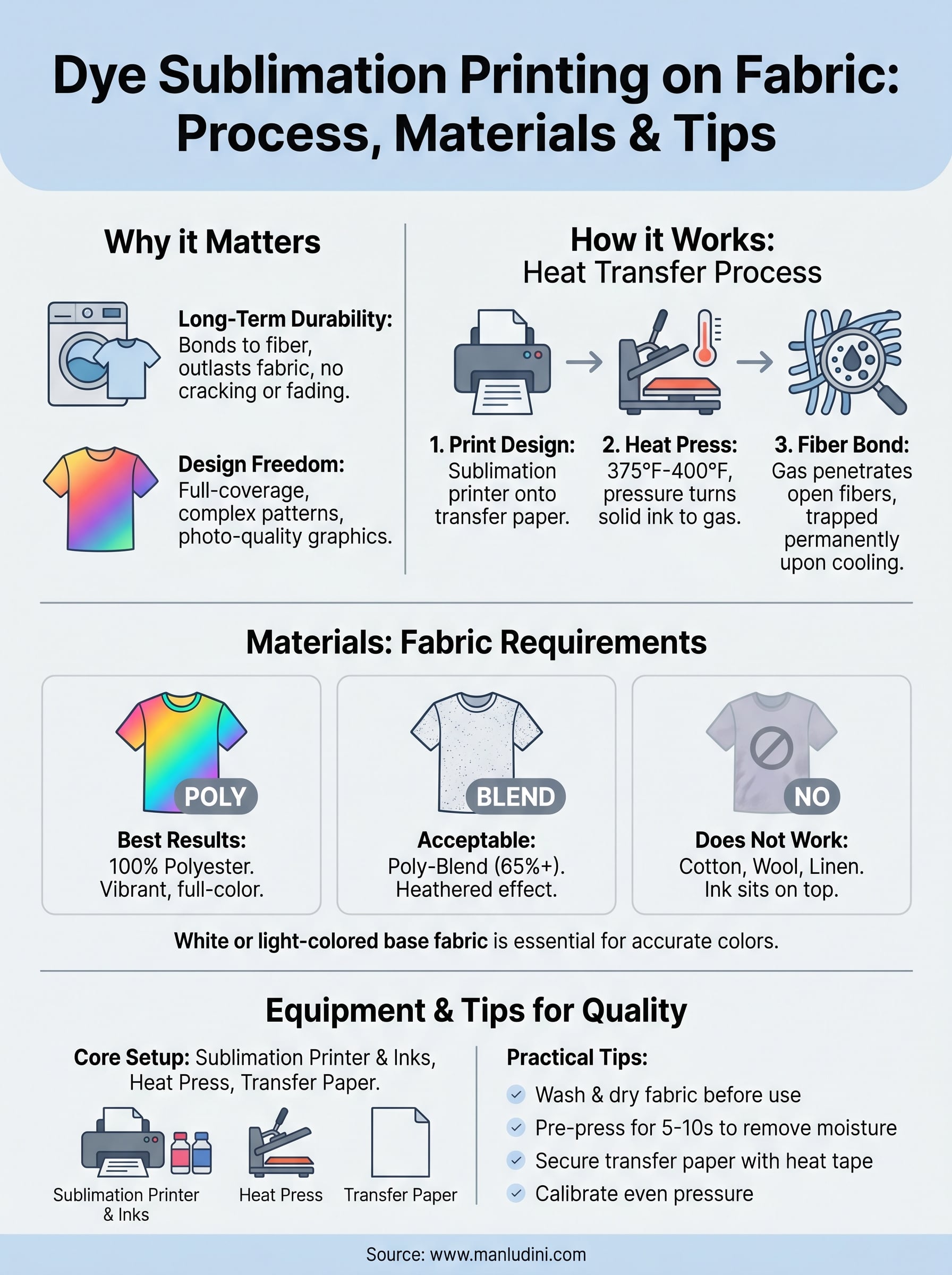
Dye sublimation printing on fabric uses heat and pressure to turn solid ink into gas, bonding it directly into synthetic fibers rather than sitting on top of them. The result is a permanent, full-color print that won't crack, peel, or fade the way traditional screen printing can over time.
For fashion brands producing custom apparel, especially those working with polyester and poly-blend fabrics, sublimation opens up serious design flexibility. All-over prints, complex patterns, and photographic-quality graphics become practical at production scale. But the process has specific material requirements and technical constraints that determine whether a print turns out vibrant or washed out. Understanding those details before you commit to production saves both time and money.
At Manludini, we support brands through every stage of garment manufacturing, from sample development to bulk production. That includes coordinating printing methods like sublimation with the right fabrics, trims, and finishing processes so the final product matches what you designed.
This article breaks down how dye sublimation printing actually works, what materials and equipment are involved, which fabrics perform best, and practical tips to get clean, lasting results on your garments.
Why dye sublimation matters for fabric printing
Most printing methods deposit ink on top of fabric, which means you're working with a layer sitting above the fibers. That layer cracks, fades, or peels after repeated washing. Dye sublimation printing on fabric works differently because the dye bonds at a molecular level with the fiber itself, becoming part of the material rather than a coating applied over it. For brands that care about long-term print durability, this is a genuine production advantage, not just a technical detail.
Sublimation-printed garments regularly outlast the fabric itself in terms of color retention, with prints holding up through hundreds of wash cycles without visible degradation.
Why print permanence matters for brand quality
When you're building a fashion brand, product consistency is part of your reputation. A shirt that looks great on day one but fades after five washes creates returns, customer complaints, and a brand impression you don't want. Sublimation eliminates that particular failure point because the ink cannot separate from the fiber once it has bonded during the heat transfer process. Color accuracy also stays consistent across a full production run, which matters when you're ordering bulk quantities and need every finished piece to match your approved sample.
Repeat customers notice when quality holds up over time. If you produce activewear, swimwear, or any garment that goes through heavy use and frequent washing, sublimation printing gives you a reliable foundation that screen printing and heat transfer methods struggle to match on synthetic fabrics. For brands competing on quality in those categories, the difference shows.
The design freedom sublimation opens up
Traditional screen printing works well for simple graphics with a limited color palette, but the cost and complexity increase quickly when your design uses gradients, photographic images, or patterns that cover the entire garment. Full-coverage, all-over prints are where sublimation genuinely outperforms other methods because there's no additional cost tied to color count or coverage area. You can print edge to edge with a complex gradient for roughly the same cost as a two-color block graphic.
For brands developing performance apparel, sportswear, or fashion-forward pieces with detailed artwork, this flexibility changes what's achievable at a manageable production cost. Patterns that would require multiple screens or separate print runs in other methods translate directly from your digital file to the finished fabric. That means fewer production steps, less room for error, and a cleaner path from artwork approval to finished garment.
How dye sublimation printing on fabric works
Dye sublimation printing on fabric follows a two-stage process: printing the design onto transfer paper, then using heat to convert that ink into gas and push it into the fabric. The ink never passes through a liquid stage during the transfer, which is what sets sublimation apart from standard inkjet or screen printing methods. Understanding the mechanics helps you make better decisions about fabric selection, equipment settings, and what to expect from the final output.
The heat transfer process step by step
The process starts when a sublimation printer lays your artwork onto specially coated transfer paper using sublimation inks. That printed paper then gets placed face-down onto your fabric and loaded into a heat press. At temperatures typically between 375°F and 400°F, the solid dye converts directly into gas under pressure, and that gas penetrates the open fiber structure of the fabric. When the heat source is removed, the fibers contract, trapping the dye permanently inside.
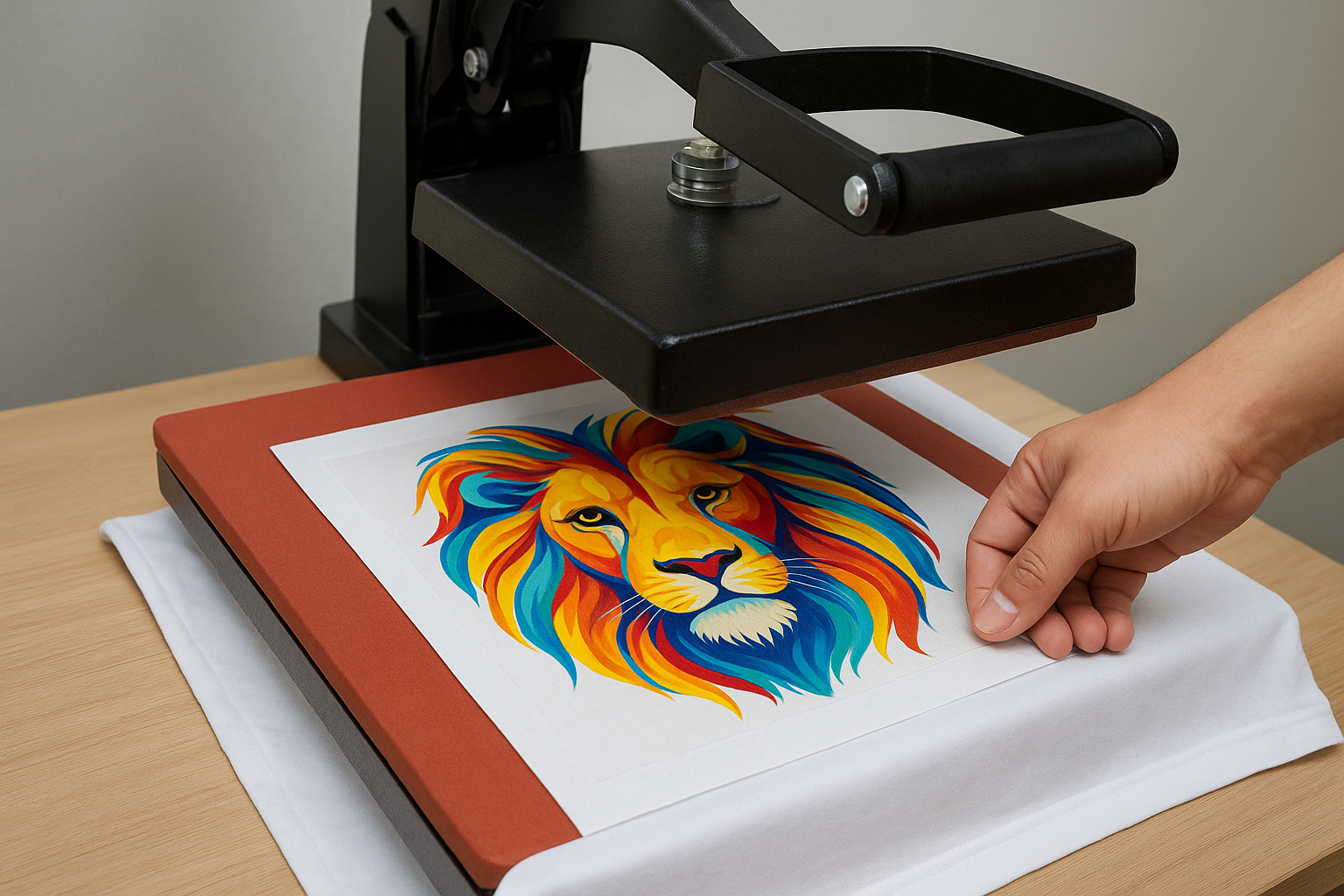
The entire transfer takes between 45 and 90 seconds depending on your fabric weight and heat press settings, which makes it one of the faster production methods for detailed, full-coverage prints.
The transfer paper comes out with little to no ink remaining on it, which tells you the dye successfully moved into the fabric rather than staying on the surface. Color vibrancy and sharpness depend on consistent temperature, even pressure across the platen, and the right dwell time for your specific fabric.
Why the fiber bond matters
Once the dye cools inside the fiber, it becomes part of the fabric structure itself. You cannot wash it out, scratch it off, or separate it from the material. This is why sublimation-printed garments hold their color and detail even after repeated washing cycles, giving your finished products a quality that holds up in real use.
Materials and fabrics that give the best results
Not every fabric works with dye sublimation printing on fabric, and choosing the wrong material is the most common reason prints come out faded or muddy. Polyester content and fabric construction both determine how well the dye bonds during the heat transfer process, so your fabric choice sets the ceiling for print quality before any other variable comes into play.
Polyester: the only fabric that works reliably
Polyester is the standard substrate for sublimation because its synthetic fiber structure opens under heat and accepts the dye gas directly. 100% polyester fabrics produce the most vibrant results because every fiber in the weave is available to bond with the ink. Lighter-weight fabrics typically show sharper detail than heavier constructions due to how the gas disperses during transfer, so fabric weight is worth factoring into your development decisions early.
White or light-colored base fabric is essential for accurate color output because sublimation inks are translucent, meaning the fabric color shows through and shifts the final result.
Darker polyester fabrics block the dye colors from appearing correctly, which is why most sublimation production runs use white or pale base materials. If your design includes specific brand colors, testing on your exact fabric swatch before approving bulk production protects you from color surprises at the finished goods stage.
Fabric blends and their limitations
Poly-blend fabrics with at least 65% polyester can work, but the non-polyester fibers in the blend will not accept the dye, creating a heathered effect where those fibers stay unprinted. For some brands producing vintage-look or athletic apparel, that texture is intentional. For sharp, photographic prints, it creates visible inconsistency.
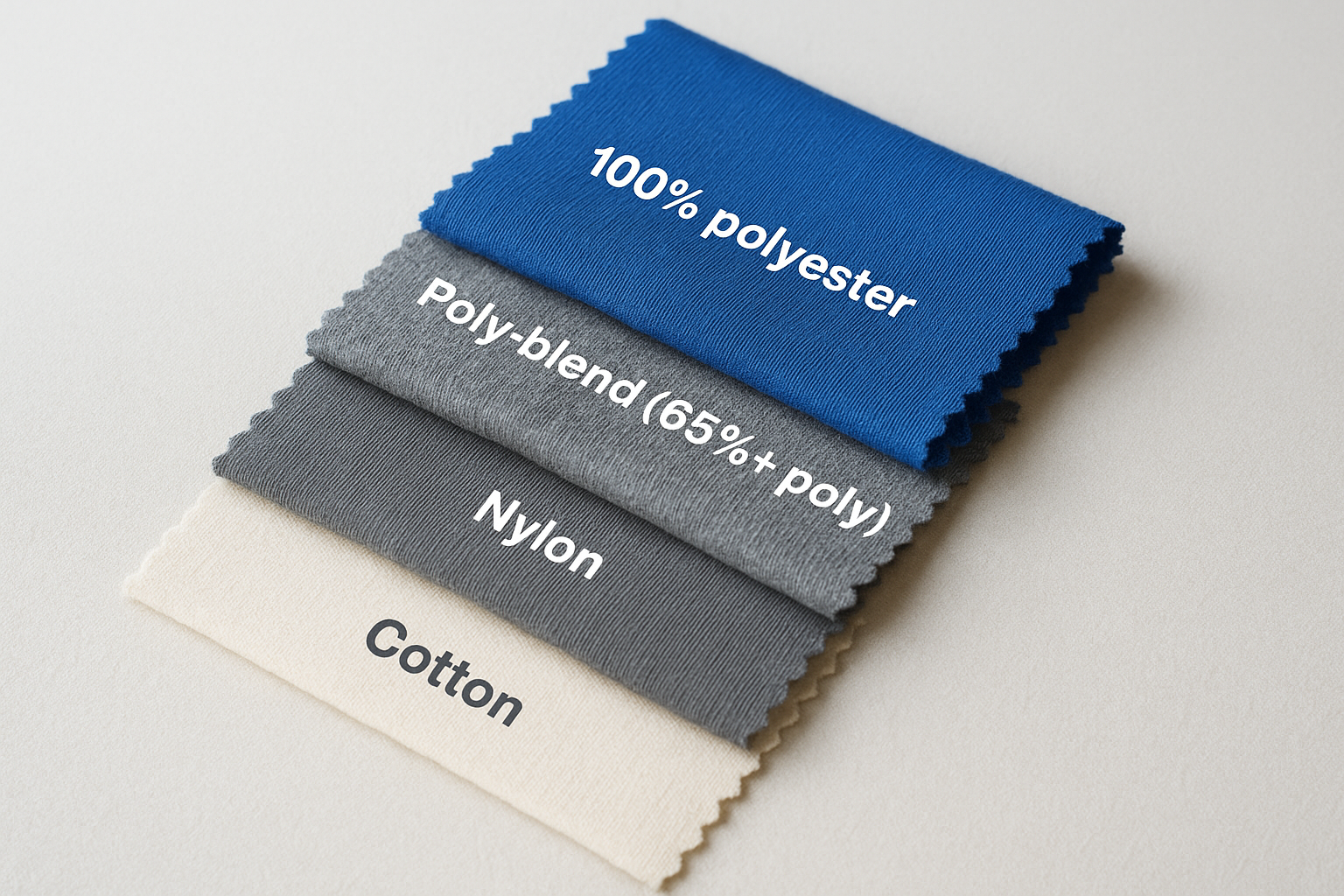
Here's a quick reference for how common fiber types perform with sublimation:
| Fiber type | Sublimation compatibility |
|---|---|
| 100% polyester | Best results, full vibrancy |
| Poly-blend (65%+ poly) | Acceptable, heathered appearance |
| Nylon | Works with specialty sublimation inks |
| Cotton | Does not work |
| Wool or linen | Does not work |
Equipment and setup you need to start
Getting into dye sublimation printing on fabric requires a specific set of tools, and using the wrong equipment at any stage produces poor results regardless of how good your artwork or fabric choice is. Your core setup consists of three components working together: a sublimation printer loaded with the correct inks, transfer paper designed specifically for sublimation, and a heat press capable of reaching consistent temperatures across the full print area. Skipping proper calibration on any one of these three creates problems that show up in every finished garment you produce.
Sublimation printer and inks
Sublimation printers use dye-based inks formulated specifically to convert to gas under heat, and standard inkjet inks will not produce this reaction. Most production operations run on wide-format printers that handle roll-fed transfer paper, which makes large or all-over garment prints practical at volume. Your printer settings, particularly color profiles and paper feed calibration, directly affect how accurately the printed transfer matches your original approved artwork file.
Matching your ICC color profile to your specific ink and paper combination is one of the most important steps for getting predictable, consistent color output before you press a single garment.
Heat press requirements
Your heat press needs to deliver even temperature and consistent pressure across the entire platen surface to avoid hot spots or uneven color in the finished print. Check that your press holds a stable temperature in the 375°F to 400°F range, because temperature swings of even 10 to 15 degrees shift color output noticeably across a full production run.
Different press formats serve different production scales:
- Clam-shell presses: practical for sample development and small production runs
- Swing-away presses: provide better platen access and more consistent pressure distribution
- Rotary or conveyor presses: built for high-volume bulk production where speed and consistency both matter
Tips to improve print quality and avoid common issues
Consistent results with dye sublimation printing on fabric come down to controlling the variables that shift between runs: temperature, pressure, paper alignment, and fabric preparation. Even experienced operators run into avoidable issues when these basics slip, so building a pre-press checklist into your workflow prevents most problems before they start.
Pre-press checks that catch problems early
Fabric preparation directly affects how cleanly the dye bonds during transfer. Wash and dry your fabric before printing to remove sizing agents, oils, or any residual treatment from the manufacturing process. These surface coatings interfere with dye penetration and leave blotchy or inconsistent color across the finished piece.
Pressing your blank fabric for 5 to 10 seconds before loading the transfer paper removes moisture and wrinkles that would otherwise cause ghosting or color shifting in the final print.
Always secure your transfer paper to the fabric with heat-resistant tape to prevent any movement during the press cycle. Even a small shift while the platen closes can create a double-image effect that ruins the garment.
Handling color and pressure settings
Pressure calibration matters as much as temperature. Uneven pressure across the platen creates areas where the dye does not fully transfer, which shows up as patches of lighter color in the finished print. Check your press with a pressure sheet before starting a production run.
Run test prints on the exact fabric you plan to use in bulk before approving your final artwork file. Colors shift depending on fabric weight, fiber density, and dye lot variations between fabric orders. A test press on your actual production material gives you accurate color reference before you commit to full quantity, saving both material cost and production time.
What to do next
Dye sublimation printing on fabric gives you a durable, design-flexible production method, but only when you match it with the right fabric, equipment, and process controls. The core decisions that determine your results happen before the press closes: fabric fiber content, base color, printer calibration, and pressure settings all lock in your quality ceiling before a single garment gets finished.
If you're developing a custom apparel line and want sublimation to work reliably at bulk production scale, the details covered in this article give you a practical starting point. Testing on your actual production fabric before approving final artwork remains the single step that prevents most expensive mistakes.
Working with a manufacturing partner who understands how printing methods connect to the broader production process makes that process faster and less costly. Reach out to Manludini to discuss sample development, fabric sourcing, and bulk production for your next collection.
0 comments