
Choosing the best knit fabric for t-shirts affects everything from how a garment drapes on the body to how it holds up after dozens of washes. Yet many brands rush past this decision, picking a fabric based on price alone, and end up with tees that shrink, pill, or feel cheap on skin. The fabric is the product, and getting it wrong costs you samples, time, and customer trust.
At Manludini, we help fashion brands source and produce custom t-shirts from scratch, from fabric selection and sampling through bulk production. We've worked with enough knit fabrics to know which ones perform and which ones disappoint. That hands-on experience shaped this guide.
Below, we break down five knit fabrics that consistently work well for t-shirt production: jersey, cotton modal, tri-blend, slub cotton, and spandex blends. For each, you'll get a clear look at weight, stretch, softness, and which type of tee it suits best.
1. Cotton jersey knit with spandex
Cotton jersey with spandex is the most widely used knit fabric in t-shirt production for good reason. It combines the natural breathability of cotton with just enough elasticity to move with the body. Most blends run between 90-95% cotton and 5-10% spandex, also called elastane or Lycra.
Hand feel and drape
This fabric feels soft and slightly smooth against the skin, not stiff or papery. It drapes well without clinging, which gives it a clean, tailored look when cut properly. Fabric weight for t-shirts typically ranges from 160 to 220 GSM, with lighter weights suiting warm-weather styles and heavier weights adding structure to the garment.
Stretch and recovery
The spandex content gives this fabric four-way stretch, meaning it extends both horizontally and vertically. Recovery is strong: the fabric bounces back to its original shape after washing and wearing. Without spandex, cotton jersey alone tends to stretch out over time, especially across the shoulders and chest.
If your t-shirt needs to hold its shape after repeated wear, cotton jersey with 5-10% spandex is the most reliable choice available to you.
Best t-shirt styles
This fabric works well for fitted and athletic-cut tees, where the stretch helps the garment move with the body. It also performs well for everyday basics and activewear crossover styles. It is less ideal for boxy or oversized silhouettes, where you want minimal stretch and a more relaxed structure.
What to ask your supplier for
Request a GSM specification sheet and ask for the exact fiber ratio, such as 95/5 cotton/spandex. Also ask for a pre-production swatch so you can test stretch, color, and hand feel before committing to a bulk fabric order.
Common problems and fixes
The most common issue is fabric shrinkage after the first wash. Ask your supplier about pre-shrinking or sanforizing the fabric before cutting. Color bleeding is another risk with darker shades, so request a wash test on your sample before signing off on bulk production.
2. Cotton modal jersey knit
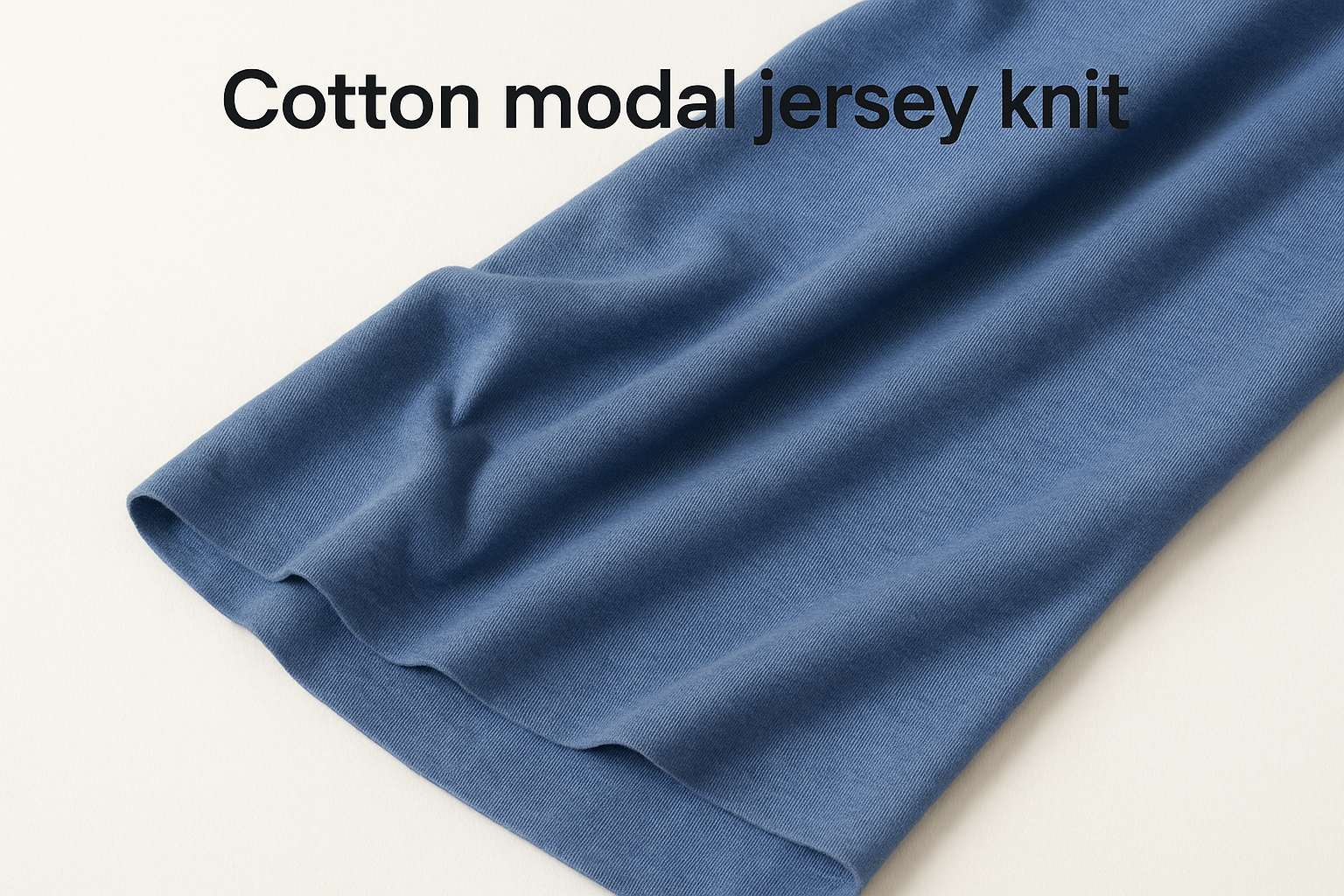
Cotton modal jersey blends cotton with modal, a semi-synthetic fiber derived from beech tree pulp. The typical ratio runs 50/50 or 60/40 cotton to modal, producing a fabric that feels noticeably softer than standard cotton jersey at a similar weight.
Hand feel and drape
Modal adds a silky, smooth texture that sits closer to luxury fabrics than everyday cotton. It drapes fluidly and resists pilling better than most knit options, making it one of the best knit fabrics for t-shirts where premium hand feel is a brand priority.
Stretch and recovery
This knit has moderate two-way stretch with decent recovery, though it performs less aggressively than spandex blends. The fabric holds its shape through washing but can lose structure slightly without added spandex.
Best t-shirt styles
Cotton modal suits relaxed-fit and lounge-style tees where softness and drape matter more than athletic stretch. It also works well for premium basics and layering pieces.
What to ask your supplier for
Request the exact fiber ratio and GSM upfront, targeting 160-200 GSM for most tee applications. Ask for a pre-production wash swatch to confirm shrinkage before committing to bulk.
Common problems and fixes
Modal absorbs dye well but can fade faster than cotton alone. Ask your supplier to run colorfast testing on your sample before approving bulk production.
If softness is the top priority for your brand, cotton modal jersey consistently outperforms standard cotton jersey on skin feel.
3. 100% cotton jersey knit
100% cotton jersey is the most foundational option in the category of best knit fabric for t-shirts. It uses no synthetic fibers, making it a natural choice for brands prioritizing breathability and everyday comfort over stretch performance.
Hand feel and drape
This fabric feels substantial and slightly textured compared to blended knits. It drapes with a relaxed, natural structure rather than clinging, which suits casual and laid-back silhouettes well without any added complexity in the construction process.
Stretch and recovery
100% cotton jersey offers two-way stretch only, extending across the width with limited lengthwise give. Over time, it tends to stretch out at stress points like the collar and shoulders, since there is no spandex to assist with recovery.
If your brand prioritizes organic cotton certification or natural fiber labeling, 100% cotton jersey is your most straightforward production path.
Best t-shirt styles
This fabric suits boxy, oversized, and vintage-cut tees where minimal stretch is intentional. It also performs well for graphic tees, since the flat surface holds screen prints and DTG prints cleanly without distortion.
What to ask your supplier for
Request ring-spun or combed cotton for a smoother finish and specify GSM between 180 and 220 for standard tee weights before approving bulk fabric.
Common problems and fixes
Shrinkage is the primary risk with 100% cotton. Ask your supplier to pre-shrink or sanforize the fabric before cutting to reduce dimensional changes after the first wash.
4. Tri-blend jersey knit
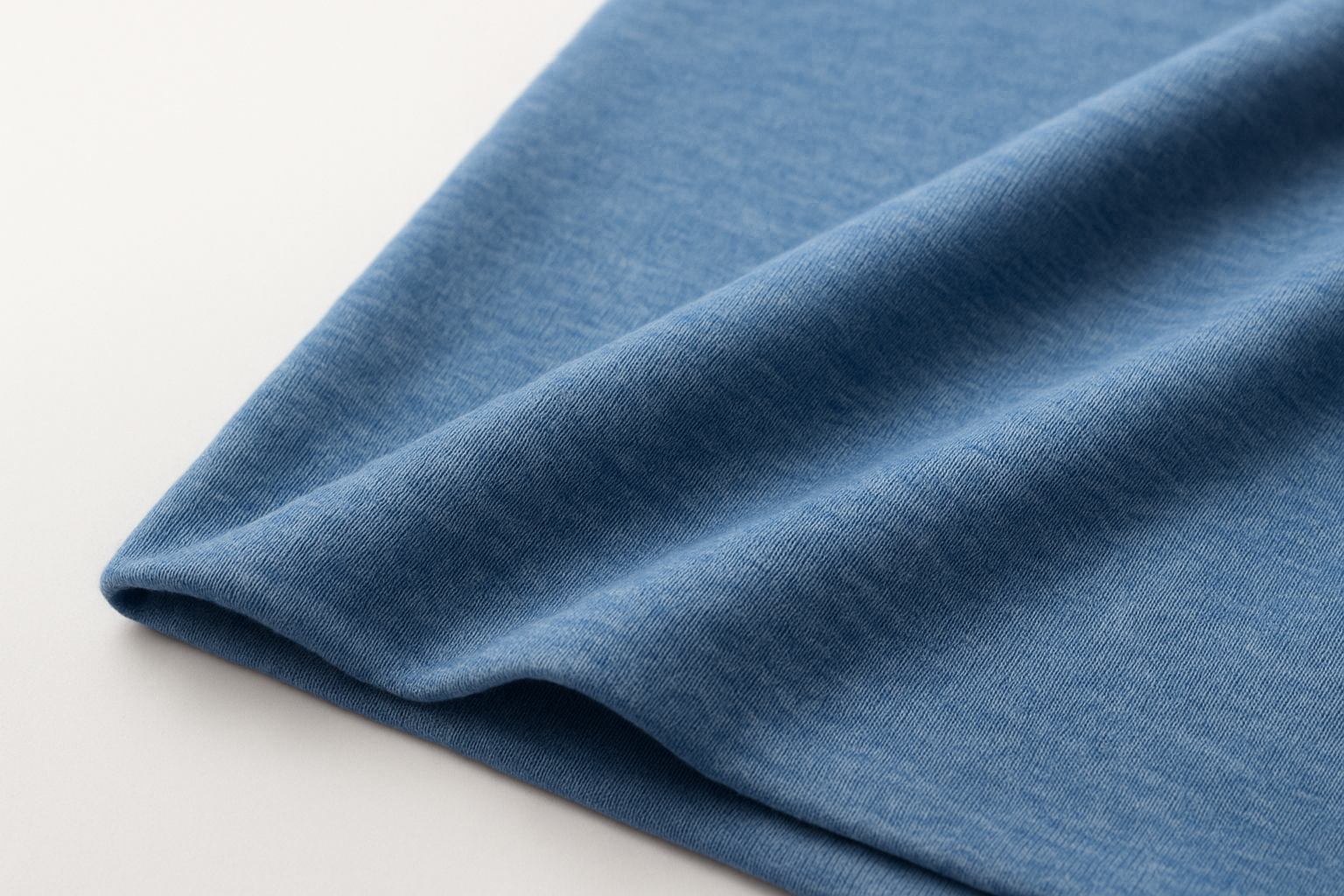
Tri-blend jersey mixes cotton, polyester, and rayon in one knit, commonly in a 50/25/25 ratio. The result is a fabric with unique texture and drape that stands apart from standard cotton jersey or any single-fiber knit option.
Hand feel and drape
This fabric has a soft, lightweight feel with a heathered texture that other knits rarely match. It drapes loosely and gives finished tees a worn-in, vintage character straight from production.
Stretch and recovery
Tri-blend offers moderate two-way stretch with average recovery. The polyester content helps it hold shape better than rayon alone, but it will not deliver the recovery performance of spandex blends after repeated wear.
Best t-shirt styles
This is one of the best knit fabrics for t-shirts targeting a casual, vintage aesthetic. It suits graphic tees and lifestyle styles printed with water-based or discharge inks particularly well.
If your brand identity leans toward a lived-in, relaxed look, tri-blend jersey delivers that quality more naturally than most other knit options.
What to ask your supplier for
Request the exact fiber ratio and specify GSM between 140 and 180 for the lightweight feel this fabric is known for.
Common problems and fixes
Shrinkage and color inconsistency are the most common risks. Rayon is heat-sensitive, so ask your supplier to pre-wash fabric samples before bulk cutting begins.
5. Polyester performance knit
Polyester performance knit is a synthetic knit fabric engineered specifically for moisture management and durability. It differs from cotton-based options in one key way: polyester wicks sweat away from the skin instead of absorbing it, keeping the wearer dry during activity.
Hand feel and drape
This fabric feels smooth and lightweight, often with a slight sheen that reads as clean and modern. It drapes with structure rather than flowing loosely, giving finished tees a sharp, athletic silhouette without excess fabric movement.
Stretch and recovery
Polyester performance knit delivers strong four-way stretch with excellent recovery, even after repeated washing and heavy use. It holds its shape better than most natural fiber knits under physical stress.
If your brand produces activewear or training tees, polyester performance knit gives you the best stretch-to-recovery ratio of any option on this list of the best knit fabrics for t-shirts.
Best t-shirt styles
This fabric suits moisture-wicking and training tees where performance takes priority over natural fiber softness. It also works well for sports and athletic-use styles where durability matters as much as comfort.
What to ask your supplier for
Request GSM between 140 and 180 for performance tees and confirm the fabric includes a moisture-wicking treatment or technical finish before approving samples.
Common problems and fixes
Odor retention is the most common complaint with polyester knits. Ask your supplier about antimicrobial finishing treatments applied during fabric production to reduce this issue before bulk orders begin.
Quick recap and what to do next
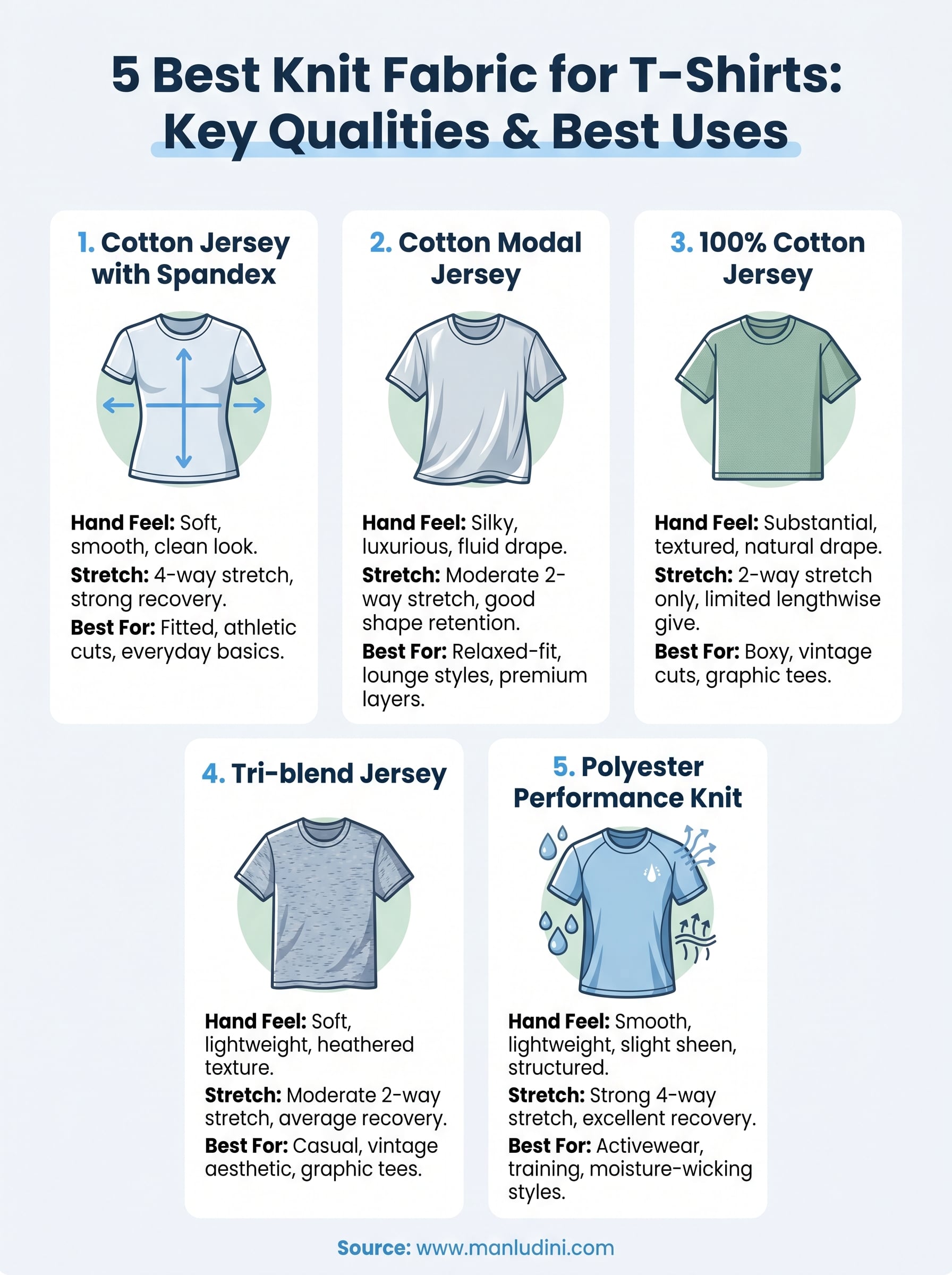
Each fabric on this list solves a different problem. Cotton jersey with spandex gives you the best stretch and recovery for fitted styles. Cotton modal delivers premium softness for lounge and lifestyle tees. 100% cotton jersey suits boxy and graphic-heavy cuts. Tri-blend brings a vintage, worn-in feel that works well with casual branding. Polyester performance knit handles activewear and moisture management better than any natural fiber option.
Picking the best knit fabric for t-shirts comes down to your silhouette, your customer, and your production volume. Getting fabric selection wrong early adds cost and delays across your entire development process, so it pays to get clear on your specs before sampling begins.
If you need a manufacturing partner who can help you source the right knit fabric and move from samples into bulk production, contact the team at Manludini to start your development.
0 comments