
Choosing the right fabric types for clothing can make or break a garment. The wrong pick leads to complaints, returns, and wasted production runs. The right one gives your pieces the hand feel, drape, and durability your customers expect. Yet many brands, especially those early in development, rush past fabric selection without fully understanding what each material brings to the table.
At Manludini, we work with fashion brands through every stage of garment manufacturing, from sampling to bulk production. Fabric sourcing and selection is one of the first conversations we have with clients, because everything that follows depends on it, pattern behavior, construction methods, finishing options, and final cost. We've seen firsthand how a single fabric swap can change an entire production outcome.
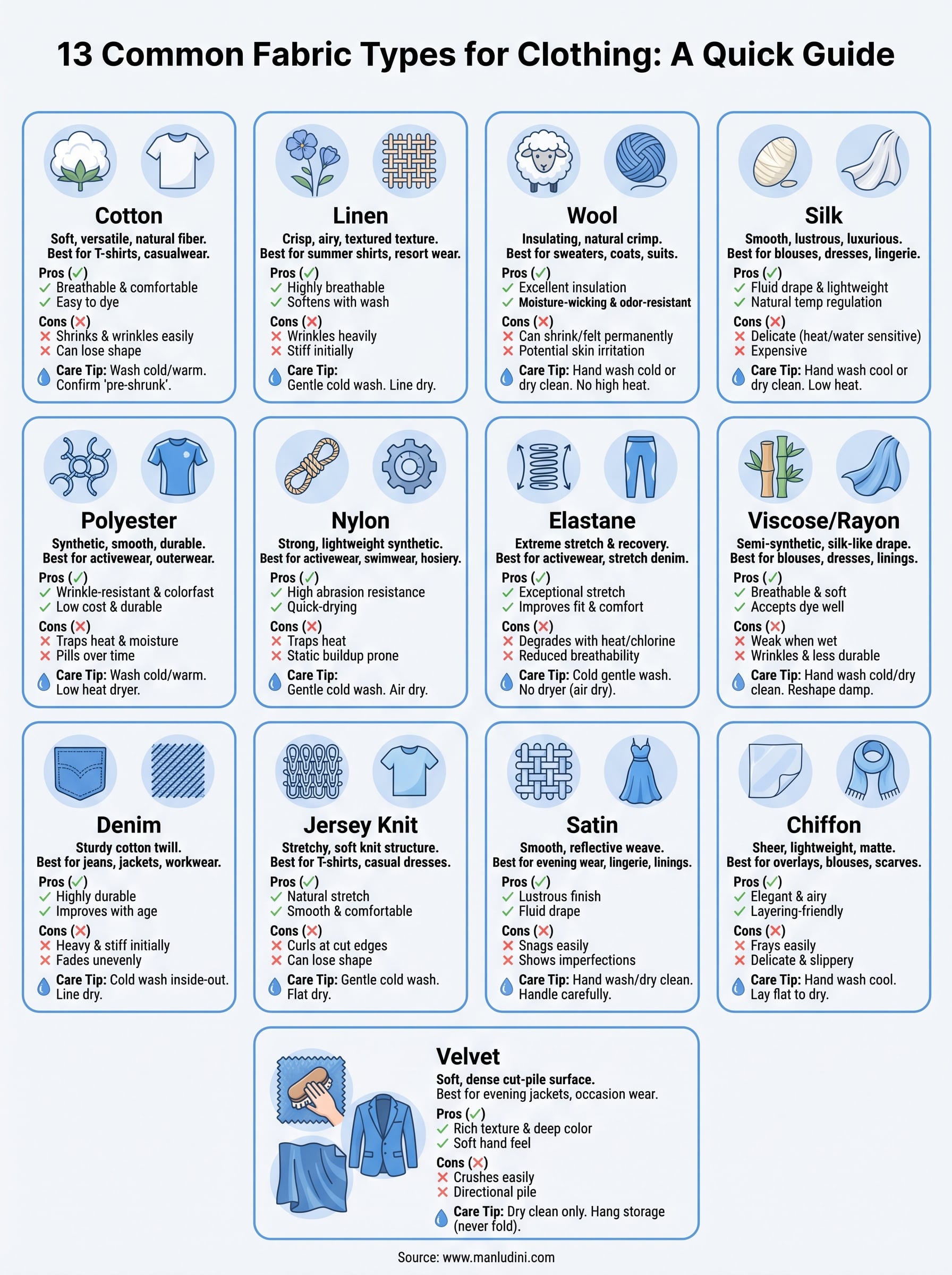
This guide breaks down 13 of the most common clothing fabrics, covering what they're made of, where they work best, their strengths and weaknesses, and how to care for them. Whether you're developing your first collection or expanding into new categories, this is the practical foundation you need before making any sourcing decisions.
1. Cotton
Cotton is one of the most widely recognized fabric types for clothing across every market segment, from budget basics to premium essentials. Its broad appeal comes from a combination of comfort, versatility, and accessibility that few other materials can match.
What cotton is and how it feels
Cotton comes from the natural fibers of the cotton plant, which are spun into yarn and then woven or knit into fabric. It has a soft, slightly textured hand feel that most people find comfortable directly against the skin. The fabric is breathable and lightweight, making it a natural fit for warm climates and everyday wear.
Best uses in clothing
Cotton performs well across a wide range of garment categories. T-shirts, casual shirts, underwear, and hoodies are the most common uses, but structured cotton fabrics also work in pants, chinos, and outerwear when the weave and weight are right for the construction.
Pros
- Breathable and moisture-absorbent, keeping wearers cool
- Easy to dye with good color retention
- Works across a wide range of construction methods and finishes
- Naturally biodegradable
Cons
- Shrinks if not pre-shrunk or washed incorrectly
- Wrinkles easily compared to most synthetics
- Can lose shape over time with heavy use
Care tips and common mistakes
Wash cotton in cold or warm water to limit shrinkage and color fading. The most common mistake brands make is failing to specify pre-shrunk cotton in their tech packs, which causes fit problems after the consumer's first wash.
Always confirm pre-shrunk treatment with your supplier before you lock in your size specifications.
Common variants and blends
Combed cotton is processed to remove short fibers, resulting in a smoother and stronger fabric. Pima and Supima cotton are long-staple premium options with a silkier feel. Cotton-polyester blends reduce shrinkage and wrinkling while keeping most of the breathability intact.
Sourcing notes for brands
Cotton is widely available through mills in China, India, and Bangladesh. GSM (grams per square meter) is the most important spec to confirm early, as it controls weight, drape, and structure. For standard casualwear, 160 to 200 GSM is a typical range, but your category and target customer should guide the final selection.
2. Linen
Linen is one of the oldest fabric types for clothing in recorded history, and it remains a strong choice for warm-weather collections today. Its natural texture and lightweight structure make it a reliable option for brands focused on seasonal or resort-focused lines.
What linen is and how it feels
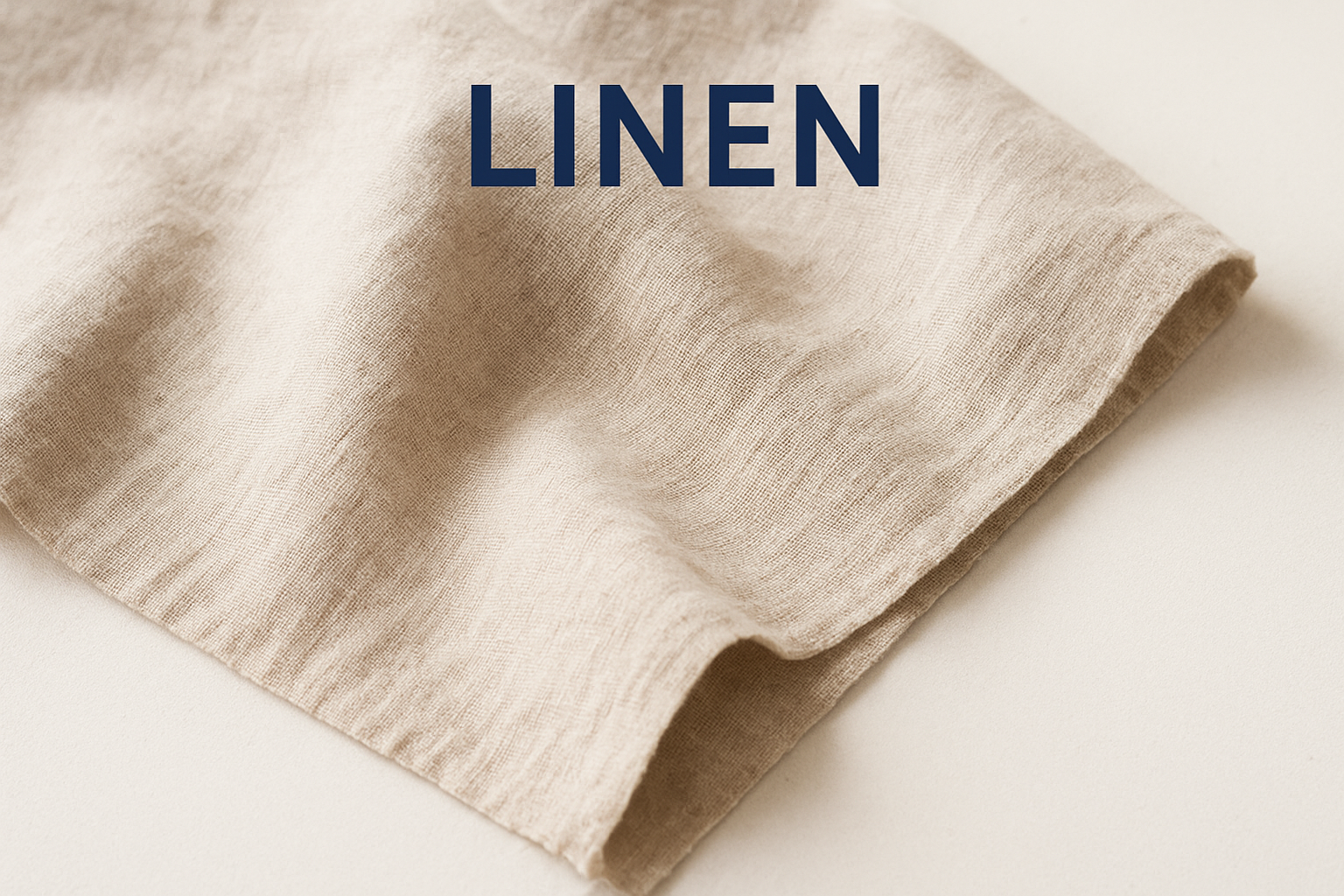
Made from fibers extracted from the flax plant, linen has a crisp, slightly coarse texture that softens noticeably with each wash. It feels cool and airy against the skin, which is why it performs so well in warmer climates and high-humidity environments.
Best uses in clothing
Linen fits naturally into summer shirts, trousers, blazers, and dresses. It also works well for resort wear and lightweight outerwear where breathability is the main priority.
Pros
- Highly breathable and moisture-wicking
- Gets softer with repeated washing
- Naturally antibacterial properties
Cons
- Wrinkles heavily and is difficult to keep pressed
- Less elastic than cotton, limiting stretch-based designs
- Can feel stiff on first wear before it breaks in
Care tips and common mistakes
Wash linen in cold water on a gentle cycle to preserve the fiber structure. The most common mistake is over-drying, which makes the fabric stiff and prone to cracking at seams. Always line dry linen garments or pull them from the dryer while still slightly damp.
Communicate shrinkage expectations clearly on your care labels, since linen can shrink 3 to 5 percent after the first wash.
Common variants and blends
Linen-cotton blends reduce wrinkling while keeping the breathable feel intact. Linen-viscose blends add drape and softness to more structured silhouettes.
Sourcing notes for brands
European linen from Belgium and France is considered premium, but Chinese mills offer competitive quality at lower price points for mid-range collections. Always request fabric swatches and GSM specs before committing to bulk.
3. Wool
Wool is one of the most technically capable fabric types for clothing, particularly for cold-weather and tailored categories. Its natural properties make it a versatile material that works across everything from luxury knitwear to structured outerwear.
What wool is and how it feels
Wool comes from the fleece of sheep and other animals, including goats and alpacas. The fiber has a naturally crimped structure that traps air and creates insulation. Depending on the grade and processing, wool can feel soft and fine or coarse and textured, so the specific type you select matters a great deal for the end garment.
Best uses in clothing
Wool fits best in sweaters, coats, suits, and tailored trousers. Finer grades like merino work well in base layers and knitwear where direct skin contact is a priority and softness is non-negotiable.
Pros
- Excellent natural insulation without added bulk
- Naturally moisture-wicking and odor-resistant
- Holds its shape well compared to cotton and linen
Cons
- Can shrink or felt permanently if washed incorrectly
- Coarser grades may cause skin irritation for sensitive wearers
- Higher price point than most synthetic alternatives
Care tips and common mistakes
Always wash wool in cold water on a delicate cycle, or hand wash when possible. The most common mistake is using hot water or a high-heat dryer, which causes irreversible felting and size loss.
Specify "hand wash cold" or "dry clean only" clearly on care labels for any garment with significant wool content.
Common variants and blends
Merino wool is the most popular fine-grade option for skin-contact applications. Wool-polyester blends improve durability and reduce cost for mid-market collections without losing much warmth.
Sourcing notes for brands
Quality wool fabrics source well from mills in Italy, Australia, and China. Always request fiber diameter specs measured in microns, since this directly controls softness and suitability for your target category.
4. Silk
Silk stands apart from most other fabric types for clothing because of how it combines natural luxury with practical performance. It has been a premium textile for centuries, and its unique fiber structure explains why.
What silk is and how it feels
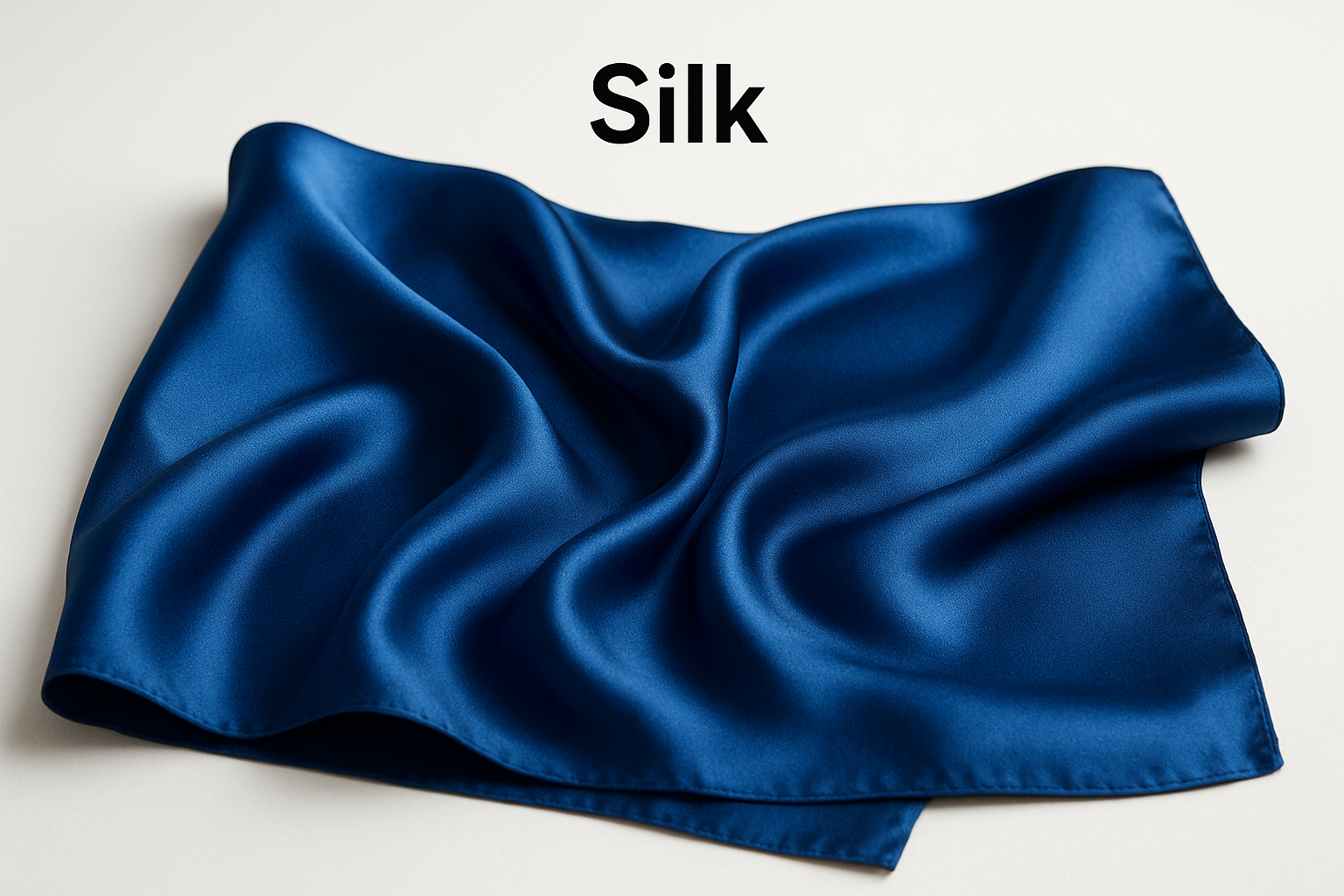
Silk comes from the cocoons of silkworms, specifically the Bombyx mori species. The fiber is a continuous filament that gets reeled, twisted, and woven into fabric. The result is a material with a smooth, slightly cool hand feel and a natural sheen that synthetic alternatives still struggle to replicate convincingly.
Best uses in clothing
Silk works best in blouses, dresses, lingerie, and linings where drape and a refined surface appearance are the main priorities. It also performs well in scarves and occasion wear where the fabric's natural luster adds visual value.
Pros
- Lightweight with excellent drape and fluid movement
- Natural temperature regulation, keeping wearers cool in heat and warmer in mild cold
- Strong fiber with high tensile strength relative to its weight
Cons
- Highly sensitive to heat, sweat, and water stains, which limits everyday wearability
- Expensive compared to most natural and synthetic alternatives
- Requires careful handling throughout production and consumer use
Care tips and common mistakes
Hand wash silk in cool water with a mild detergent, or dry clean for structured garments. The most common mistake is using direct heat from an iron, which permanently damages the fiber surface.
Always test any finishing process, including steaming and pressing, on a fabric sample before applying it to full production.
Common variants and blends
Charmeuse is a popular woven silk with a satin finish. Silk-polyester blends reduce cost and improve durability while keeping some of the natural drape.
Sourcing notes for brands
China remains the dominant supplier of raw silk and finished silk fabrics. When sourcing, always request momme weight specifications (typically 12 to 22 momme for apparel) alongside shrinkage and colorfastness data before committing to bulk orders.
5. Polyester
Polyester is one of the most widely used fabric types for clothing across every price point and category. Its cost efficiency and durability make it a go-to option for brands that need reliable performance at scale.
What polyester is and how it feels
Made from petroleum-derived polymers, most commonly polyethylene terephthalate (PET), polyester is a fully synthetic fiber. It has a smooth, slightly slick hand feel that varies depending on the weave density and any surface finish applied.
Best uses in clothing
Polyester performs well in activewear, outerwear, and fast-fashion basics. Its moisture resistance and shape retention make it especially strong for sportswear and performance-focused categories where durability matters more than breathability.
Pros
Polyester offers several practical advantages that explain its widespread adoption across mid-market and budget categories.
- Wrinkle-resistant and holds shape well
- Durable and colorfast across repeated washes
- Lower cost than most natural fibers
Cons
Despite its durability, polyester has real limitations that affect wearability and your sustainability positioning with consumers.
- Traps heat and moisture, reducing breathability
- Pills over time with repeated friction
- Less sustainable than natural fiber alternatives
Care tips and common mistakes
Wash polyester in cold or warm water to prevent pilling and static buildup. The most common mistake you can make is using high heat in the dryer, which causes fiber distortion in lower-quality constructions.
Always check with your supplier on heat tolerance before specifying any finishing treatment that involves high-temperature pressing.
Common variants and blends
Recycled polyester (rPET) is increasingly popular for brands with sustainability goals. Polyester-cotton blends reduce wrinkling and improve durability for casual and workwear styles.
Sourcing notes for brands
Your best sourcing options for polyester come from mills in China, South Korea, and Taiwan. Always confirm GSM and yarn count early in development, since these two specs directly control most of the fabric's performance characteristics.
6. Nylon
Nylon is one of the strongest synthetic fabric types for clothing available at scale, valued primarily for its exceptional abrasion resistance and high tensile strength relative to its weight.
What nylon is and how it feels
Nylon is a fully synthetic polymer fiber that was first introduced commercially in the 1930s. It has a smooth, slightly silky surface feel that is noticeably lighter than most synthetics at the same GSM.
Best uses in clothing
Nylon performs best in activewear, swimwear, hosiery, and outerwear shells. Its resistance to moisture and physical wear makes it a strong fit for technical and performance-focused categories.
Pros
Nylon holds several practical advantages that make it a go-to for performance and high-wear applications.
- Highly durable and abrasion-resistant under repeated stress
- Lightweight with solid moisture-wicking behavior
- Retains shape well across heavy use cycles
Cons
Despite its durability, nylon has trade-offs that affect comfort and sustainability positioning for your brand.
- Traps heat more than natural fibers in warm conditions
- Prone to static buildup without proper fabric treatment
- Less breathable than cotton or linen constructions
Care tips and common mistakes
Wash nylon in cold water on a gentle cycle to prevent heat-related fiber distortion. The most common mistake is running nylon through a high-heat dryer, which warps the structure and accelerates surface pilling.
Always specify low-heat or air-dry care instructions on your labels when nylon content exceeds 50 percent.
Common variants and blends
Ripstop nylon uses a reinforced grid weave that resists tearing in outerwear. Nylon-elastane blends are a standard choice for swimwear and activewear where stretch and recovery are both required.
Sourcing notes for brands
Strong nylon fabric sourcing comes from mills in China, Taiwan, and South Korea. Always confirm denier rating and surface finish early since these two specs control most of the fabric's performance and hand feel characteristics.
7. Elastane
Elastane is rarely used as a standalone fabric, but it plays a critical role across many fabric types for clothing that require stretch and recovery. Even a small percentage added to a base fabric changes how a garment fits, moves, and holds its shape over time.
What elastane is and how it feels
Elastane, also sold under the brand name Spandex or Lycra, is a fully synthetic fiber made from a segmented polyurethane polymer. It feels smooth and form-fitting against the skin, and it can stretch to several times its original length before snapping back without distortion.
Best uses in clothing
Elastane works best in activewear, swimwear, leggings, fitted underwear, and stretch denim. Its recovery properties make it essential for any garment where the wearer needs a close fit without restriction of movement.
Pros
- Exceptional stretch and recovery without permanent deformation
- Improves fit and comfort across a wide range of body movements
- Extends the life of blended fabrics by reducing stress on seams
Cons
- Degrades with repeated exposure to high heat, chlorine, and oils
- Cannot be used alone as a structural fabric
- Reduces breathability when used in higher concentrations
Care tips and common mistakes
Wash elastane blends in cold water on a gentle cycle and skip the dryer entirely when possible. The most common mistake brands make is specifying high-heat finishing processes that break down the elastane fiber before the garment even reaches the consumer.
Always confirm heat tolerance for any elastane-blend fabric with your supplier before approving any pressing or bonding steps in production.
Common variants and blends
Cotton-elastane and polyester-elastane blends are the most common pairings in production. Nylon-elastane is the standard choice for swimwear and compression garments.
Sourcing notes for brands
Most elastane-blend fabrics source well from mills in China, South Korea, and Taiwan. Always confirm elastane percentage and recovery rate specs early, since these two figures directly control how the finished garment performs on the body.
8. Viscose and Rayon
Viscose and rayon refer to the same semi-synthetic fabric, though the terminology differs by region. Both come from chemically processing natural cellulose, typically wood pulp or bamboo, into a fiber that sits between natural and fully synthetic materials.
What viscose and rayon are and how they feel
Viscose has a soft, silky hand feel with a natural drape that makes it a widely used alternative to silk in mid-market collections. The fabric feels lightweight against the skin and flows easily, which is why it performs well in warmer-weather styles and fluid silhouettes.
Best uses in clothing
Viscose works well in blouses, dresses, linings, and lightweight tops where drape and a smooth surface are the priorities. It also appears frequently across printed fabric types for clothing because it accepts dye cleanly and holds color consistently.
Pros
- Breathable and comfortable in warm conditions
- Accepts dye evenly, producing vivid and consistent color results
- Lightweight with a natural drape similar to silk
Cons
- Weak when wet, making it prone to stretching and tearing during washing
- Wrinkles easily and often requires ironing after each wash
- Less durable than cotton or polyester over repeated wear cycles
Care tips and common mistakes
Hand wash viscose in cool water and reshape it while damp to prevent distortion. The most common mistake brands make is specifying machine washing on a regular cycle, which breaks down the fiber quickly and generates consumer complaints.
Always specify "hand wash cold" or "dry clean" on care labels for any garment with significant viscose content.
Common variants and blends
Modal and lyocell (Tencel) are higher-grade versions of viscose with improved durability and a softer feel. Viscose-polyester blends reduce wrinkling and add structure to otherwise fluid silhouettes.
Sourcing notes for brands
Viscose fabrics source well from mills in China, India, and Indonesia. Always confirm shrinkage rates and colorfastness specs before committing to bulk, since these two factors generate the most common quality issues in viscose production.
9. Denim
Denim is one of the most recognizable fabric types for clothing worldwide, built on a cotton twill weave that creates its characteristic diagonal rib pattern and lasting durability. Its combination of structure, wearability, and broad market appeal keeps it relevant across casual, workwear, and fashion categories alike.
What denim is and how it feels
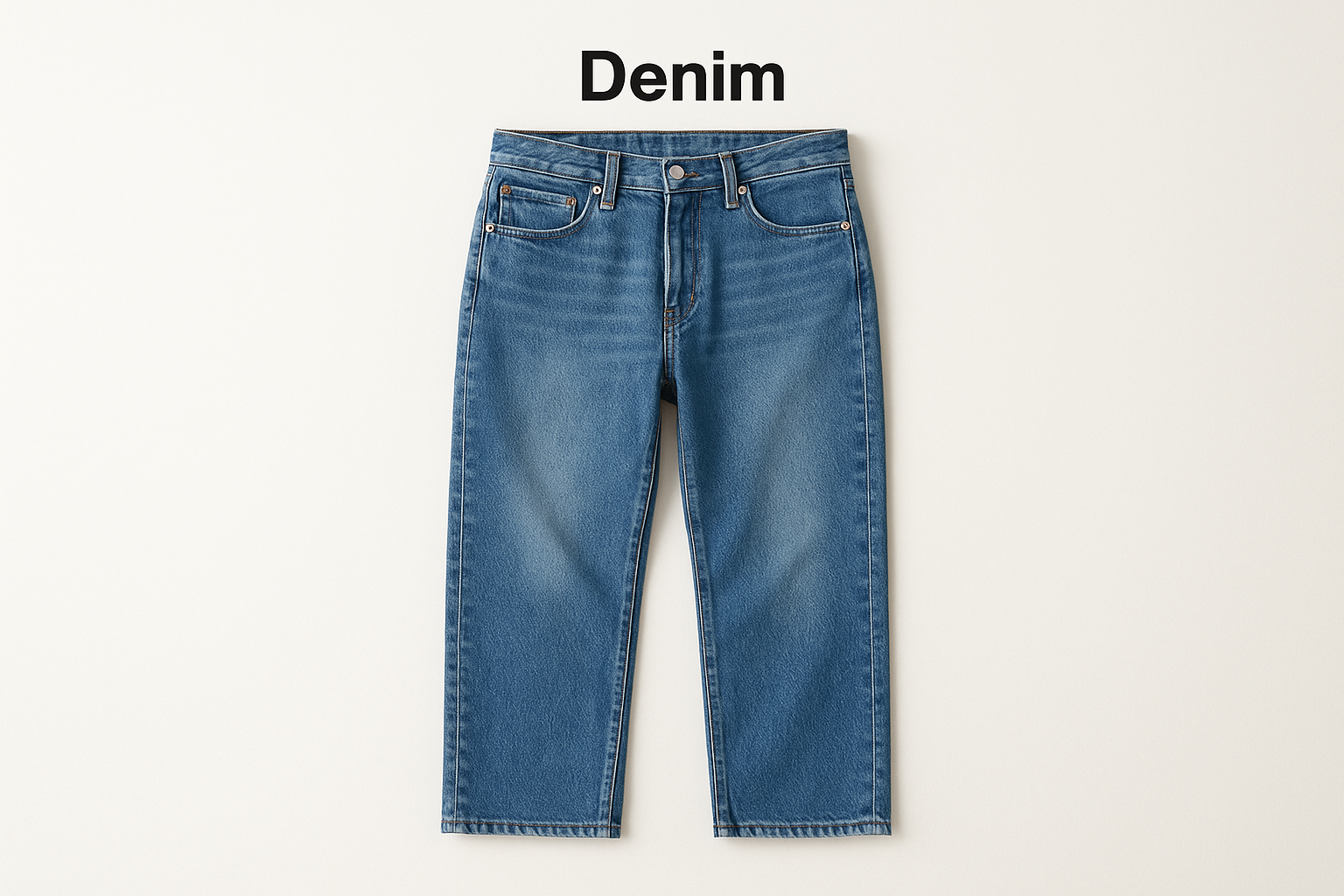
Denim is a sturdy cotton twill fabric traditionally woven with an indigo-dyed warp yarn and a white or undyed weft. It has a firm, structured hand feel when new that gradually softens and conforms to the wearer's body with repeated use and washing.
Best uses in clothing
Denim performs best in jeans, jackets, shorts, and overalls. It also fits well in structured skirts and casual workwear where durability and a distinctive surface texture are both priorities.
Pros
- Highly durable and resistant to everyday wear and abrasion
- Improves in character with age, fading, and use
- Works across a wide range of construction techniques and finishes
Cons
- Heavy and stiff in higher weight constructions, limiting comfort in warm weather
- Fades unevenly without proper care instructions from the start
- Longer drying time compared to lighter fabrics
Care tips and common mistakes
Wash denim in cold water and turn garments inside out to slow color loss. The most common mistake brands make is omitting this on care labels, which causes premature fading and consumer complaints.
Specify cold wash and inside-out care instructions on all denim garments to protect the indigo dye and extend product life.
Common variants and blends
Stretch denim incorporates elastane for improved fit and freedom of movement. Raw denim skips pre-washing entirely, allowing wearers to develop a unique fade pattern through personal wear.
Sourcing notes for brands
Strong denim sourcing comes from mills in China, Pakistan, and Turkey. Always confirm fabric weight in ounces per square yard before sampling, since this one spec controls most of the fabric's structure, drape, and seasonal suitability.
10. Jersey Knit
Jersey knit is one of the most widely used fabric types for clothing in everyday casualwear, built on an interlocking loop structure that gives it natural stretch and a soft hand feel without requiring added elastane content.
What jersey knit is and how it feels
Jersey knit is a single-knit fabric made by interlocking loops of yarn in a continuous, one-directional structure. It has a smooth face on the front, a slightly textured reverse side, and a soft, flexible feel that most wearers find comfortable against the skin from the first wear.
Best uses in clothing
Jersey knit fits best in t-shirts, tank tops, casual dresses, and lightweight hoodies. Its natural stretch makes it well-suited to body-skimming silhouettes where both comfort and a clean surface appearance matter.
Pros
- Stretches in multiple directions without added elastane
- Smooth surface accepts printing and dyeing cleanly
- Comfortable and easy to wear across most body types
Cons
- Curls at cut edges during production if not handled correctly
- Can lose shape at the neckline over time with repeated stretching
- Lighter weights pill faster than woven alternatives
Care tips and common mistakes
Wash jersey knit in cold water on a gentle cycle and reshape garments flat while damp. The most common mistake is machine drying at high heat, which causes irreversible shrinkage and distortion in the knit structure.
Always specify gentle cycle and low-heat or air-dry care instructions on your labels for any jersey knit garment.
Common variants and blends
Cotton jersey is the standard choice for casualwear. Poly-cotton jersey blends improve durability and reduce shrinkage while keeping most of the fabric's softness intact.
Sourcing notes for brands
Jersey knit sources well from mills in China, Bangladesh, and India. Always confirm GSM and knit gauge before sampling, since these two specs control the weight, drape, and overall quality feel of the finished garment.
11. Satin
Satin stands out among fabric types for clothing when surface appearance drives the design. Its distinctive sheen and smooth drape come from a specific weave structure rather than a fiber type, which means satin can be produced using silk, polyester, or nylon as the base yarn.
What satin is and how it feels
Satin gets its signature look from a weave pattern where warp threads float over multiple weft threads, creating a reflective surface on one side and a matte finish on the reverse. The hand feel is smooth and almost frictionless, with enough natural weight to drape fluidly across the body.
Best uses in clothing
Your best applications for satin are evening gowns, bridal wear, lingerie, and linings where a polished surface and fluid movement are the main priorities. It also fits well in blouses and occasion wear where visual impact matters most.
Pros
- Highly reflective surface that reads as premium at any price point
- Fluid drape that flatters both structured and relaxed silhouettes
- Works across woven and lined construction methods
Cons
- Snags easily from friction or rough handling during production
- Shows every imperfection, including stitching errors and surface marks
- Slippery structure makes cutting and sewing more demanding for your production team
Care tips and common mistakes
Hand wash or dry clean satin to protect the weave surface. The most common mistake is machine washing on a regular cycle, which breaks down the floating threads and permanently dulls the sheen.
Always specify "dry clean only" or "hand wash cold" on care labels for any garment with significant satin content.
Common variants and blends
Silk satin is the premium option with the most natural luster. Polyester satin delivers a similar surface appearance at a much lower cost and with better durability across wash cycles.
Sourcing notes for brands
Satin fabrics source reliably from mills in China and South Korea. Always confirm thread count and float length specifications before sampling, since these two factors directly control the surface sheen quality in your finished garments.
12. Chiffon
Chiffon sits in a distinct category among fabric types for clothing where lightness and transparency are the primary design tools. Like satin, chiffon is defined by its weave structure rather than a single fiber source, which means you can produce it from silk, polyester, or nylon depending on your budget and performance goals.
What chiffon is and how it feels
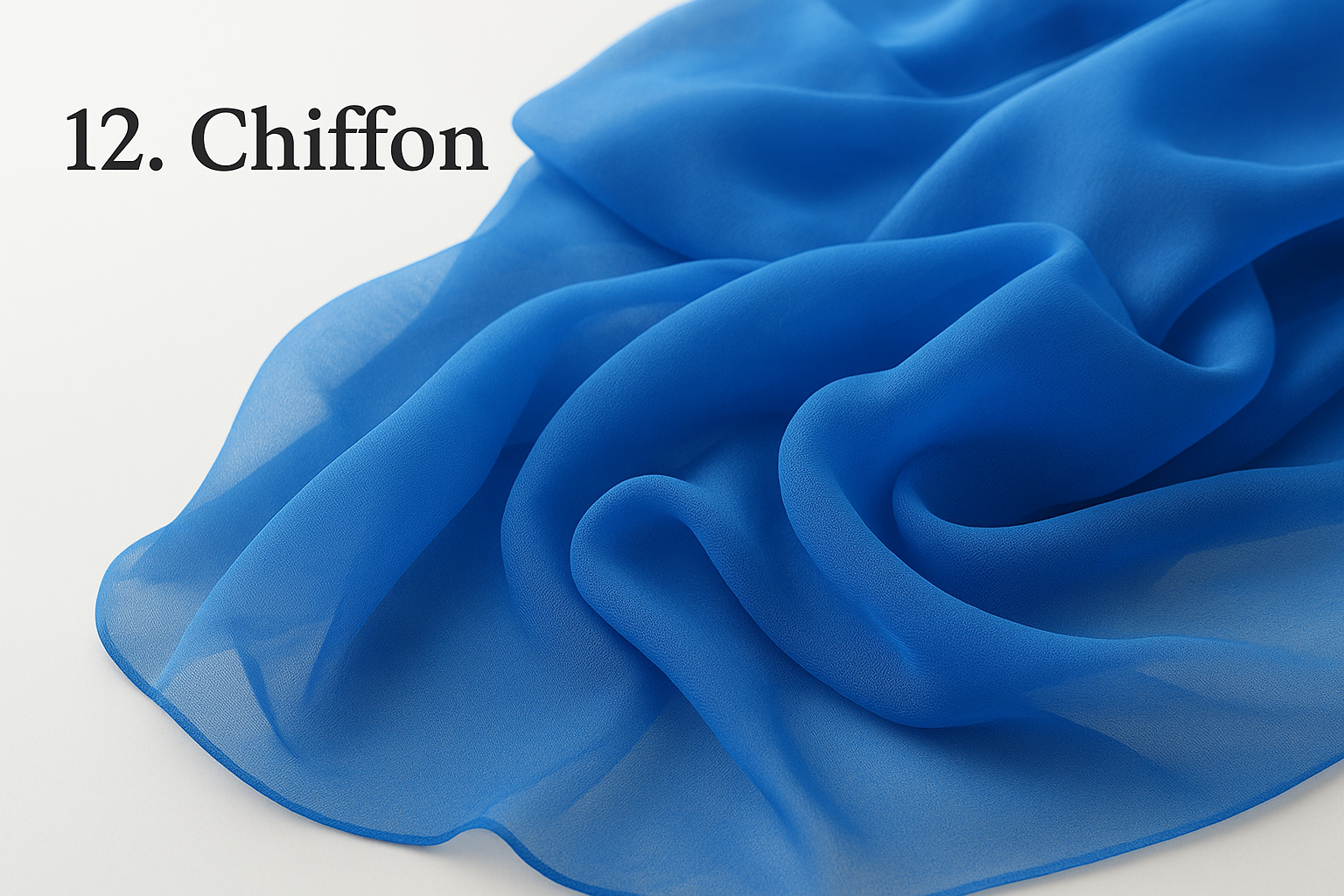
Chiffon is a plain-weave fabric made with highly twisted yarns that create a slightly rough texture despite its sheer, delicate appearance. It feels lightweight and almost weightless against the skin, with a soft drape that moves freely with the body.
Best uses in clothing
Chiffon fits best in evening wear, blouses, scarves, and layered dress constructions where transparency and movement add visual dimension. It works particularly well as overlay fabric in bridal and occasion wear where softness and drape are the design priority.
Pros
- Lightweight and fluid with an elegant visual quality
- Layering-friendly without adding bulk or stiffness to the silhouette
- Takes dye well when made from natural silk fiber
Cons
- Frays easily along cut edges, requiring careful finishing during production
- Slippery and difficult to cut and sew accurately at scale
- Sheer construction limits standalone use in most garment categories
Care tips and common mistakes
Hand wash chiffon in cool water with a mild detergent and lay it flat to dry. The most common mistake is machine washing on a regular cycle, which causes thread distortion and permanent surface damage.
Specify "hand wash cold" or "dry clean only" on care labels for any garment with significant chiffon content.
Common variants and blends
Silk chiffon is the premium option with the most refined drape. Polyester chiffon delivers comparable sheerness at lower cost with improved durability across wash cycles.
Sourcing notes for brands
Chiffon sources reliably from mills in China and India. Always confirm yarn twist count and GSM before sampling, since these two specs directly control the fabric's sheerness, drape, and behavior during construction.
13. Velvet
Velvet occupies a unique space among fabric types for clothing because its defining characteristic comes from its pile construction rather than a specific fiber source. You can produce velvet from silk, polyester, nylon, or cotton, and the resulting fabric will share the same dense, raised surface with minor differences in sheen and feel.
What velvet is and how it feels
Velvet is a cut-pile woven fabric where evenly trimmed loops of fiber create its signature soft, dense surface. It feels plush and smooth in one direction but slightly resistant when brushed the opposite way, which is why consistent pile direction matters during both cutting and sewing.
Best uses in clothing
Your strongest applications for velvet are evening jackets, blazers, dresses, and occasion wear where tactile richness and visual depth are the design priority. It also works well in accessories and structured tops for brands targeting premium or holiday-focused collections.
Pros
- Rich surface texture that reads as high-value across all fiber types
- Holds color deeply, producing saturated, consistent results
- Works well with both structured and draped silhouettes
Cons
- Crushes under pressure, leaving permanent marks from improper storage or handling
- Requires careful pile-direction matching during production, which slows cutting and sewing
- Heavier constructions limit seasonal flexibility for your collection
Care tips and common mistakes
Dry clean velvet to protect the pile structure. The most common mistake is folding velvet garments for storage, which causes permanent crushing along the fold lines.
Always store velvet garments hanging and in a breathable cover to maintain the pile surface between production and consumer delivery.
Common variants and blends
Crushed velvet adds an intentional texture through a twisting or pressing process. Stretch velvet blends elastane into the base for activewear and form-fitting styles.
Sourcing notes for brands
Velvet sources reliably from mills in China, South Korea, and Turkey. Always confirm pile height and base fiber content before sampling, since these two specs directly control the fabric's drape, weight, and final surface quality.
Next Steps
Understanding the 13 fabric types for clothing covered in this guide gives you a real foundation for making smarter decisions in development. Every fabric choice you make affects how your garment performs, how it fits, how it ages, and how your customer feels wearing it. Getting this right early saves you from costly corrections during sampling and bulk production.
Your next move is to match each fabric on this list against your specific garment category, target customer, and price point before you commit to anything. Confirming specs like GSM, fiber content, and shrinkage rates with your supplier before sampling is the single most effective way to avoid production problems.
If you need a manufacturing partner who can guide you through fabric sourcing, sample development, and bulk production with clear communication and reliable follow-through, reach out to the team at Manludini to talk through your next collection.
0 comments