
Cotton accounts for a huge share of global garment production, but not all cotton fabrics behave the same way. Choosing between the different types of cotton fabric for clothing comes down to weight, weave, finish, and how the fabric performs in the final product. Pick the wrong one, and you end up with a garment that doesn't drape, breathe, or hold up the way your customer expects. Get it right, and your entire collection feels intentional.
At Manludini, we work with fashion brands through every stage of production, from fabric sourcing and sample development to bulk manufacturing. One of the most common early decisions we help brands make is selecting the right cotton fabric for each style. It's a choice that affects fit, cost, construction method, and even how your private label packaging should position the product.
This guide breaks down six cotton fabrics commonly used in clothing, what makes each one different, and when to reach for one over another. Whether you're developing your first collection or refining an existing line, this will help you make sharper sourcing decisions before production begins.
1. Cotton jersey knit
Cotton jersey is one of the most widely used knit fabrics in apparel. If you've worn a basic t-shirt or a fitted casual dress, you've already experienced it. Understanding how it works helps you make smarter choices when evaluating types of cotton fabric for clothing at the sourcing stage.
What it is
Jersey knit is a single-knit fabric produced on circular knitting machines. The construction gives it a smooth front face and a slightly textured back. Unlike woven fabrics, jersey has built-in stretch in multiple directions without needing added elastane.
It's available in a wide range of weights, measured in grams per square meter (GSM). Standard t-shirt jersey sits between 140 and 180 GSM, while heavier options push toward 220 GSM for more structured casual styles.
Key properties
The main advantage of cotton jersey is its stretch and recovery. It moves with the body and snaps back without distorting. It's also breathable and soft against skin, making it a consistent choice for warm-weather categories and direct-to-skin styles. One trade-off is that cut edges curl, which means your sewing method matters more than it would with a woven fabric.
Jersey weight directly affects how a garment drapes and holds shape, so confirm GSM with your mill before approving bulk fabric.
Best uses in clothing
Jersey is the right choice for styles that need comfort and body movement rather than rigid structure. It performs well in:
- T-shirts and tank tops
- Fitted casual and loungewear dresses
- Basic underwear and intimates
- Lightweight activewear tops
Sourcing and production notes
When sourcing cotton jersey, always request fabric swatches with full specs including GSM, fiber content, and shrinkage data before confirming any order. Run a wash test before cutting bulk fabric. Mills can be inconsistent between sample rolls and production rolls, so verifying specs upfront saves you from rework and delays once production is underway.
2. Cotton poplin
Cotton poplin is one of the most widely used woven fabrics in structured apparel. When you're working through the different types of cotton fabric for clothing that require a clean, tailored appearance, poplin is usually one of the first options worth evaluating.
What it is
Poplin uses a plain weave construction where the weft yarn is slightly thicker than the warp, producing a subtle horizontal rib on the surface. The result is a smooth, tightly woven fabric that holds its shape well and takes pressing cleanly.
Unlike knit fabrics, poplin has minimal stretch and behaves more predictably during cutting and sewing, which makes it a reliable choice for precise construction.
Key properties
The tight weave gives poplin durability and mild wrinkle resistance compared to looser cotton fabrics. It's lightweight but firm, which keeps seams flat and garment lines clean. It breathes less than jersey, so it fits structured or transitional-wear styles better than high-heat categories.
Confirm the thread count and finish with your mill before bulk approval, since both directly affect how the fabric presses and how seams behave in the final garment.
Best uses in clothing
Poplin fits styles where structure and a clean surface matter most:
- Dress shirts and blouses
- Tailored trousers and skirts
- Uniforms and corporate workwear
Sourcing and production notes
When sourcing poplin, request pre-shrunk or sanforized options to avoid post-wash sizing problems in bulk production. Always verify the weave density and fabric weight match your approved sample before confirming your production order.
3. Oxford cloth
Oxford cloth is a basket-weave cotton fabric that sits between the crispness of poplin and the casual texture of a heavier canvas. When you're working through different types of cotton fabric for clothing, Oxford cloth offers a recognizable texture and structured softness that suits specific categories well.
What it is
Oxford cloth uses a modified basket weave, typically a 2x1 construction where two weft yarns interlace with one warp yarn. This produces a soft, lightly textured surface with more body than poplin but less stiffness than canvas. The construction also makes it more forgiving to sew, especially for brands developing their first structured casual styles.
Key properties
The basket weave gives Oxford cloth durability and a relaxed but structured drape that holds up through repeated washing. It carries more weight than standard poplin, which means seams sit flatter and garment edges behave more predictably during construction.
Oxford cloth in 100% cotton wrinkles more than poplin, so factor in easy-care finish options when planning bulk production for dress or workwear categories.
Best uses in clothing
Oxford cloth works best where you need a structured but casual aesthetic:
- Casual button-down shirts and overshirts
- Shirt-jackets and lightweight outerwear
- Workwear and campus-style tops
Sourcing and production notes
When sourcing Oxford cloth, confirm the yarn count and weave density with your mill, since lighter Oxford fabrics behave closer to poplin while heavier weights act more like canvas. Always request a pre-production swatch to verify handle and finish before approving bulk.
4. Cotton twill and denim
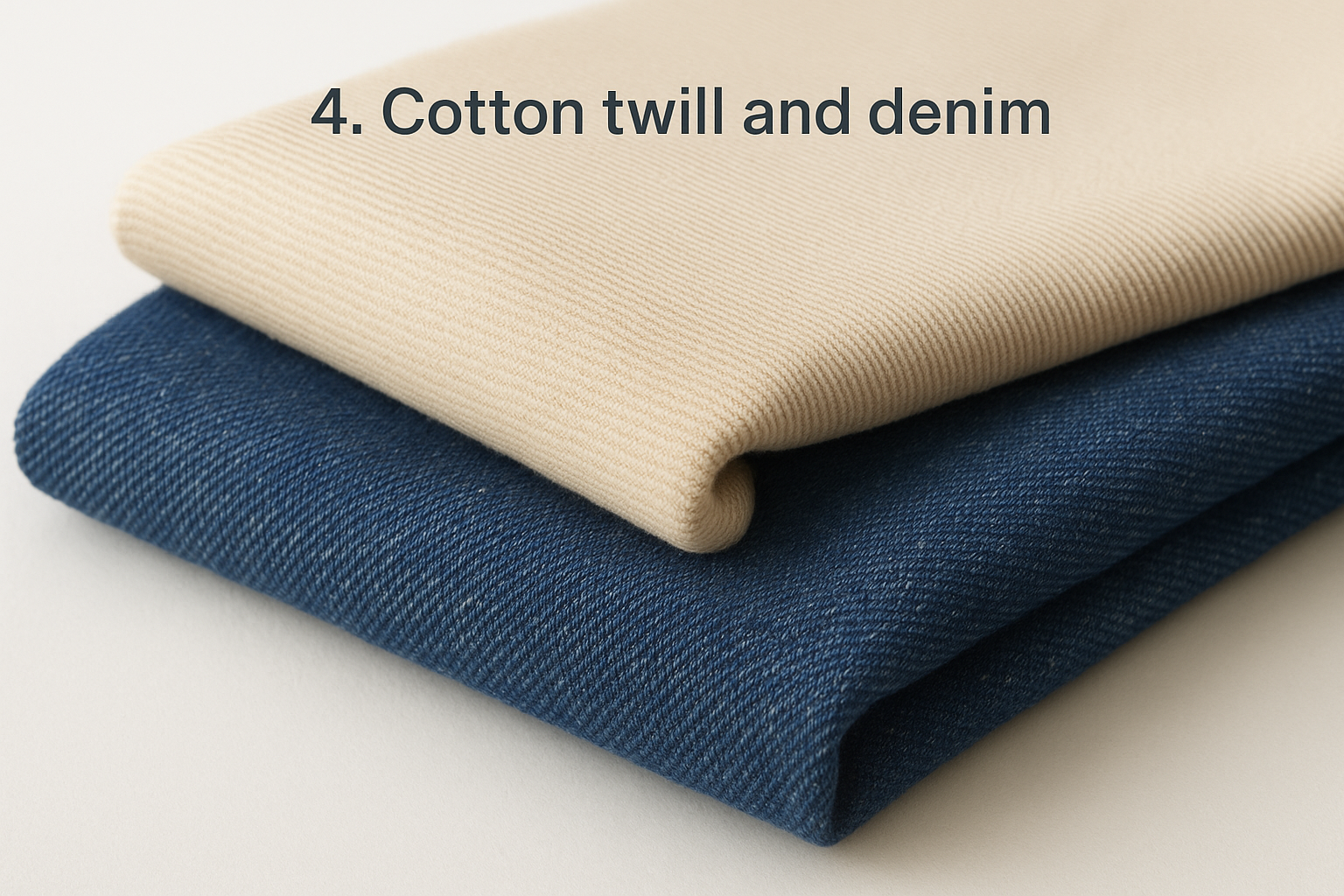
Cotton twill and denim are two of the most recognizable types of cotton fabric for clothing in everyday wear. Both share the same foundational weave structure, which explains why they often appear together when brands are selecting fabrics for more durable, structured categories.
What it is
Twill is a diagonal weave construction where the weft thread passes over and under multiple warp threads in a stepped pattern. Denim is a specific type of twill where the warp yarn is dyed, typically indigo, and the weft remains undyed, producing that familiar two-tone look.
Key properties
The twill weave makes both fabrics exceptionally durable and resistant to tearing, which is why they hold up in hard-wearing categories. Denim carries significant weight, typically 10 to 14 oz per yard, and softens with wear without losing its structural integrity.
Lighter twill weights around 6 to 8 oz work well for chinos and casual trousers, while heavier weights suit outerwear and workwear.
Best uses in clothing
Twill and denim fit styles built for durability and structure:
- Jeans and denim jackets
- Chinos and casual trousers
- Workwear jackets and overshirts
Sourcing and production notes
When sourcing twill or denim, confirm the weight in ounces per yard and request a shrinkage report before cutting bulk. Both fabrics can shrink significantly after the first wash.
Always ask your mill for pre-shrunk or sanforized options to protect sizing consistency across the full production run.
5. Cotton lawn and voile
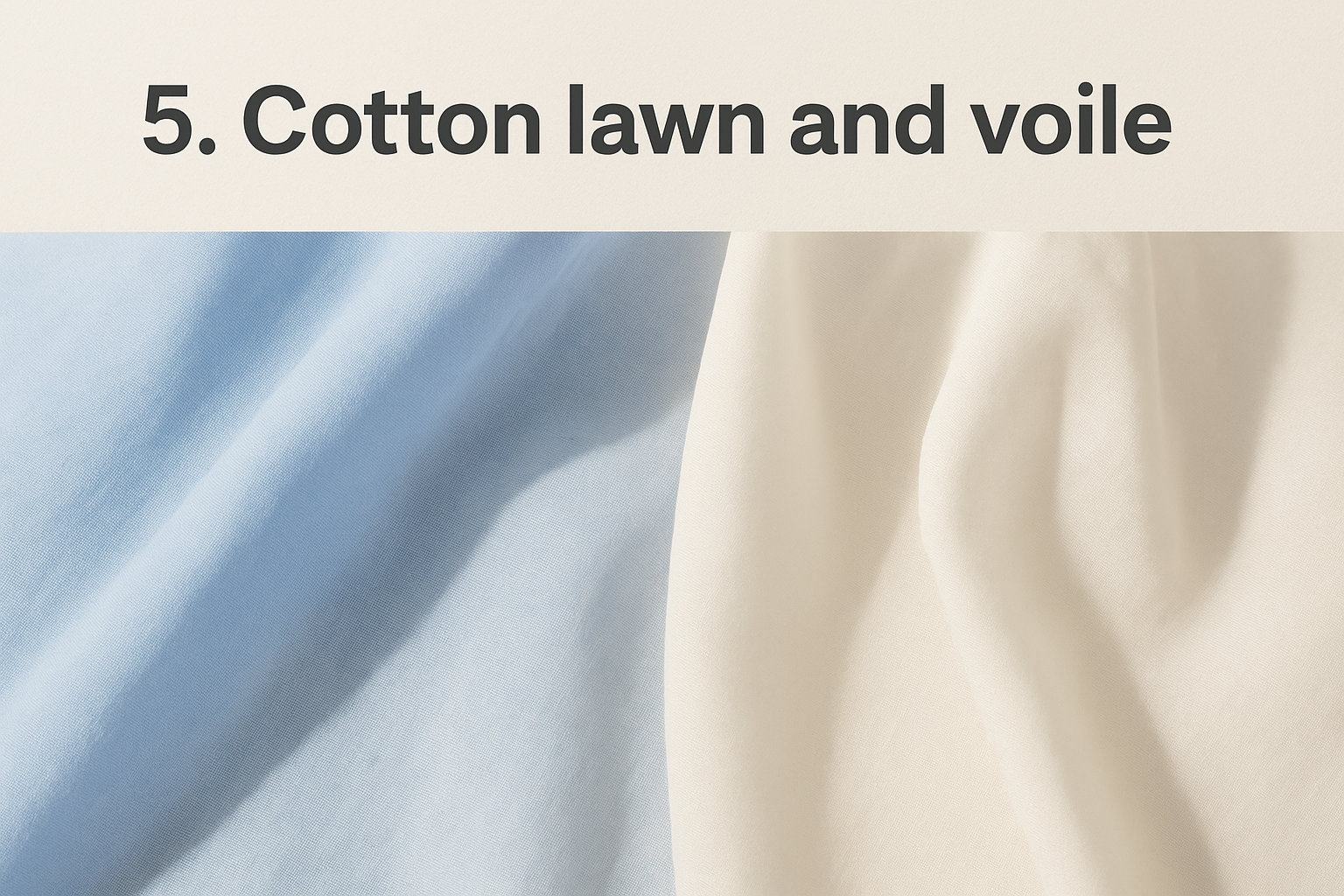
Cotton lawn and voile sit at the lighter end of the cotton fabric spectrum. When you're evaluating types of cotton fabric for clothing that need to feel airy and delicate, these two fabrics stand out for their fine weave construction and translucent quality.
What it is
Cotton lawn is a plain weave fabric built from tightly spun, high-count yarns that produce a fine, smooth, and slightly lustrous surface. Voile follows a similar plain weave structure but uses more loosely twisted yarns, giving it a softer hand and a slightly more open drape than lawn.
Key properties
Both fabrics are lightweight and semi-sheer, which makes them breathable in warm conditions. Lawn delivers a crisper surface finish that holds printed designs more sharply, while voile drapes more fluidly and performs better in gathered or layered styles.
Because both fabrics are semi-sheer, most finished garments will need lining or require deliberate design decisions around transparency.
Best uses in clothing
Lawn and voile suit styles where lightness and movement define the look. Both perform well in:
- Blouses and summer shirts
- Dresses and skirts with gathered or floaty silhouettes
- Light layering pieces and cover-ups
Sourcing and production notes
When sourcing lawn or voile, confirm the yarn count and fabric weight in GSM before bulk approval. Both fabrics cut and sew cleanly, but their fine construction means machinery tension settings need careful calibration to avoid distortion or pulling during production.
6. Cotton flannel
Cotton flannel is one of the softer, warmer types of cotton fabric for clothing and a reliable choice when your collection targets cold-weather or cozy-wear categories. Its brushed surface and medium-to-heavy weight make it immediately recognizable to most consumers.
What it is
Flannel starts as a plain or twill weave fabric that goes through a brushing process after weaving. That process raises fibers on one or both sides of the fabric, creating the soft, napped surface flannel is known for. The brushing adds warmth without significantly increasing the overall fabric weight.
Key properties
Flannel delivers strong insulation and a soft hand that makes it comfortable against skin. The napped surface traps air, which adds warmth in cooler conditions. It does wrinkle more easily than tightly woven fabrics like poplin or Oxford cloth, so factor that into your design decisions before committing to a style.
Flannel's nap direction affects how color appears in finished garments, so cut all pattern pieces in the same direction during production.
Best uses in clothing
Flannel fits styles built around warmth and casual comfort, with your strongest applications in cold-weather and lifestyle-wear categories:
- Casual shirts and overshirts
- Pajamas and loungewear sets
- Lined jackets and outerwear layers
Sourcing and production notes
When sourcing flannel, confirm GSM and nap density with your mill before approving bulk fabric. Request a wash test to check for shrinkage and pilling, since both are common issues with lower-quality flannel options.
Final takeaways
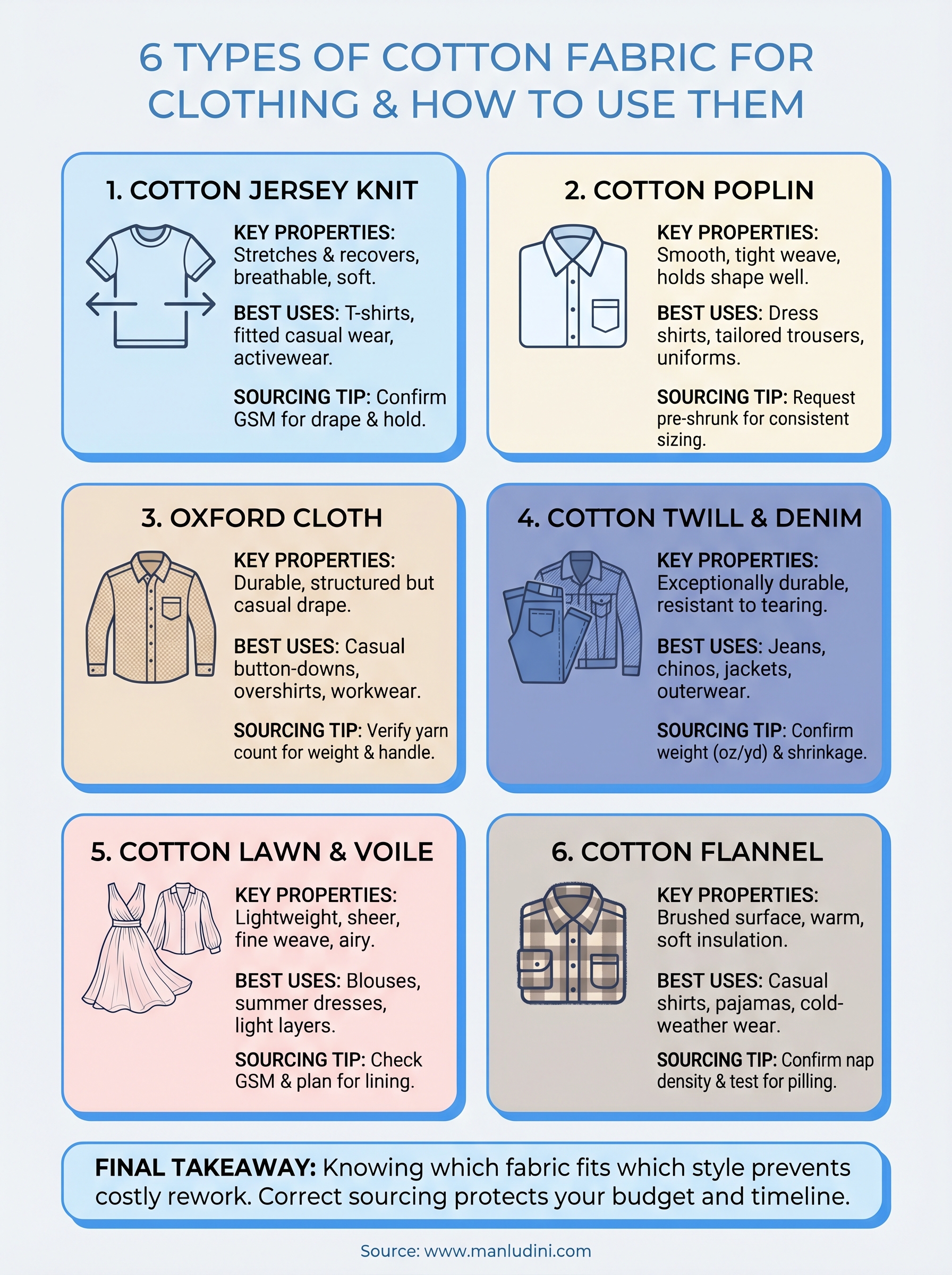
The six types of cotton fabric for clothing covered here each serve a different purpose in a finished garment. Jersey moves with the body. Poplin and Oxford cloth hold structure. Twill and denim handle wear. Lawn and voile add lightness. Flannel brings warmth. Knowing which fabric fits which style before development begins saves you from costly rework and production delays down the line.
Your fabric choice affects every stage that follows, from cutting and sewing methods to how the finished piece performs in the market. A wrong call at the sourcing stage can ripple through sampling, fit approvals, and bulk production. Getting that decision right early is one of the most practical ways to protect your budget and keep your production timeline on track.
If you're ready to move from fabric selection into sample development or bulk production, work with the team at Manludini to get your project moving.
0 comments