
If you've ever asked what is the best fabric for clothing, you already know the answer isn't simple. It depends on what you're making, who's wearing it, and what performance you need from the finished garment. A fabric that works perfectly for a summer dress can fall apart as a winter jacket lining. The "best" fabric is always relative to the project.
At Manludini, we work with fashion brands and designers through every stage of garment production, from initial sampling to bulk manufacturing. That means we deal with fabric decisions daily. We source materials, test how they perform during washing and finishing, and see firsthand how the wrong fabric choice can derail an entire collection. This isn't theoretical knowledge; it comes from years of coordinating production runs and helping brands turn concepts into finished products.
This guide ranks 12 of the most common clothing fabrics based on criteria that actually matter: comfort, durability, breathability, sustainability, cost, and ease of use for production. Whether you're a designer choosing materials for your next line, a startup figuring out your first tech pack, or just someone who wants to understand what goes into the clothes you wear, this breakdown gives you a clear, practical comparison. No filler, just honest assessments based on how these fabrics perform in real garment production.
1. Manludini fabric sourcing and development support
Before diving into the ranked list of fabrics, it helps to understand how professional sourcing support fits into your fabric decisions. Manludini works directly with brands during the development phase to match the right material to the right garment, saving you time and money before bulk production starts. The information below explains exactly what that support looks like and when it makes sense for your brand.
What it is
Manludini is a B2B apparel manufacturing partner that handles everything from sample development to bulk production, with fabric sourcing built into that process. Rather than leaving you to research mills and material specs independently, the team coordinates fabric options based on your design requirements, target price point, and production volume. You get direct factory-level access to materials without the guesswork that typically slows down new brands.
When it makes sense to use it
If you're building a new collection, launching your first production run, or switching suppliers mid-season, fabric sourcing support becomes important fast. It makes the most sense when you're working with unfamiliar materials, tight delivery windows, or specific performance requirements that standard off-the-shelf fabrics won't meet. Brands that skip coordinated sourcing often end up with unapproved substitutions that change how the finished garment looks and feels.
Getting the fabric right during sampling costs a fraction of what a fabric problem costs after bulk production starts.
How it helps you choose the right fabric
The team reviews your tech pack or reference sample and recommends fabrics based on construction, finish, and end-use performance. If you're trying to answer what is the best fabric for clothing in a specific product category, that question gets answered with actual swatches, wash test results, and production feedback rather than general guidance. You compare real options with clear tradeoffs before committing to anything.
Common pitfalls it helps you avoid
Fabric substitutions rank among the most common and costly production problems. A factory swaps your specified fabric for something cheaper or more readily available, and you don't find out until samples arrive. Manludini's production follow-up process catches these issues early. Another frequent problem is shrinkage and colorfastness failures that only appear after washing. Coordinating fabric testing before bulk production eliminates those surprises before they affect your delivery schedule.
Cost and timeline expectations
Fabric sourcing coordination is built into the sample development process, so you're not paying a separate fee for material sourcing. Sample timelines typically run 3 to 5 weeks depending on fabric availability and garment complexity. Bulk production timelines vary by order size, but you receive clear milestone updates throughout the process. The priority is keeping your production moving without unexpected delays caused by material issues caught too late.
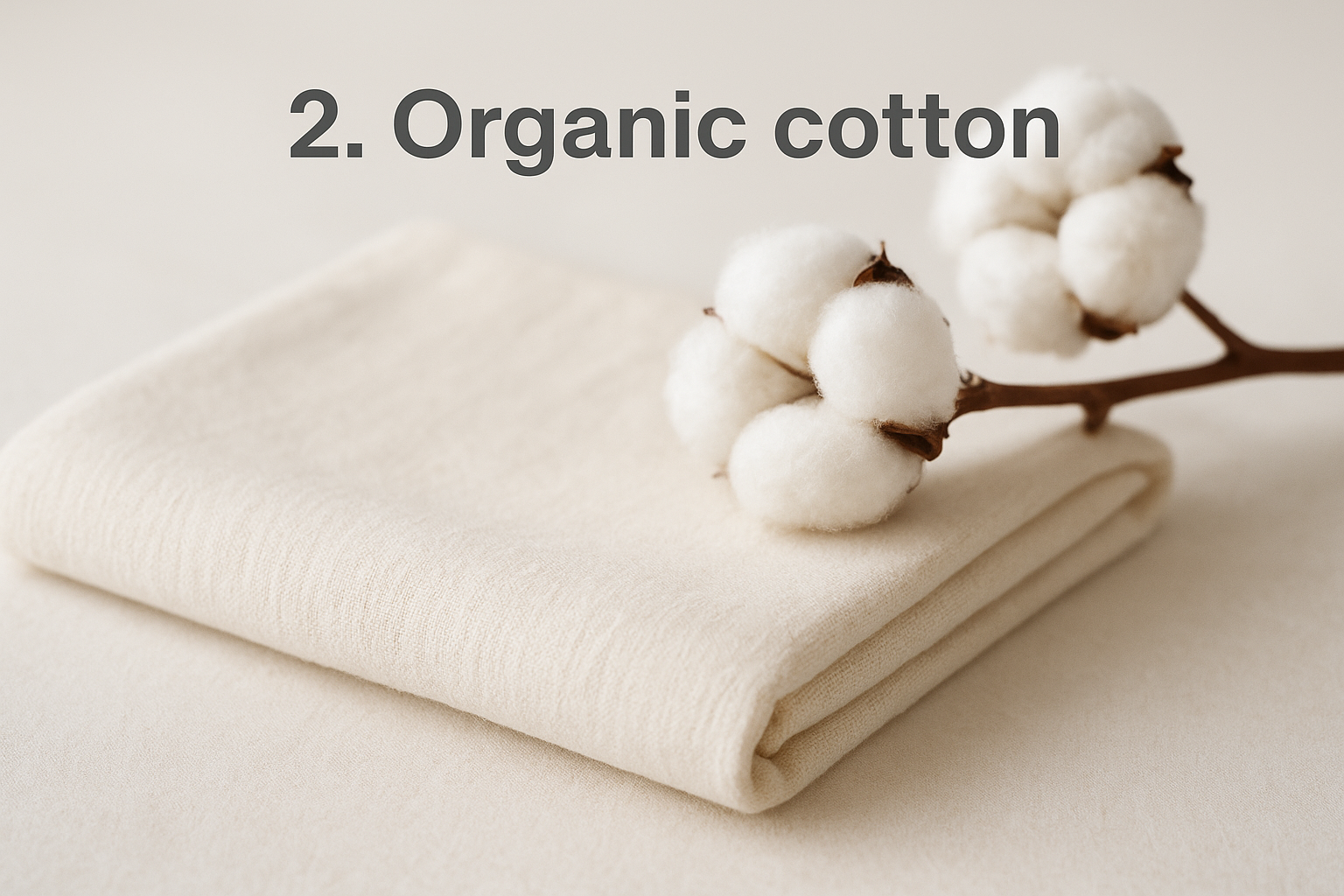
2. Organic cotton
Organic cotton ranks among the most requested fabrics in apparel production, and for good reason. It's grown without synthetic pesticides or chemical fertilizers, which keeps residue out of the fiber and makes it a cleaner choice from field to finished garment.
What it is
Organic cotton uses non-GMO plants farmed under certified organic standards, verified by organizations like the Global Organic Textile Standard (GOTS). The fiber itself processes similarly to conventional cotton, but without the chemical load that often lingers through spinning and finishing. It spins, weaves, and knits into the same structures you'd expect from standard cotton, just with better input transparency.
Best uses in clothing
Organic cotton performs best in garments worn directly against skin. Strong categories include:
- T-shirts and everyday tops
- Underwear and loungewear
- Baby clothing and sensitive-skin basics
- Lightweight shirting and casual bottoms
Comfort and skin feel
Softness is where organic cotton stands out, especially in combed or brushed finishes. People with sensitive skin or reactions to synthetic fibers consistently find it more comfortable than alternatives. If your brand is trying to answer what is the best fabric for clothing for everyday basics, organic cotton handles that category reliably.
For essentials-focused brands, organic cotton delivers consistent comfort at a price point that works across a full size run.
Durability and care
Organic cotton holds up well through repeated washing cycles when cared for correctly. Cold water washing and low heat drying reduce shrinkage and fiber breakdown. It's not the right call for high-friction or performance applications, but for casual and lifestyle garments, the durability is practical and predictable.
Sourcing notes for brands
Certifications matter here more than most categories. GOTS-certified fabric confirms organic integrity from farm through textile production. Plan for slightly higher material costs and longer sourcing lead times compared to conventional cotton, particularly in smaller order quantities.
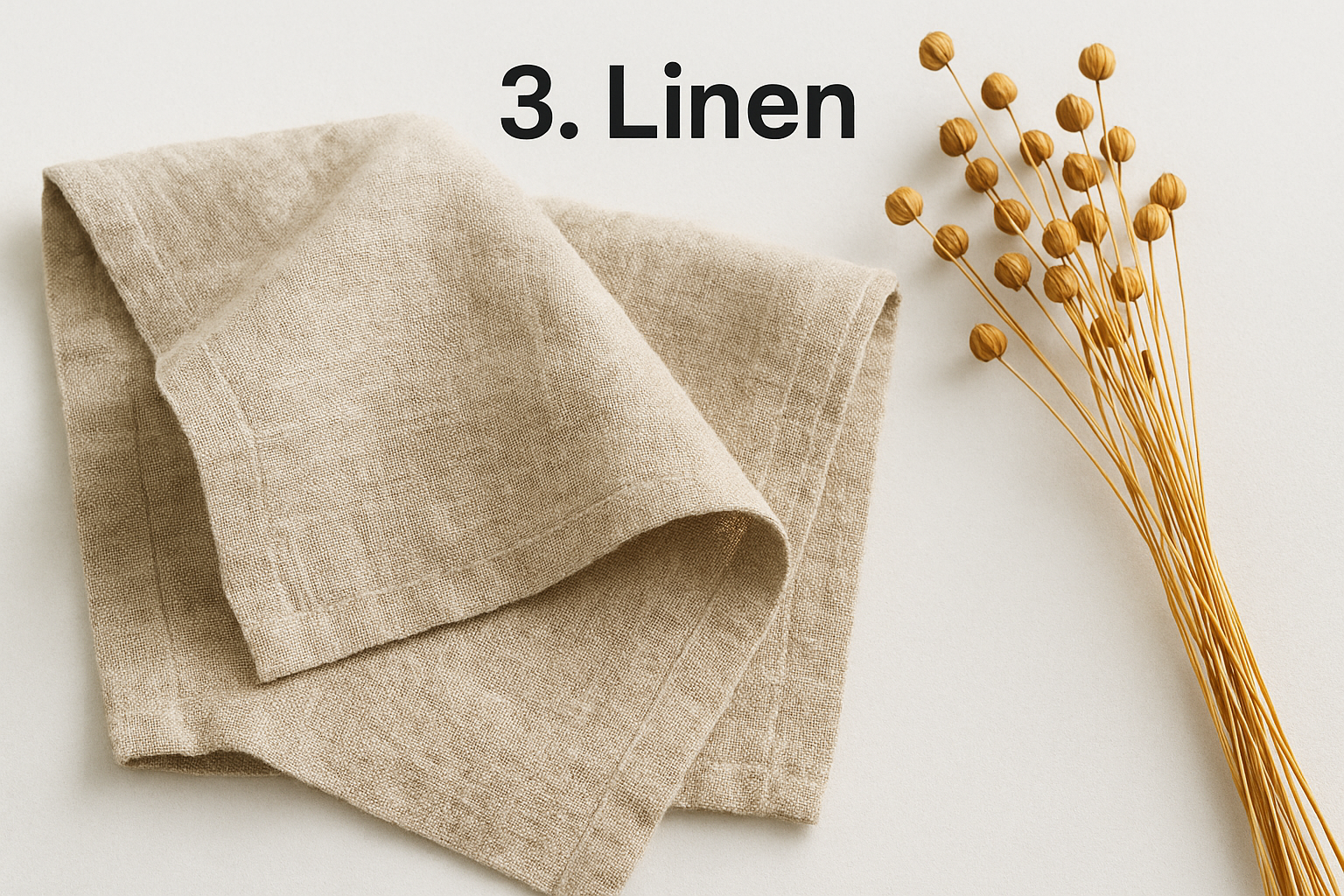
3. Linen
Linen is one of the oldest textile fibers in recorded history, made from the stalks of the flax plant. It sits firmly in the natural fiber category alongside cotton and hemp, but it behaves differently in production and on the body.
What it is
The fiber comes from flax stalks extracted through a process called retting, which loosens the fiber from the plant material. The resulting yarn is strong, slightly coarse, and carries a natural texture that gets softer with each wash. It's available in a range of weights suitable for both structured and relaxed garment styles.
Best uses in clothing
Linen performs best in warm-weather garments where breathability and structure matter equally. It's a reliable choice for:
- Lightweight trousers and shorts
- Summer blazers and overshirts
- Casual dresses and skirts
- Relaxed-fit tops and shirts
Comfort and breathability
Moisture absorption is linen's strongest performance trait. It pulls sweat away from the body quickly and dries fast, making it one of the most effective natural fabrics for hot climates. If you're asking what is the best fabric for clothing worn in warm seasons, linen consistently ranks at the top for airflow and body temperature regulation.
Linen keeps you cooler than cotton in direct heat because the fiber structure allows air to move through the fabric more freely.
Durability and care
Linen is stronger than cotton at equivalent weights, and it actually gets more supple over time rather than breaking down. It wrinkles easily, which some brands design around intentionally. Machine washing on a gentle cycle works well for most linen weights, though heavier structured pieces do better with hand washing or dry cleaning.
Sourcing notes for brands
European linen, particularly from Belgium and France, holds the strongest reputation for quality and consistent fiber length. Lead times and costs sit higher than cotton, but certified European Flax linen gives you a traceable, credible material story that resonates with quality-focused buyers.
4. Hemp
Hemp is one of the fastest-growing natural fiber crops available, and it's gaining serious traction in apparel as brands look for materials with both strong performance and a lower environmental footprint. The fiber comes from the cannabis sativa plant, processed into yarn through mechanical or chemical retting, similar to how linen is extracted from flax.
What it is
Hemp fiber is extracted from the stalks of the cannabis plant and spun into yarn or blended with other fibers for fabric production. Raw hemp has a coarse texture, but modern processing and blending with cotton or lyocell produces softer, more wearable fabrics that hold their structure well across different garment types.
Best uses in clothing
Hemp works well across a wider range of garment categories than most people expect. It performs reliably in casual and structural styles alike:
- T-shirts and casual tops, especially in cotton-hemp blends
- Pants and shorts where durability matters
- Outerwear and workwear where strength is a priority
- Accessories like bags and hats
Comfort and breathability
Hemp breathes well and pulls moisture away from the body at a rate comparable to linen. When you're thinking about what is the best fabric for clothing that handles both heat and activity, hemp-cotton blends deliver a solid balance of softness and airflow. The fiber also becomes noticeably softer with repeated washing, so comfort improves over the garment's life rather than deteriorating.
Hemp develops a better hand feel after the first several washes, which makes it a stronger long-term choice for everyday garments.
Durability and care
Hemp is one of the strongest natural fibers by weight, which translates directly into longer garment life. It resists pilling, UV degradation, and mold better than cotton, making it a smart option for outdoor or high-use styles. Machine washing works well on most hemp and hemp-blend fabrics without significant fiber breakdown.
Sourcing notes for brands
Hemp fabric sourcing requires close attention to processing method and blend composition. Pure hemp can feel stiff in lighter weights, so most production-ready options come as blended fabrics rather than 100% hemp constructions. Lead times run longer than conventional cotton, and certified organic hemp adds sourcing complexity, so factor that into your development timeline.
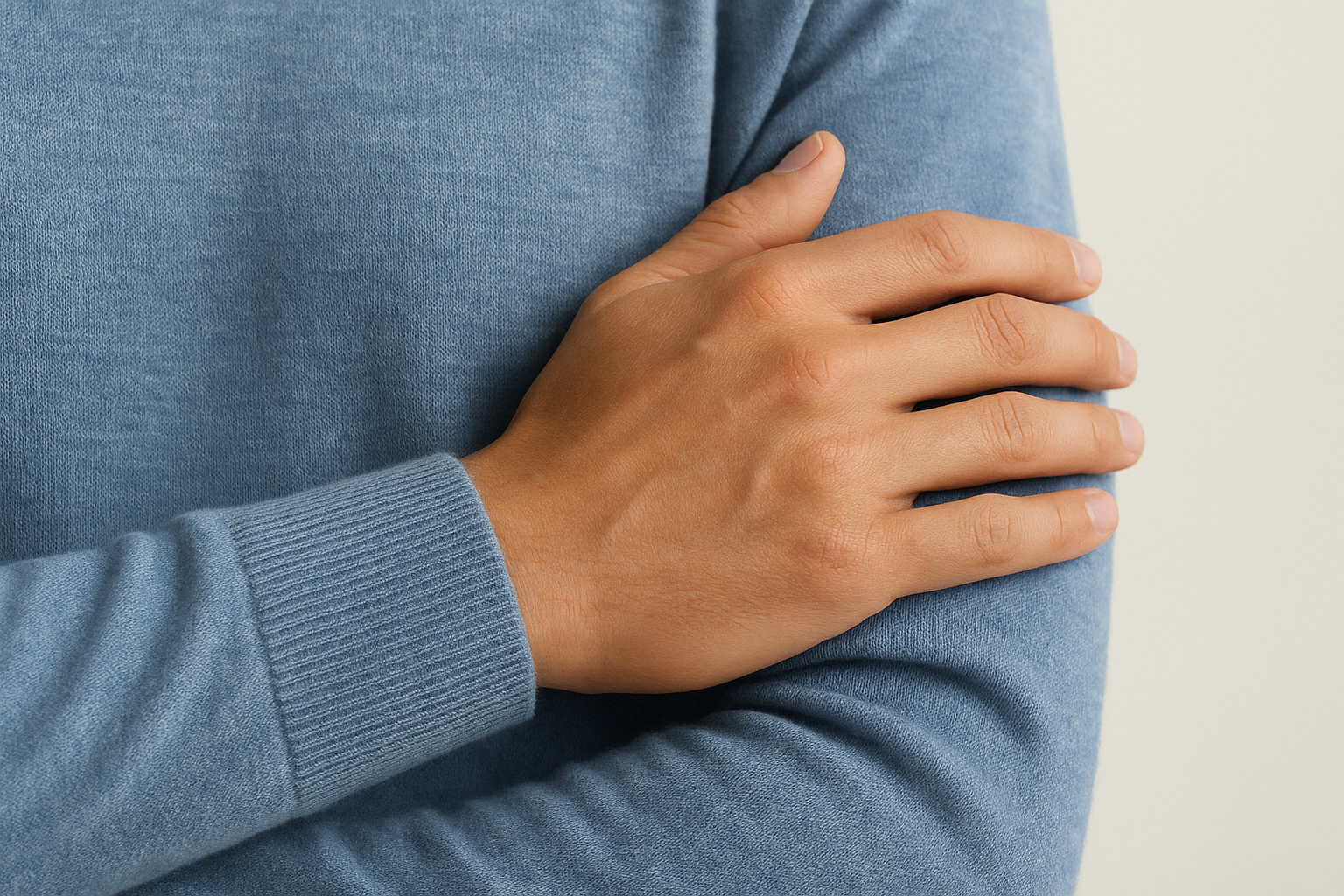
5. Merino wool
Merino wool comes from Merino sheep, a breed known for producing fiber that's finer and softer than standard wool. It's one of the few natural fibers that works across multiple seasons and end-use categories without feeling like a compromise in any of them.
What it is
Merino fiber is measured in microns, with higher-quality grades falling below 18.5 microns. That fineness is what separates it from coarser wools that scratch or irritate the skin. The fiber has a natural crimp structure that provides elasticity and helps garments return to shape after stretching or extended wear.
Best uses in clothing
Merino works across a wider category range than most natural fibers. You'll find it performing consistently well in active, travel, and lifestyle garments where temperature regulation matters. Common applications include:
- Base layers and thermal underwear
- Knitwear, sweaters, and cardigans
- Performance and outdoor apparel
- Lightweight travel shirts and everyday tees
Warmth, moisture, and odor control
When you're asking what is the best fabric for clothing that regulates body temperature across changing conditions, merino wool handles that better than almost any other natural fiber. It insulates when cold, breathes when warm, and pulls moisture away from the skin efficiently. The fiber structure also resists odor buildup naturally, which reduces how often you need to wash merino garments compared to cotton or synthetics.
Merino's natural odor resistance makes it a practical choice for travel and multi-day wear without relying on synthetic materials.
Durability and care
Merino holds up well for a natural fiber at its fineness, but it needs careful handling. Machine washing on a wool or gentle cycle with cold water protects the fiber from felting and pilling. Avoid wringing or high heat drying. With proper care, quality merino garments maintain their shape and softness for years.
Sourcing notes for brands
ZQ-certified or Responsible Wool Standard (RWS)-certified merino gives your brand a credible and traceable material story that resonates with quality-focused buyers. Costs run higher than cotton or most synthetics, and lead times for quality merino fabric can stretch depending on fiber grade and mill availability. New Zealand and Australia supply the majority of high-grade merino used in apparel production.
6. Cashmere and alpaca wool
Cashmere and alpaca sit at the premium end of natural fiber options, and both earn that position based on performance rather than just reputation. Cashmere comes from the undercoat of Cashmere goats, while alpaca fiber is shorn from alpacas raised in the Andes region of South America. Both produce exceptionally fine, soft fibers that outperform standard wool in hand feel and insulation.
What it is
Cashmere fiber grades vary by micron count and ply, with finer grades producing softer, lighter fabrics. Alpaca fiber comes in two main types: Huacaya, which is fluffy and crimped, and Suri, which produces a silkier, straighter fiber. Both fibers are naturally hypoallergenic compared to standard wool and contain much lower lanolin levels, which reduces the itchiness common with coarser wool options.
Best uses in clothing
Both fibers perform best in cold-weather garments where softness and warmth matter more than abrasion resistance. You'll find them most effective in sweaters and cardigans, scarves and wraps, lightweight layering pieces for transitional seasons, and luxury loungewear or premium basics.
Warmth and hand feel
When you're asking what is the best fabric for clothing in a luxury knitwear context, cashmere and alpaca both deliver warmth-to-weight ratios that synthetic alternatives can't match. Alpaca provides strong insulation with a slightly more durable structure than cashmere at equivalent weights.
Alpaca fiber contains no lanolin, making it a practical option for buyers with wool sensitivities who still want natural fiber warmth.
Durability and care
Both fibers need careful handling to maintain quality over time. Hand washing in cold water or dry cleaning extends garment life significantly. Cashmere is more prone to pilling than alpaca, particularly in lower-grade constructions, so fiber grade directly affects long-term performance.
Sourcing notes for brands
Quality verification matters more with cashmere than almost any other fiber because mislabeling and blending with cheaper fibers is widespread. Require certified grade documentation from your supplier. Alpaca sourcing is more traceable, with Peruvian-origin alpaca holding the strongest quality reputation globally. Both materials carry higher costs and longer lead times than standard wool alternatives.
7. Lyocell and Tencel
Lyocell is a semi-synthetic fiber made from wood pulp, most commonly sourced from eucalyptus trees. Tencel is the brand name for lyocell produced by Lenzing, an Austrian fiber company whose closed-loop manufacturing process recovers and reuses nearly all of the solvent used in production. The two terms are often used interchangeably, but Tencel specifically refers to Lenzing's certified version.
What it is
The production process dissolves wood pulp in a non-toxic solvent and pushes the resulting solution through spinnerets to form fine filaments. This process produces a fiber with a smooth surface structure that gives finished fabrics their characteristic softness and drape. Lyocell carries a lower environmental footprint than conventional viscose because the solvent loop is largely closed rather than discharged.
Best uses in clothing
Lyocell and Tencel perform well across several garment categories where soft drape and breathability are the priority. Common applications include:
- Lightweight shirts and blouses
- Dresses and flowy skirts
- Casual trousers and wide-leg pants
- Layering pieces and transitional basics
Drape, softness, and breathability
If you're asking what is the best fabric for clothing that combines a soft hand feel with fluid movement, lyocell handles that combination better than most semi-synthetics. The fiber absorbs moisture efficiently and stays cool against the skin, making it a strong choice for warm-season and travel garments. It also takes dye well, producing clean, vibrant color results without heavy chemical processing.
Lyocell's moisture management keeps garments feeling fresher longer, which reduces how often you need to wash delicate pieces.
Durability and care
Lyocell is moderately durable but sensitive to mechanical agitation when wet. Machine washing on a gentle cycle with cold water reduces shrinkage and surface pilling. Avoid tumble drying on high heat.
Sourcing notes for brands
Tencel-certified fabric gives your brand a traceable, credible sustainability claim that resonates with conscious buyers. Lead times are comparable to conventional wovens, though certified Tencel fabric carries a slightly higher cost than standard lyocell from uncertified mills.
8. Silk
Silk is a natural protein fiber produced by silkworms, most commonly from the Bombyx mori species. It holds a long-standing reputation in apparel for its smooth surface and natural sheen, but its performance qualities go well beyond appearance.
What it is
Silk fiber forms when silkworms spin their cocoons from a continuous filament of sericin-coated protein. Reeling that filament off the cocoon and twisting it into yarn produces one of the strongest natural fibers by weight. Different weave structures, from charmeuse to crepe de chine to habotai, produce fabrics with varying weights, textures, and drape qualities suited to different garment categories.
Best uses in clothing
Silk performs best in garments where drape, lightweight feel, and surface refinement matter most. It works reliably in:
- Blouses, shirts, and lightweight dresses
- Evening wear and formal garments
- Scarves, linings, and accessories
- Loungewear and sleepwear
Temperature regulation and comfort
When you're thinking about what is the best fabric for clothing that adapts to body temperature without bulk, silk handles thermal regulation better than most people expect. The fiber insulates lightly in cool conditions and breathes efficiently in warmth. It also feels smooth against skin, which makes it a consistent choice for sensitive skin applications and direct-contact garments.
Silk's natural protein structure keeps it closer in composition to skin than any other common textile fiber, which is why it feels so neutral and non-irritating.
Durability and care
Silk is vulnerable to sunlight, perspiration, and rough handling compared to most other natural fibers. Hand washing in cold water with a gentle detergent protects the fiber from breakdown. Avoid wringing, direct heat, and prolonged exposure to sunlight.
Sourcing notes for brands
OEKO-TEX or silk-specific certification helps verify fiber quality and processing standards. Chinese silk dominates the global supply, but quality varies considerably by mill and grade, so requesting swatch samples and wash test results before committing to bulk fabric is important.
9. Modal
Modal is a semi-synthetic fiber derived from beech tree pulp, processed through a method that produces a finer, softer yarn than standard viscose. It sits in the regenerated cellulose category alongside lyocell and viscose, but its production method and finished fiber properties give it a distinct performance profile worth understanding on its own terms.
What it is
Modal fiber starts with beech wood pulp dissolved in chemical solvents and extruded into fine filaments, similar to how lyocell is made. The key difference lies in the fiber's cross-sectional structure, which gives modal a higher wet strength and better shape retention than conventional viscose. Austrian fiber producer Lenzing produces a widely used certified version called MicroModal, which sets a recognized quality benchmark for the fiber category.
Best uses in clothing
Modal performs best in garments that sit close to the skin and require consistent softness across repeated wear cycles. It shows up reliably in underwear and intimates, loungewear and pajamas, casual T-shirts and tank tops, and lightweight knitwear and layering basics.
Softness, stretch, and recovery
If you're asking what is the best fabric for clothing in the everyday essentials category, modal's softness-to-weight ratio makes it one of the strongest candidates. The fiber stretches gently and returns to shape without the distortion you often see in cheaper knit fabrics. It also takes color exceptionally well, producing deep, consistent hues that hold through repeated washing without significant fading.
Modal's high wet strength means it holds its shape better than standard viscose when laundered regularly, which directly affects how long your garments stay wearable.
Durability and care
Modal holds up well through machine washing on a gentle cycle with cold water. It resists shrinkage better than cotton and doesn't pill aggressively under normal wear conditions.
Sourcing notes for brands
MicroModal-certified fabric from Lenzing gives you a traceable fiber claim and a recognizable quality signal for end consumers. Standard modal from uncertified mills varies considerably in quality, so requesting wash test results and fiber certifications before committing to bulk fabric protects your production outcome.
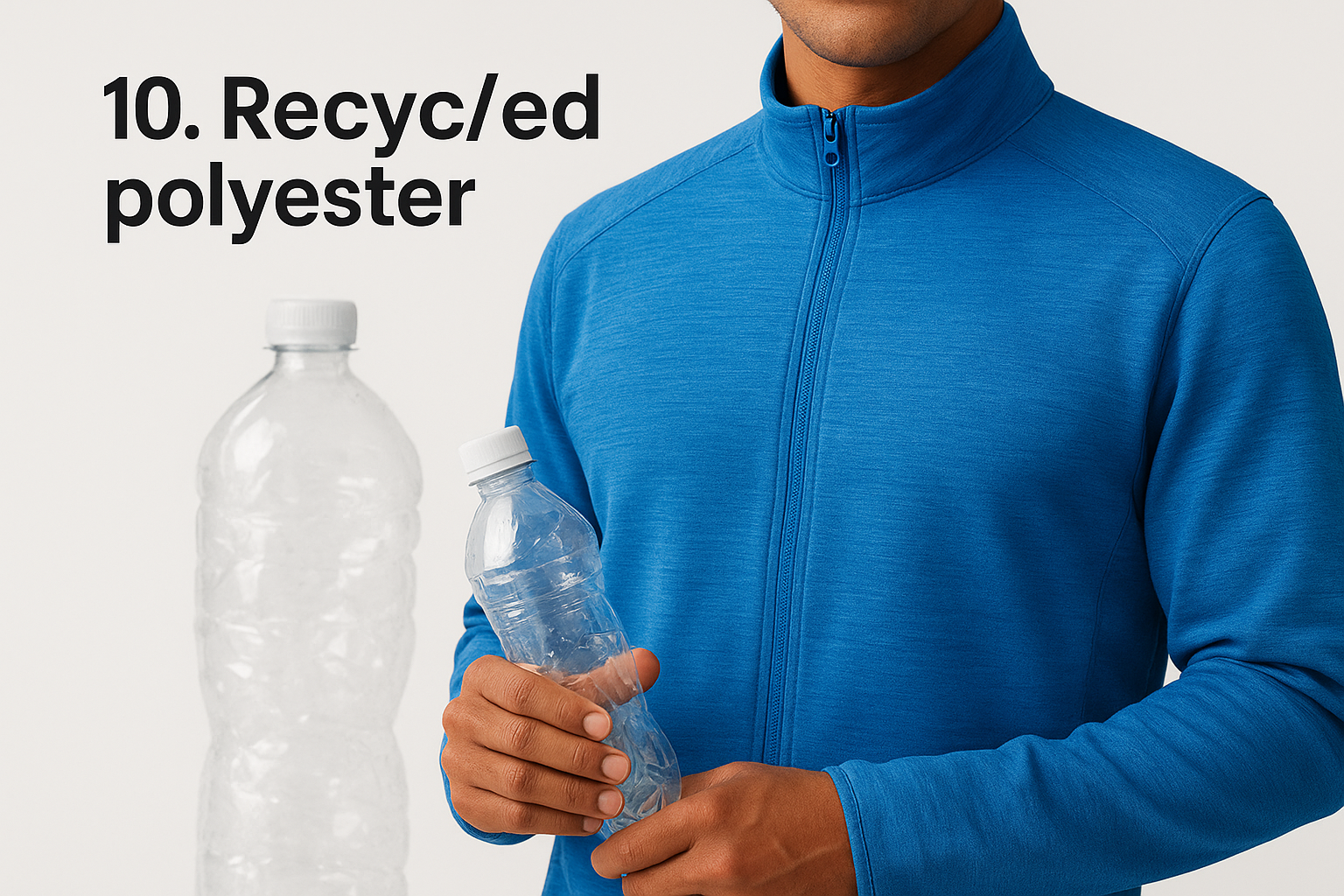
10. Recycled polyester
Recycled polyester, often labeled rPET, is made by breaking down post-consumer plastic waste like bottles and industrial scraps into polyester fiber. It delivers the same core performance as virgin polyester while reducing the demand for new petroleum-based raw material.
What it is
Recycled polyester starts with collected plastic waste processed through mechanical or chemical recycling into fiber suitable for spinning and weaving. The resulting fabric performs nearly identically to virgin polyester in construction and finish. Global Recycled Standard (GRS) certification verifies the recycled content percentage in the fiber you're sourcing.
Best uses in clothing
Recycled polyester works best in performance-driven garment categories where durability and moisture management matter more than natural feel. Common applications include activewear and athletic tops, outerwear shells and jackets, swimwear and water-resistant layers, and technical basics and performance bottoms.
Performance and moisture management
If you're asking what is the best fabric for clothing that handles moisture during physical activity, recycled polyester wicks sweat away from the skin quickly and dries faster than any natural fiber. It holds its shape under movement, resists stretching out permanently, and maintains its technical properties through many wash cycles. Brands building performance lines find it one of the most reliable options for activewear applications.
Recycled polyester delivers identical moisture management to virgin polyester with a lower production footprint, which makes it a practical swap for performance-focused brands.
Durability and care
Recycled polyester resists abrasion, UV exposure, and repeated washing better than most natural fibers. Machine washing on a standard cycle works without fiber breakdown, though washing bags that catch microplastic shedding are worth recommending to your end customers.
Sourcing notes for brands
GRS-certified fabric gives your brand a credible recycled content claim that buyers can verify. Costs run close to virgin polyester in most market conditions, and lead times are comparable to standard synthetic fabric sourcing.
11. Nylon
Nylon is a fully synthetic fiber made from petroleum-based polymers, first developed in the 1930s as a replacement for silk. It brought a new level of strength and elasticity to apparel that natural fibers couldn't consistently match, and it remains a core material in performance and technical clothing today.
What it is
Nylon is a polyamide fiber produced through a chemical synthesis process that creates long polymer chains with strong intermolecular bonds. Those bonds give nylon its characteristic strength and elasticity. It's available in several variants, with nylon 6 and nylon 6,6 being the most common in apparel manufacturing. Both produce fabrics with high tensile strength and a smooth surface that holds dye well.
Best uses in clothing
Nylon performs best in garments where durability and stretch are more important than natural breathability. It shows up reliably in:
- Activewear leggings and shorts
- Swimwear and water-resistant garments
- Outerwear shells and windbreakers
- Hosiery, lingerie, and form-fitting basics
Strength and weather resistance
When you're thinking about what is the best fabric for clothing that handles physical stress and outdoor conditions, nylon's abrasion resistance is hard to beat among synthetic options. It resists tearing, holds its shape under tension, and repels light moisture better than most natural fibers at equivalent weights.
Nylon's strength-to-weight ratio makes it a practical choice for garments that take repeated physical wear without breaking down quickly.
Durability and care
Nylon is highly resistant to abrasion, stretching, and repeated machine washing. It dries quickly and doesn't shrink under normal laundry conditions. Avoid high heat, which can distort the fiber structure and cause permanent shape loss.
Sourcing notes for brands
Blended nylon fabrics, particularly nylon-spandex constructions, dominate activewear production and are widely available through most performance fabric mills. If sustainability is a priority, recycled nylon options certified under the Global Recycled Standard give you a credible lower-impact alternative without compromising on performance.
12. Viscose and rayon
Viscose and rayon refer to the same category of semi-synthetic fiber, with viscose being the term used in Europe and rayon more common in North America. Both names describe a fiber made from regenerated cellulose, typically sourced from wood pulp, processed through a chemical spinning method to produce soft, lightweight fabric.
What it is
Viscose starts with wood pulp dissolved in caustic soda and carbon disulfide, then forced through spinnerets to create fine filaments. The resulting fiber is smooth, highly absorbent, and takes dye easily. It's one of the most widely produced semi-synthetic fibers globally because it mimics the look and feel of natural fibers at a lower cost.
Best uses in clothing
Viscose works reliably across a broad range of garment types where lightweight drape and a soft surface matter more than durability or structure. You'll find it used most often in:
- Casual dresses and blouses
- Lining fabrics for jackets and skirts
- Printed tops and flowy pants
- Lightweight summer garments
Drape and comfort
If you're evaluating what is the best fabric for clothing with fluid movement and a comfortable hand feel at an accessible price point, viscose delivers both reliably. The fiber drapes cleanly, feels smooth against skin, and breathes well enough for warm-season wear. It also takes prints with excellent color clarity, which makes it a strong choice for pattern-forward collections.
Viscose's low cost and wide availability make it one of the most practical options for brands working with tight material budgets.
Durability and care
Viscose is weaker when wet than most other semi-synthetics, which means rough machine washing causes fiber breakdown and shape loss quickly. Hand washing in cold water or a delicate machine cycle extends garment life considerably.
Sourcing notes for brands
Standard viscose carries a higher environmental impact than lyocell because the chemical process is less contained. If sustainability matters to your brand positioning, look for ECOVERO-certified viscose from Lenzing, which uses a more controlled production process with lower emissions and better traceability than conventional viscose mills.
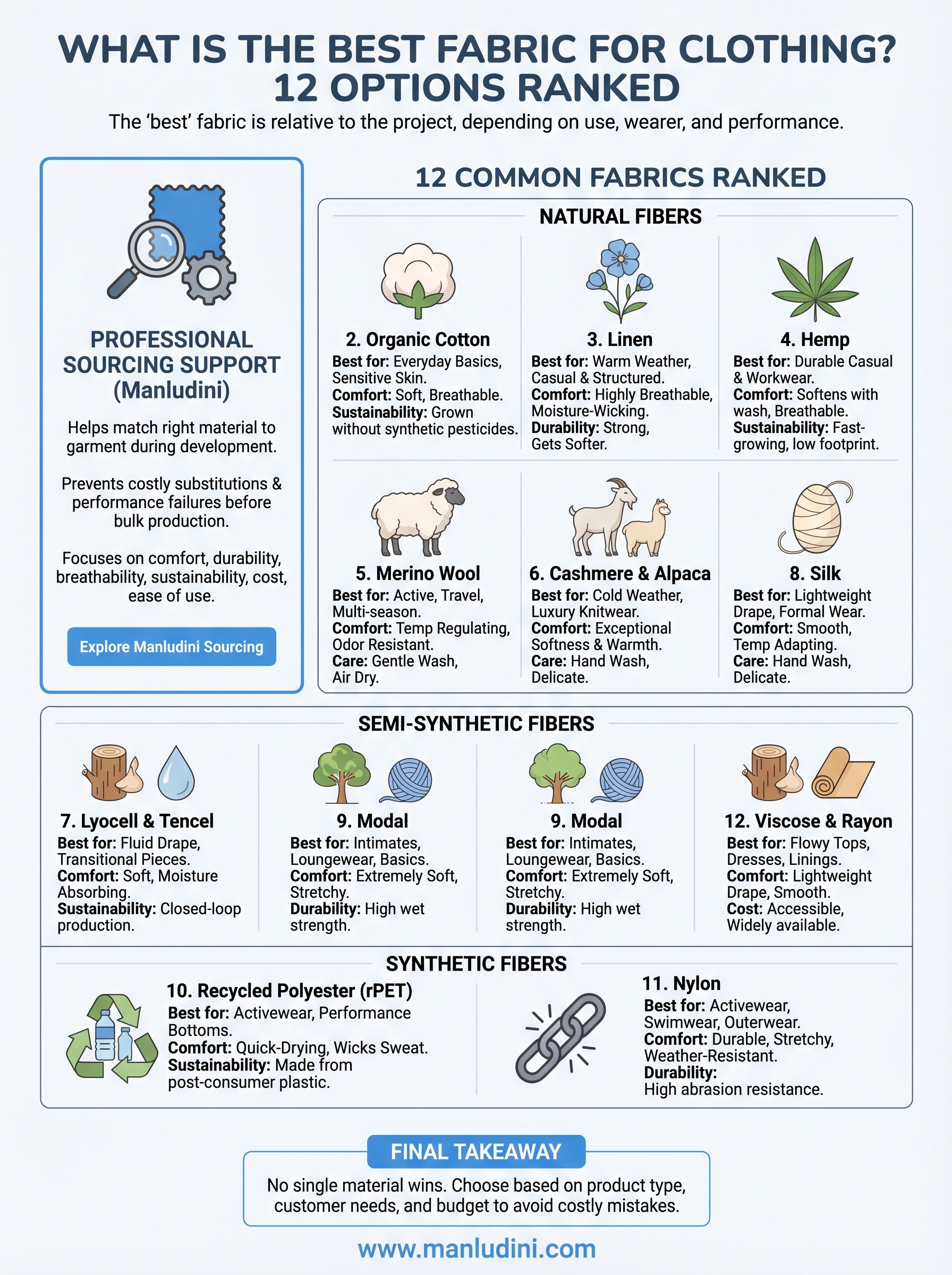
Final fabric takeaways
Answering what is the best fabric for clothing always comes back to the same starting point: what your garment needs to do and who wears it. Natural fibers like organic cotton, linen, and merino wool cover most comfort and breathability needs. Semi-synthetics like lyocell and modal fill the gap where you need softness with better performance. Synthetics like recycled polyester and nylon handle durability and technical demands that natural fibers can't meet consistently.
No single material wins across every category. The right fabric decision depends on your product type, your customer's expectations, and your production budget. Getting that decision wrong early costs you more than the fabric itself once sampling and bulk production are involved. If you want help matching the right materials to your next collection before you commit to bulk, work with Manludini's fabric sourcing and development team to move from concept to finished garment with fewer surprises.
0 comments