
Jersey fabric shows up everywhere, from basic t-shirts to fitted dresses to baby onesies. But if you're developing a product line or planning a collection, knowing exactly what is jersey fabric used for goes beyond a simple list. You need to understand where this knit performs well, where it doesn't, and how its properties affect your finished garment.
That's the kind of detail that matters when you're moving from concept to production. At Manludini, we work with fashion brands and startups through sample development and bulk manufacturing, so we see firsthand how fabric choice shapes everything, fit, drape, construction method, even cost. Jersey is one of the most requested fabrics we handle, and for good reason.
This article breaks down the full range of jersey fabric applications, from everyday clothing and activewear to home textiles and accessories. Whether you're sourcing fabric for a new collection or deciding if jersey is the right pick for your next project, you'll walk away with a clear, practical understanding of what this material can do.
Why jersey fabric works for everyday wear
Jersey fabric dominates everyday clothing for one main reason: its knit construction moves with the body instead of restricting it. Unlike woven fabrics, jersey is built from interlocked loops of yarn that flex and stretch in ways flat-woven materials simply cannot. When you're building a collection around basics or lifestyle wear, comfort and consistent fit across a wide range of body types are non-negotiable, and jersey handles both. To fully understand what is jersey fabric used for, you need to start with the properties that make it perform so reliably across so many product categories.
Stretch, recovery, and fit
The stretch and recovery in jersey is what makes it so practical for form-fitting garments. The knit structure lets the fabric expand and then return to its original shape, which means your garment holds its form through repeated wear and washing. For products like t-shirts, fitted dresses, and activewear, that behavior directly affects how the item looks and performs after the first few uses.
A jersey with poor recovery will bag out at the elbows and knees within weeks, which leads to returns and negative feedback, both costly for a growing brand.
Not all jersey behaves the same way. Single jersey stretches mainly in one direction and tends to curl at the edges during cutting, while double jersey and interlock are more stable and easier to handle in production. Choosing the right construction before you move to sampling will save you revision time and unnecessary costs.
Softness and ease of care
Jersey is usually made from cotton, polyester, rayon, or blended yarns, and the knit loop structure creates small air pockets that give the fabric some breathability. For everyday clothing like t-shirts, loungewear, and casual dresses, that makes a noticeable difference in how comfortable the garment feels against the skin throughout the day.
Softness also depends on fiber content and yarn weight. A lightweight cotton jersey feels very different from a heavier polyester blend, even though both carry the same name. Before you commit to bulk fabric orders, requesting hand-feel samples gives you a much clearer picture of what the finished product will actually be like. Jersey is also relatively easy to care for, which matters to your end customer since most pieces hold up through standard machine washing without special handling.
What jersey fabric is and how it performs
Jersey is a knit fabric, not a woven one. That distinction matters because the entire way it's constructed, through interlocked loops of yarn, is what gives it the stretch and softness it's known for. Understanding what is jersey fabric used for starts with knowing how it's built, because the structure determines everything from how it sews to how it fits on the body.
Knit structure and fiber options
Jersey fabric can be made from a wide range of fibers, including cotton, polyester, rayon, modal, and wool, as well as blends that combine two or more of these. The fiber you choose changes the drape, breathability, and durability of the finished product significantly. A cotton jersey feels breathable and natural against the skin, while a polyester or rayon blend tends to drape more fluidly and resists wrinkles better, making it a common pick for dresses and tops.
The fiber content isn't just a fabric spec. It affects how your garment behaves in wash testing, how it photographs, and how your end customer experiences it over time.
Weight and thickness
Jersey comes in a range of weights measured in grams per square meter (GSM), from lightweight options around 140 GSM suited for layering and summer basics, to heavier constructions above 280 GSM used in sweatshirts and structured tops. Selecting the right GSM for your product prevents common issues like see-through fabric in tops or excess stiffness in pieces that need to drape freely. Always request weight specs from your supplier before approving bulk fabric for production.
What jersey fabric is used for in clothing
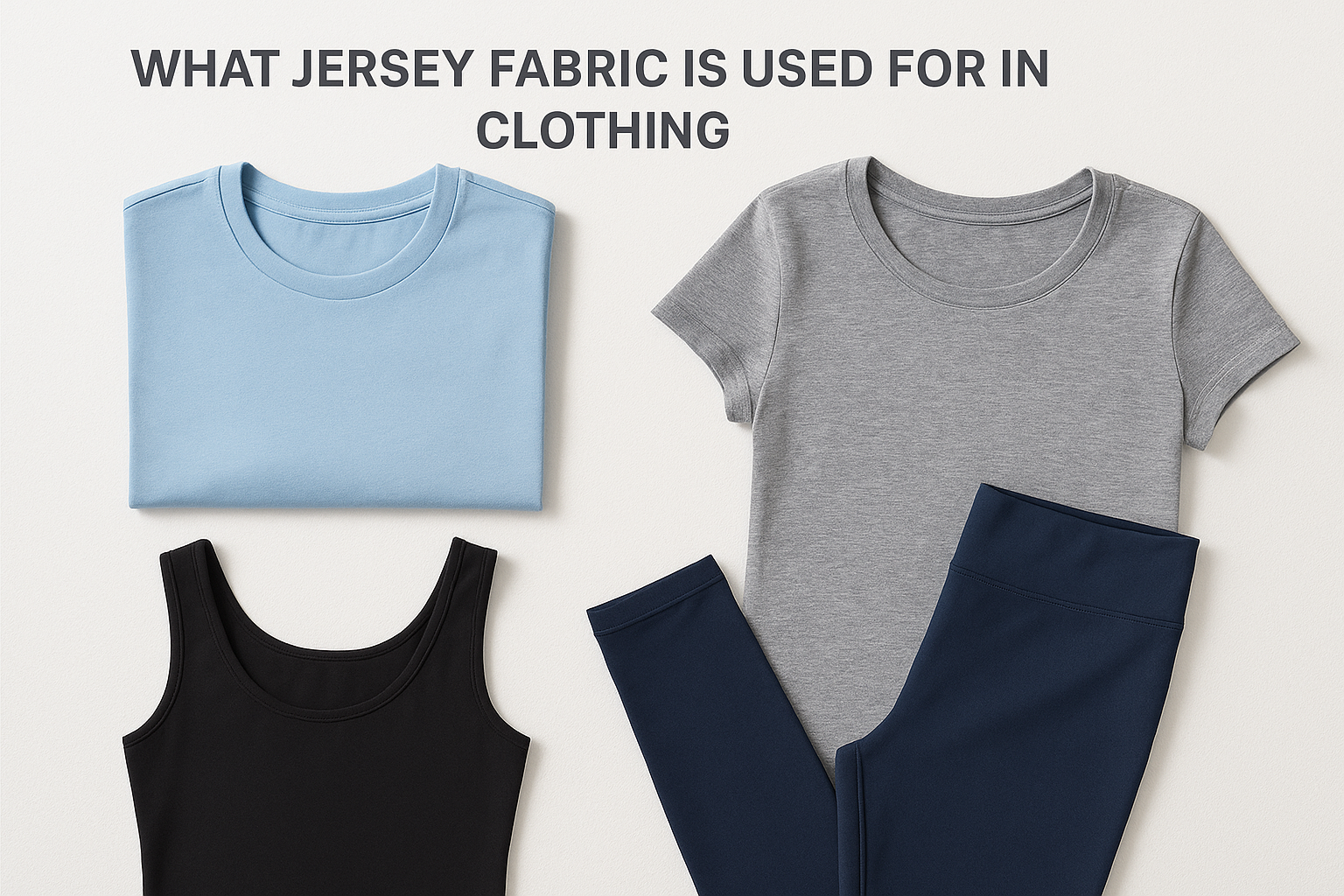
Jersey covers a wide range of clothing applications precisely because its stretch and softness adapt to so many silhouettes. If you're deciding what is jersey fabric used for across your product line, the answer in clothing alone is broad enough to support an entire collection built around a single fabric family.
Tops, t-shirts, and basics
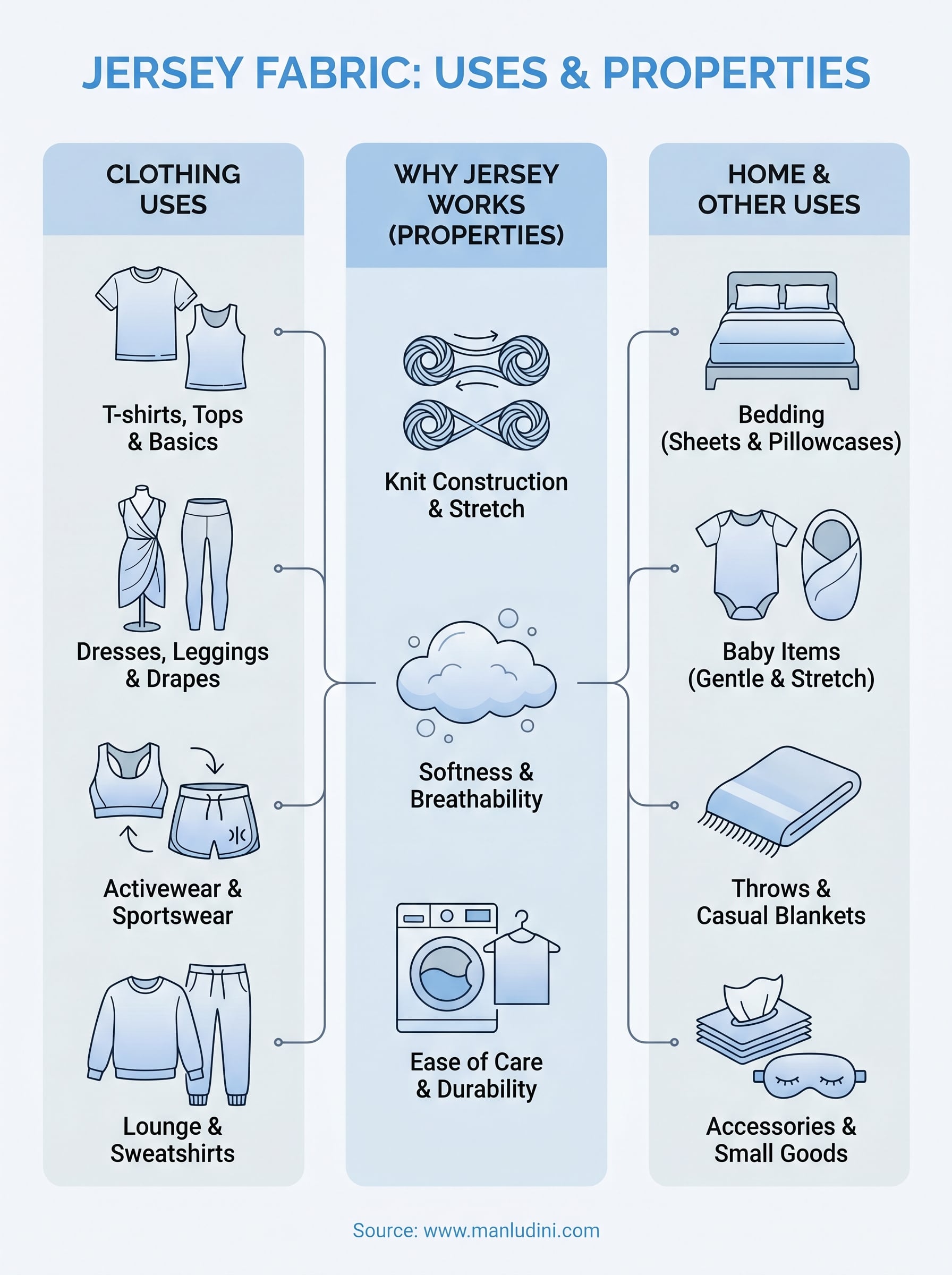
The most common application for jersey is t-shirts and casual tops, and for good reason. The fabric's knit structure lays flat against the body without pulling or restricting movement, which makes it the default choice for everyday basics. Lightweight cotton jersey in the 140 to 180 GSM range works well here, giving you enough opacity for a quality feel while keeping the garment breathable and easy to layer.
If you're building a basics line, getting the GSM and fiber blend right at the sampling stage will save you significant revision time before bulk production.
Dresses, leggings, and activewear
Jersey also performs strongly in fitted dresses and draped styles, where the fabric's natural hang creates clean lines without tailoring complexity. Rayon and modal jersey are common picks here because they drape more fluidly than cotton. For leggings and activewear, a polyester or nylon-spandex jersey blend gives you the compression and four-way stretch those categories require. Heavier double jersey works well for structured sweatshirts and joggers, where fabric stability during construction is more important than drape. Matching the jersey type to the garment function keeps your production results consistent and reduces fit issues during sampling.
What jersey fabric is used for at home
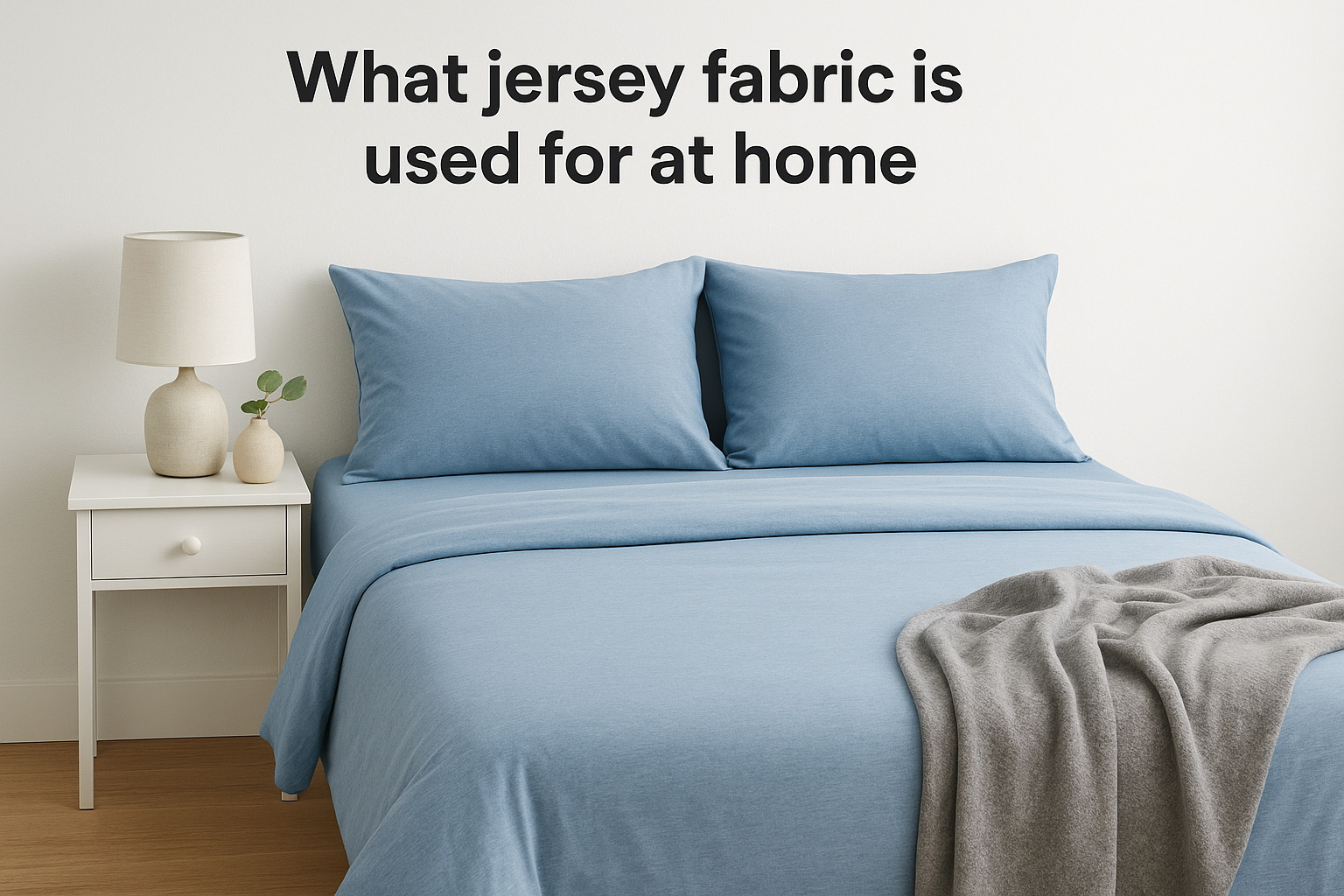
Jersey isn't limited to clothing. When you ask what is jersey fabric used for beyond apparel, the answer extends into a practical range of household textiles where its softness and stretch solve real problems in everyday use.
Bedding and bath textiles
Sheet sets and pillowcases made from jersey have become a popular alternative to traditional woven cotton bedding because the fabric feels soft and slightly stretchy right out of the packaging, without the break-in period that woven cotton typically needs. The knit structure also wraps fitted sheets snugly around mattress corners, reducing the slipping common with stiffer materials. Lightweight cotton jersey in the 160 to 200 GSM range works well here, giving you enough durability for repeated washing while keeping the fabric breathable enough for year-round use.
If you're developing a home textiles line alongside apparel, jersey bedding shares much of the same fabric sourcing and construction process as your knit garments, which can simplify your supply chain.
Baby items and throws
Baby products like swaddle blankets, sleep sacks, and infant bodysuits are a natural fit for jersey because the fabric's stretch makes garments gentle to put on and take off without stressing the seams. Softness against sensitive skin matters here more than in almost any other product category. Jersey throws and casual blankets are another strong home application, particularly when made from cotton or modal blends that soften further with every wash. For brands looking to expand into lifestyle or baby categories, jersey offers a familiar construction that your existing manufacturing setup can often handle without major adjustments.
How to choose the right jersey for your project
Choosing the right jersey comes down to matching fabric construction and fiber content to the specific demands of your product. Answering the question of what is jersey fabric used for in your particular case requires you to start with how the finished item will actually be worn, washed, and used day-to-day before you request a single sample.
Consider your end use first
Your end use determines everything from knit type to GSM range before you even start talking to a supplier. A fitted t-shirt needs a lightweight single jersey with good recovery, while a structured sweatshirt needs a heavier double jersey or fleece-backed construction that holds its shape through consistent wear. Baby products and bedding call for natural fiber options like cotton or modal that soften over time and hold up through frequent washing without pilling or distortion.
Locking in your end use requirements before requesting samples prevents costly revisions and keeps your development timeline on track.
Match fiber and weight to function
Fiber content and GSM work together, so treat them as a pair rather than two separate decisions. A rayon jersey at 160 GSM drapes smoothly for a midi dress but would feel too thin and unstable for a structured jogger. Polyester and nylon blends give you the stretch retention and durability that activewear demands, while cotton and modal work better for anything where breathability and skin contact are priorities.
| Fiber | Common use |
|---|---|
| Cotton jersey | T-shirts, basics, baby products |
| Rayon or modal | Dresses, draped tops, loungewear |
| Polyester or nylon blend | Activewear, leggings, sportswear |
| Wool jersey | Cold-weather basics, structured layering |
Ask your manufacturer for fabric specs in writing before approving bulk orders, and always request hand-feel swatches alongside the technical data.
Next steps
Jersey fabric covers far more ground than most buyers realize before they start sourcing. From everyday t-shirts and fitted dresses to bedding, baby products, and activewear, understanding what is jersey fabric used for across different categories gives you a real advantage when you're building a collection or expanding into new product lines. The fiber content, GSM, and knit type you choose at the development stage directly shape your fit results, your production costs, and your customer's experience with the finished product.
Taking the time to match those specs to your actual end use before you request samples keeps your development timeline tight and reduces expensive revisions later. If you're ready to move from concept to a finished garment and want a manufacturing partner who can guide you through fabric selection, sampling, and bulk production, reach out to the team at Manludini to get your project started.
0 comments