
Most fabrics get dyed before they're ever cut or sewn. But with garment dyeing, the process flips, the garment is fully constructed first, then dyed as a finished piece. That difference might sound minor, but it changes how the fabric looks, feels, and ages in ways that matter to both brands and their customers.
If you're developing a collection and considering garment-dyed finishes, understanding how the process actually works helps you make better decisions during sampling and production. It affects your fabric choices, your color options, your costs, and even your timeline from development to bulk. It also behaves very differently from piece dyeing or yarn dyeing, which can cause confusion when you're briefing a factory or reviewing lab dips.
At Manludini, we support brands through every stage of garment production, including dyeing, washing, and finishing. This article breaks down what garment dyeing is, how it's done, where it works best, and how it compares to other dyeing methods so you can plan your next project with confidence.
Why brands use garment dyeing
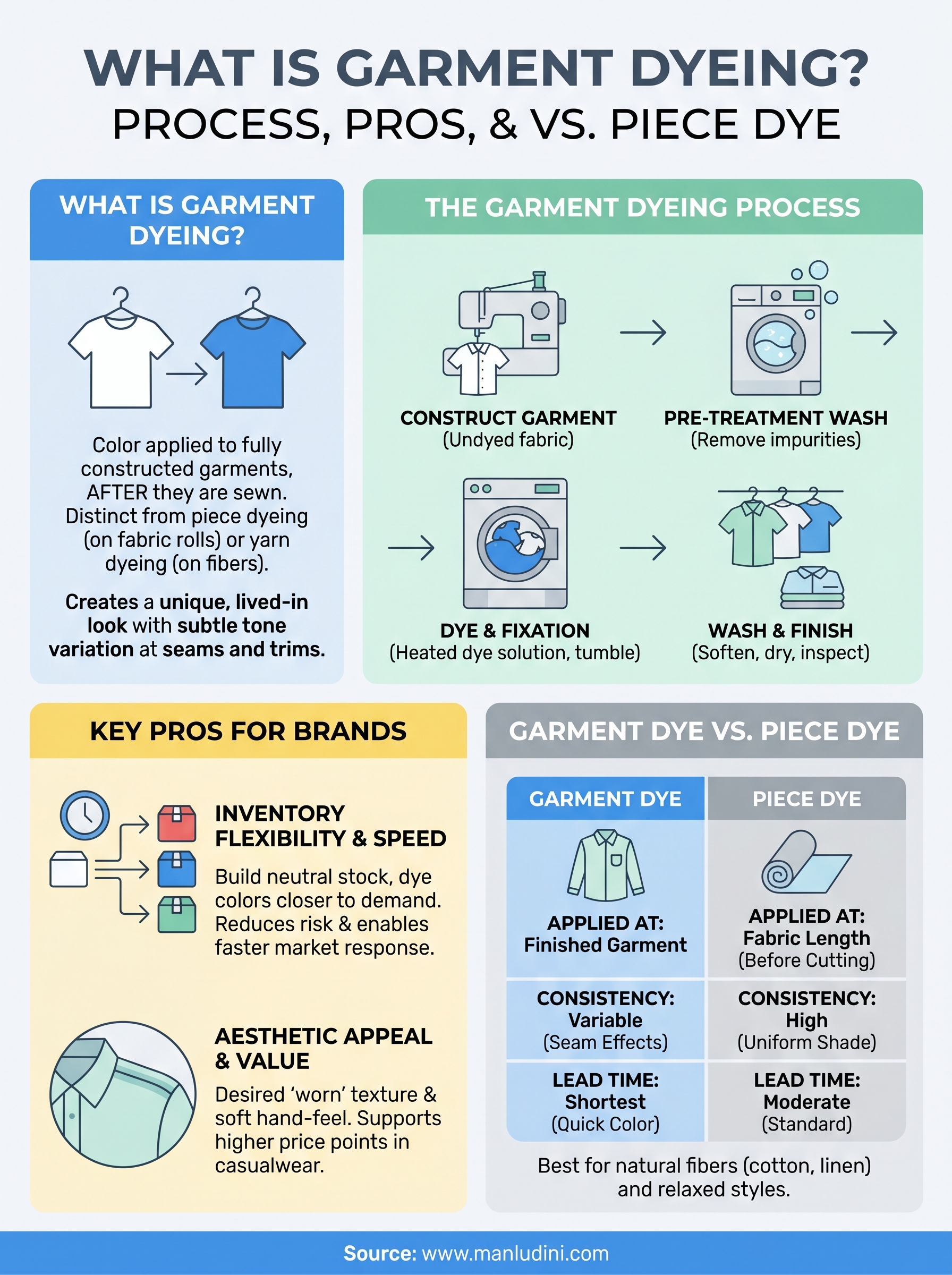
Brands that understand what is garment dyeing often choose it because it solves a real inventory problem. When you dye finished garments instead of raw fabric, you can build a neutral base inventory in white or ecru and commit to final colors much later in the production cycle. That flexibility directly reduces the risk of over-ordering unpopular shades and ending up with unsellable stock at the end of a season.
Deferring your color commitment until closer to your sell date is one of the most practical advantages garment dyeing offers brands at any scale.
The aesthetic appeal
Garment dyeing produces a look that standard piece dyeing cannot replicate. Because the dye penetrates an already-constructed garment, seams, hems, threads, and trims absorb color at slightly different rates than the main fabric panels. That subtle variation gives the finished piece a naturally worn, slightly uneven tone that reads as authentic rather than manufactured.
For brands in casualwear, streetwear, or workwear categories, that lived-in texture is a deliberate design outcome. Consumers in these segments often pay more for that aesthetic, which means garment dyeing can support a higher retail price point without significantly increasing your production cost.
Faster response to market demand
Another reason brands invest in garment dyeing is speed of color response. If you hold undyed garments in storage, you can react quickly when a specific color gains traction without rebuilding your production run from scratch. You simply dye the quantity you need, in the shade that's selling, and move it to fulfillment faster than a brand relying on pre-dyed fabric.
For smaller labels managing limited working capital, that agility reduces both financial exposure and lead time pressure. You're not forecasting color demand six months out; you're responding to real market signals with inventory you already own.
How garment dyeing works step by step
Once you understand what is garment dyeing conceptually, the production sequence is straightforward to plan. The factory constructs the garment completely first using undyed or scoured fabric, then sends the finished pieces into a dye cycle rather than dyeing raw fabric before cutting begins.
Planning your production around this sequence affects your fabric choice, thread selection, and trim specifications from the start.
Preparing and loading the garments
Before the dye bath, garments go through pre-treatment washing to remove oils, sizing agents, and residue from construction. Skipping this step causes uneven dye uptake and inconsistent shading across your batch.
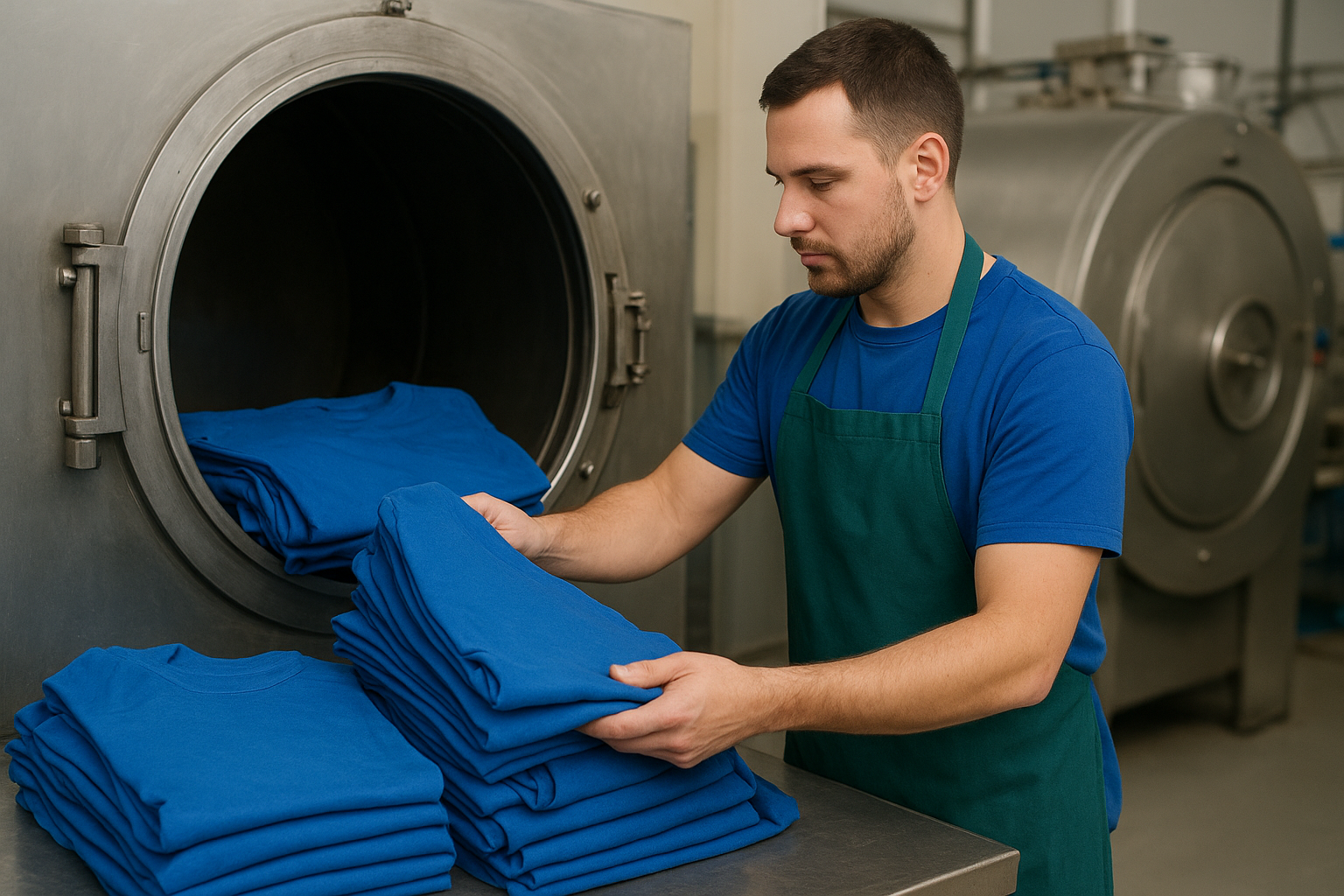
Once clean, the garments load into a paddle dyeing machine or rotary drum and tumble continuously through a heated dye solution. Water temperature, dye concentration, and tumbling time all require tight control to achieve consistent color across every piece.
Fixation, washing, and finishing
After the dye cycle, the factory runs a fixation process to bond color into the fiber. Excess dye then rinses out through several wash stages, which improves your colorfastness results in lab testing.
The final stage covers softening treatments and drying, followed by inspection for shade consistency across the full batch. Any pieces outside the acceptable range get pulled before packing.
Garment dyed vs piece dyed vs yarn dyed
Understanding what is garment dyeing is easier when you compare it directly to the other two main dyeing methods. Each approach introduces color at a different stage of production, which changes color consistency, lead time, and how the finished garment looks and behaves.
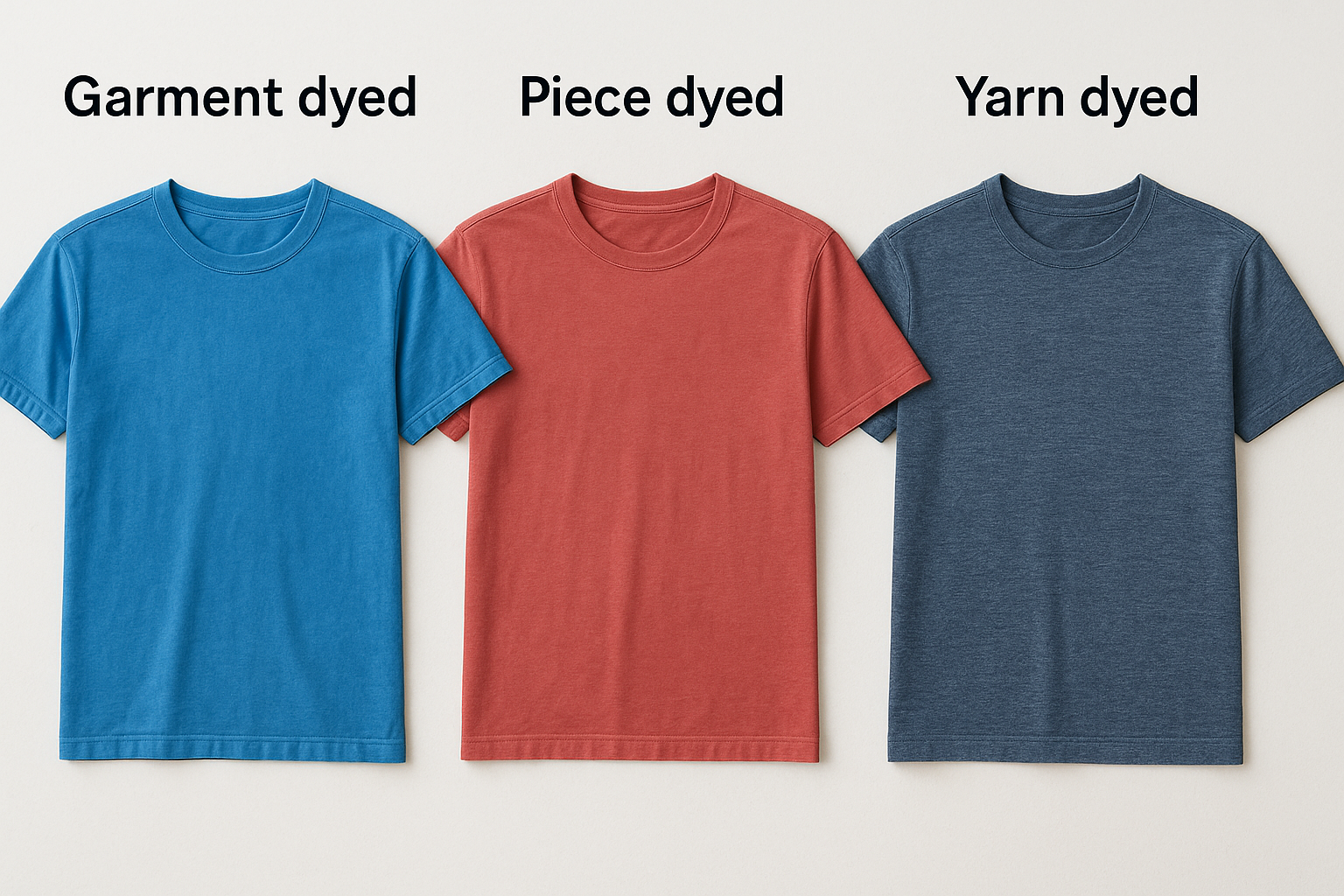
The stage at which color enters the process shapes everything, from texture variation to how much scheduling flexibility you retain.
Piece dyeing and yarn dyeing explained
Piece dyeing applies color to flat fabric lengths before the factory cuts or sews anything. You get tight color uniformity across all panels, which works well for structured styles like tailored shirts or suiting where consistent shading across seams is essential.
Yarn dyeing goes even further back, coloring the fiber or yarn before weaving or knitting begins. That process produces fabrics with built-in color patterns like stripes, checks, or heather blends. It delivers a depth of texture that piece dyeing and garment dyeing cannot match, but it also demands the longest lead time and the highest minimum order quantities of all three methods.
| Method | Color applied at | Color consistency | Typical lead time |
|---|---|---|---|
| Yarn dyed | Fiber or yarn | Highest | Longest |
| Piece dyed | Fabric length | High | Moderate |
| Garment dyed | Finished garment | Variable | Shortest |
Pros, cons, and best use cases
Once you know what is garment dyeing and how it fits into a production plan, you can evaluate whether it matches your specific project. The main advantages center on flexibility and aesthetics, while the limitations mostly come down to color consistency and fiber compatibility.
Garment dyeing rewards brands that prioritize inventory agility and a natural look over perfect color uniformity.
Where garment dyeing works best
Garment dyeing suits casual, relaxed styles built from natural fibers like cotton, linen, and cotton-linen blends. Categories like fleece, sweatshirts, tees, chinos, and lightweight jackets consistently produce strong results because the fabric absorbs dye evenly and the slightly uneven tone matches what buyers in those categories expect.
Structured or formal styles work less well. Rigid tailored constructions often show unacceptable shade variation across panels, and polyester-heavy fabrics resist most standard dye processes entirely.
Key tradeoffs to factor in
Your thread, labels, and trims need to be dye-compatible or pre-dyed to match the target color, otherwise they absorb dye differently and create unwanted contrast across the finished garment.
Sizing also requires attention. Shrinkage tolerances need to be built into the base garment before dyeing, and fit specs should account for the dimensional change the dye bath introduces.
Quality, compliance, and cost tips
Once you understand what is garment dyeing and commit to using it, quality control and cost planning need attention from the start, not after bulk production finishes. The dye bath introduces variables that don't exist in piece dyeing, so catching issues early saves you time and money.
Set your colorfastness and shade tolerance standards before sampling starts, not after you receive your first batch.
Testing standards to request
Ask your factory for colorfastness test results covering wash, rub, and light exposure before approving bulk production. Specify an acceptable shade tolerance range on your tech pack so both sides agree on what passes before garments leave the factory.
- Wash fastness: minimum ISO 105-C06 or AATCC 61
- Rub fastness: dry and wet, minimum grade 3-4
- Shade tolerance: define Delta E limits per your brand standard
Keeping costs under control
Your base garment cost is lower because you hold undyed inventory, but dye processing and water treatment fees add per-unit costs to account for in your costing sheet. Request a full breakdown separating construction cost from dyeing cost.
Batch size directly affects cost per unit. Larger dye runs spread fixed setup costs across more pieces, so planning color commitments in realistic volumes reduces your unit cost without sacrificing quality.
Final takeaways
Understanding what is garment dyeing gives you a practical edge when planning your next collection. You now know that color enters the process after construction, which creates both the aesthetic variation buyers recognize and the inventory flexibility smaller brands need to manage risk across seasons. That single shift in sequence touches your fabric choices, your trim specs, your testing requirements, and your overall production cost.
The method works best on natural fiber basics in casual and workwear categories, and it requires upfront planning around thread, trims, shrinkage, and colorfastness testing standards. When you account for those variables from the start, garment dyeing becomes a reliable production strategy rather than a guessing game.
If you're ready to develop a garment-dyed collection and want a manufacturing partner that handles sampling through bulk, work with the Manludini team to get your project moving with the right factory support and production follow-up from day one.
0 comments