
If you've ever stretched a t-shirt, worn a pair of leggings, or pulled on a hoodie, you've already handled knit fabric. But what is knit fabric exactly, and why does it behave so differently from a button-down shirt or a pair of chinos? The answer comes down to how the yarn is constructed, interlocking loops instead of intersecting threads, and that single difference changes everything about how the fabric moves, drapes, and performs.
At Manludini, we work with fashion brands through every stage of garment development, from sampling to bulk production. A significant share of the styles we produce, think joggers, tees, polo shirts, underwear, activewear, are built on knit fabrics. Choosing the right knit directly affects fit, comfort, cost, and how the finished piece holds up after repeated washes. It's one of the earliest decisions in product development, and it shapes everything that follows.
This article breaks down the types of knit fabric, their core properties, where each one works best, and how knit compares to woven fabric. Whether you're developing your first collection or sourcing for an established line, understanding knit fabric will help you make sharper material decisions before production begins.
How knit fabric is made
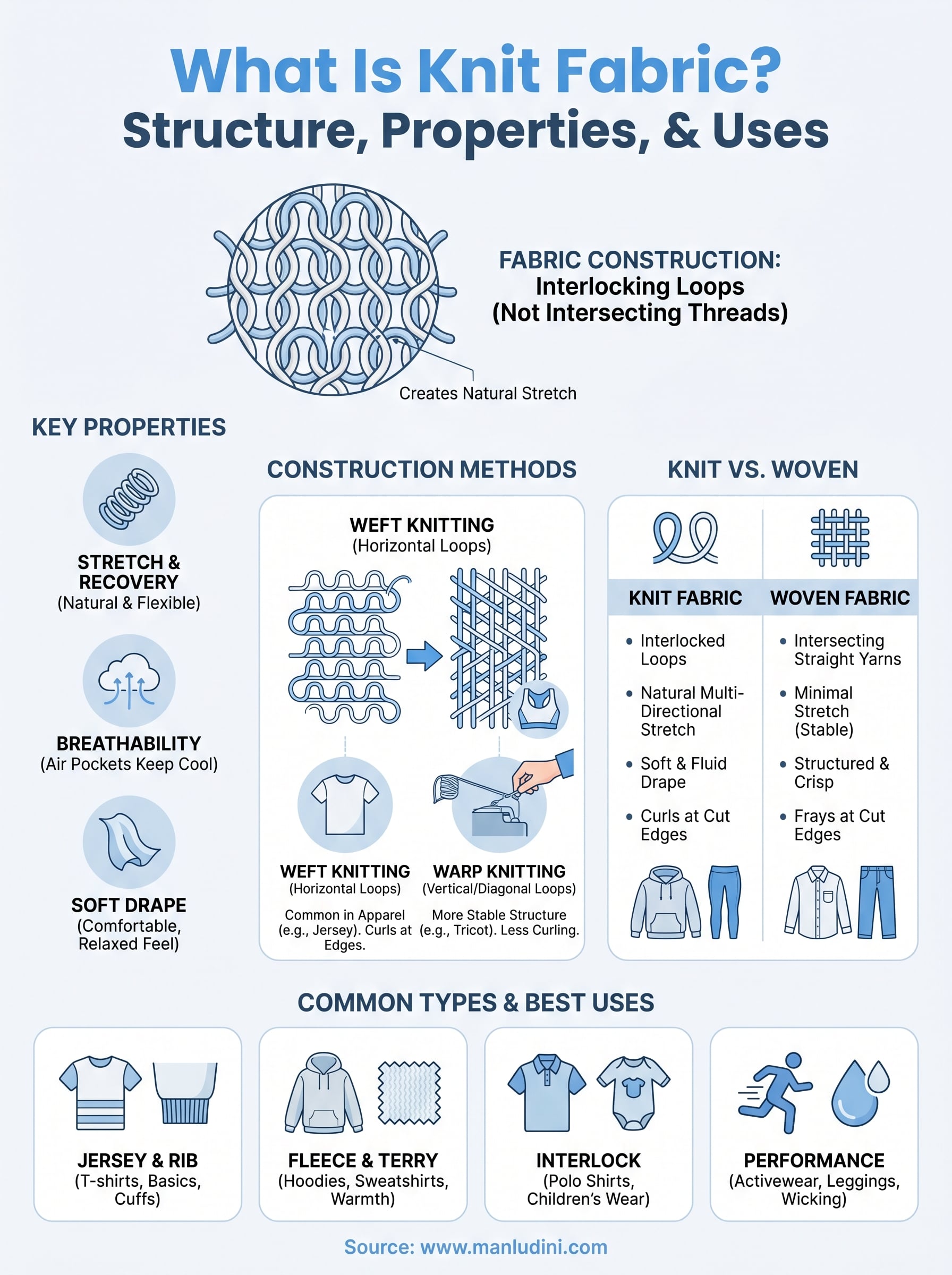
Knit fabric starts with yarn fed through a series of needles that pull each new loop through the one before it, creating a continuous chain of interlocked loops across the fabric. This structure is called loop interlocking, and it's what separates knit from woven fabric at the most fundamental level. Because those loops can flex, expand, and contract, the fabric naturally moves with the body rather than resisting it. That built-in movement is not a side effect. It's a direct result of how the fabric was constructed.
Weft knitting vs. warp knitting
The two main construction methods are weft knitting and warp knitting, and they produce fabrics with noticeably different behavior. In weft knitting, a single yarn runs horizontally across the fabric, forming rows of interlocking loops. This is the method behind everyday fabrics like jersey and rib knit. In warp knitting, multiple yarns run vertically and interlock diagonally, producing a more stable, less stretchy structure. Fabrics like tricot and mesh typically come from warp knitting.
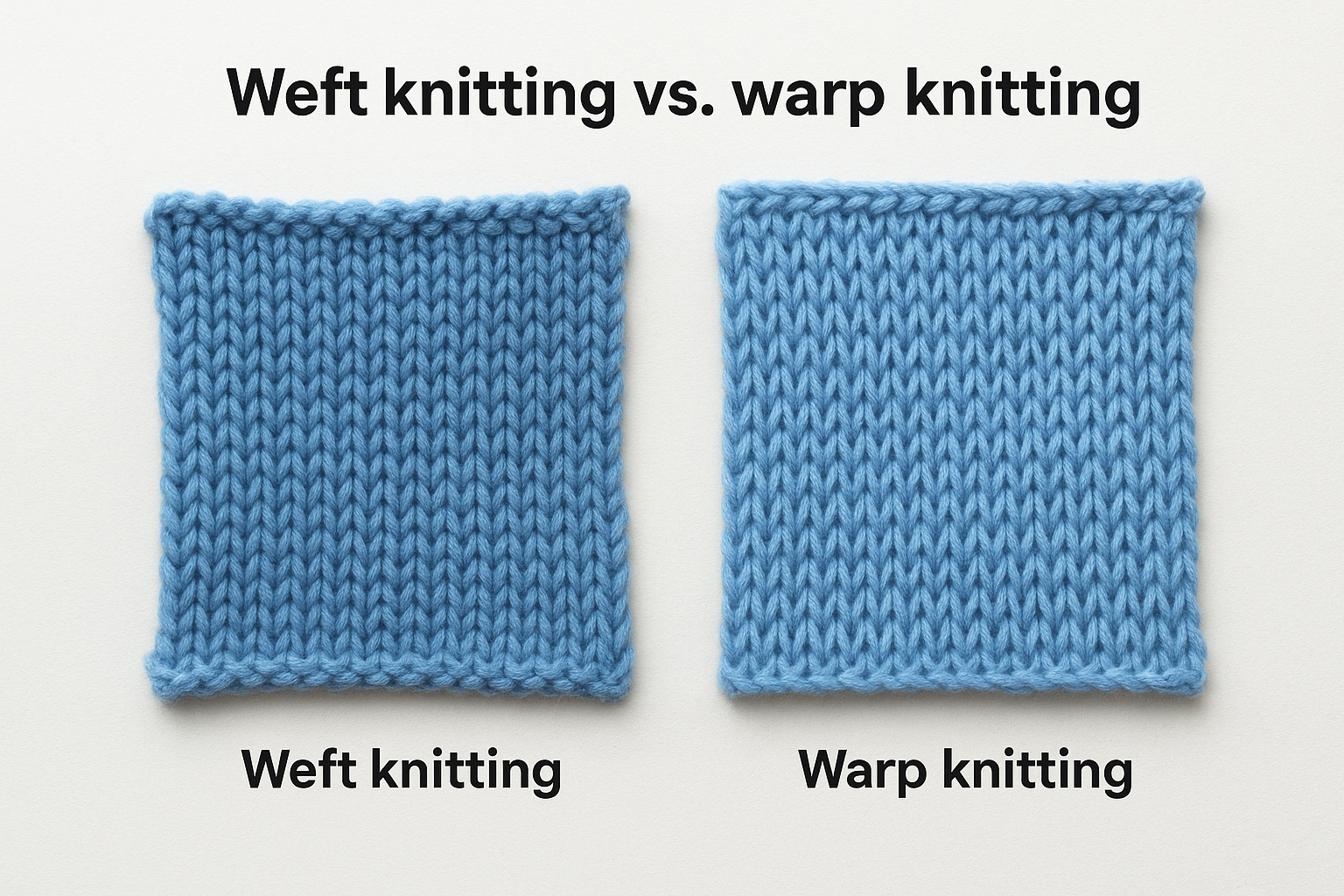
Weft knitting is far more common in apparel production, particularly for basics, activewear, and casual styles.
Knowing which construction method your fabric uses helps you anticipate how it will cut and sew on your production line. Weft-knit fabrics tend to curl at the cut edges, which affects how your pattern pieces need to be drafted and handled. Warp-knit fabrics are more dimensionally stable and less prone to that curling, making them easier to manage during construction.
Machine knitting vs. hand knitting
Most commercial garment production relies on machine knitting, where industrial circular or flat knitting machines produce fabric at high speed with consistent tension and weight. Circular knitting machines produce a continuous tube of fabric, which is then cut open and sewn into finished garments. Flat knitting machines produce fabric in panels, giving manufacturers more control over shaping specific pattern pieces before assembly.
Hand knitting exists but plays no meaningful role in commercial apparel production at scale. For any production line, machine-knit fabric is what you'll be working with. Knowing whether your fabric comes from a circular or flat machine matters for pattern grading, seam placement, and per-unit cost.
Key properties of knit fabric
When someone asks what is knit fabric, the real answer goes beyond construction and into how that construction behaves in use. The loop-based structure gives knit fabric specific characteristics that directly affect how a garment fits, feels, and holds up. Understanding these properties before you select materials will save you from fit problems, sample rejections, and production rework down the line.
Stretch and recovery
The most defining property of knit fabric is its natural stretch, which comes directly from the flexible loops in the structure. Most knit fabrics stretch in at least one direction, and many stretch in both, which is called four-way stretch. Recovery refers to how well the fabric returns to its original shape after being stretched. Poor recovery shows up as bagging at the knees, seat, and elbows after repeated wear, and it traces back to fabric selection more often than to construction errors.
Evaluate recovery by stretching a fabric swatch fully and releasing it. If it doesn't spring back quickly, it won't hold its shape in a finished garment.
Breathability and drape
Knit fabrics are generally more breathable than woven fabrics because the looped structure creates small air pockets throughout the material. Those pockets allow heat and moisture to move away from the body, which is why knit dominates activewear, casualwear, and base layers.
That soft drape also sets knit apart in how garments feel against the body. Structured woven fabrics cannot replicate this comfortable, relaxed feel without significant mechanical finishing or added stretch fibers blended into the yarn.
Knit vs woven fabric
The clearest way to understand what is knit fabric versus woven fabric is to look at how each is constructed. Knit fabric builds structure through interlocked loops, while woven fabric uses two sets of straight yarns that cross each other at right angles. That structural difference shapes how each fabric moves, stretches, sews, and wears over time. Knowing this distinction helps you choose the right material before you write a tech pack.
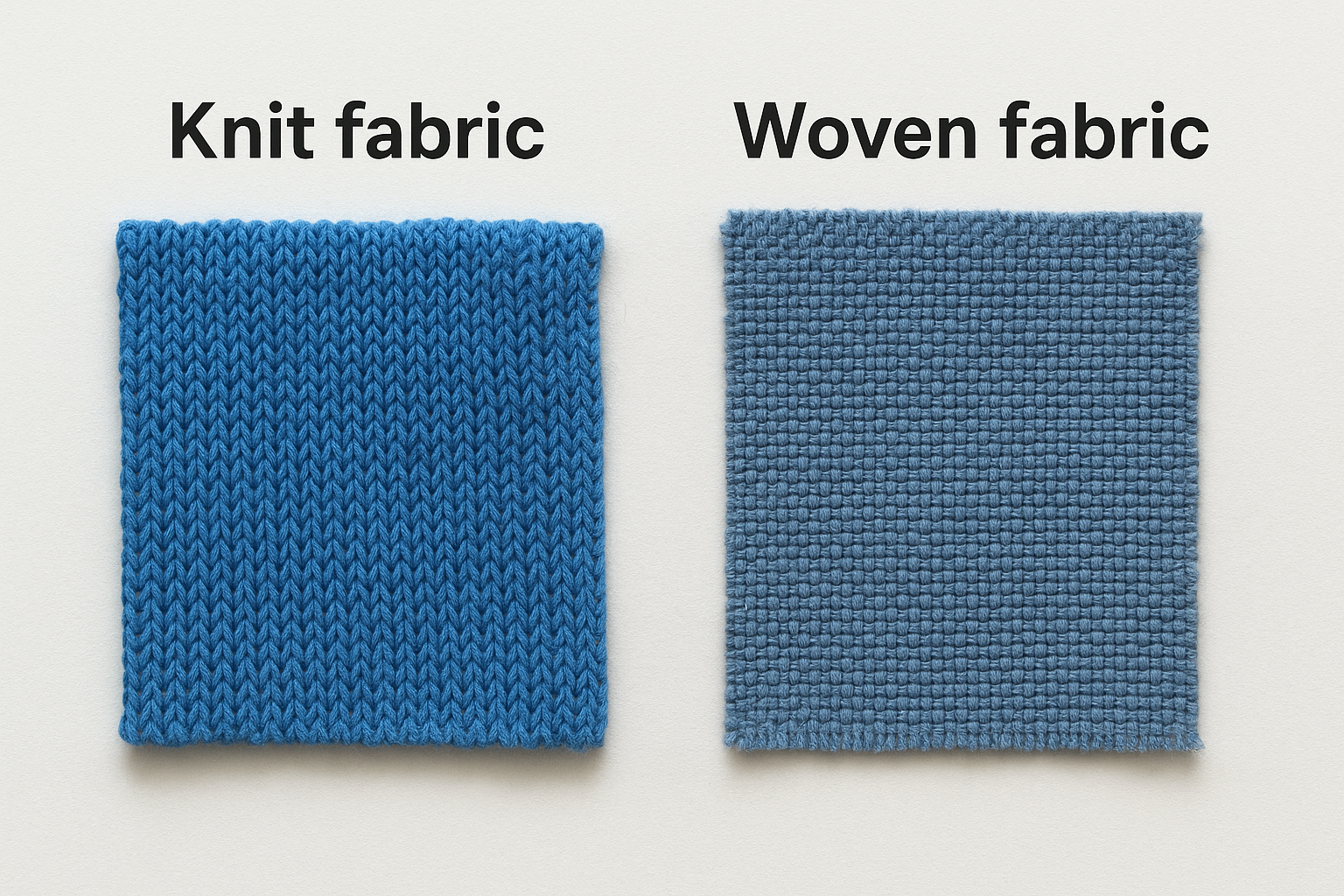
Structure and stretch
Knit fabric stretches naturally in at least one direction because those loops can flex and open under tension. Woven fabric is dimensionally stable but offers little to no stretch unless elastic fibers are blended into the yarn. This is why you find knit in t-shirts, leggings, and hoodies, and woven in dress shirts, trousers, and structured denim.
If your design requires body-conforming fit or ease of movement, knit is almost always the right starting point.
| Feature | Knit Fabric | Woven Fabric |
|---|---|---|
| Stretch | Natural, multi-directional | Minimal without added elastane |
| Edge behavior | Curls at cut edges | Frays at cut edges |
| Drape | Soft, fluid | Structured, crisp |
| Typical uses | T-shirts, activewear, underwear | Shirts, trousers, denim |
Production and care
Sewing knit fabric requires different techniques than woven. You need stretch stitches or a serger to handle seams that move with the fabric without breaking under tension. Woven fabrics tolerate a wider range of standard sewing methods and hold their shape more predictably on the cutting table. Knowing which structure your design calls for helps you plan your production process before any patterns are drafted.
Common knit fabric types and examples
Part of understanding what is knit fabric is recognizing that it's not a single material but a broad category built through different knitting methods, yarn choices, and finishes. Each type brings a different weight, texture, and performance profile, so the right choice depends on the garment you're building.
Jersey, rib, and fleece
Single jersey is the most widely used knit fabric in apparel. It's lightweight, stretches primarily in the width direction, and forms the base of most t-shirts and basic tops. Rib knit alternates raised and recessed columns, giving it strong horizontal stretch and excellent recovery, making it the standard choice for cuffs, neckbands, and waistbands. Fleece is a knit fabric with a brushed interior surface that traps warmth, commonly used in hoodies, sweatshirts, and casual outerwear.
Rib knit's recovery makes it one of the most functional and cost-effective trims in casualwear and activewear production.
Performance and specialty knits
Interlock knit is a double-sided jersey that feels smooth on both faces and sits more stable than single jersey, which makes it a reliable option for polo shirts and children's wear. French terry features loops on the interior and a smooth exterior, offering breathability with some warmth. For activewear specifically, moisture-wicking knits built from polyester or nylon blends are the standard, pulling sweat away from the skin during movement and drying faster than cotton-based alternatives.
Best uses for knit fabric in apparel
Understanding what is knit fabric becomes practical when you connect the construction to specific product categories. The stretch, breathability, and soft drape of knit fabrics make them the right call for garments that need to move with the body and feel comfortable against the skin. Knowing where each knit type performs best helps you avoid costly material mismatches before sampling begins.
Casualwear and basics
T-shirts, sweatshirts, hoodies, and joggers are all built on knit fabrics for a reason. Single jersey and fleece give these styles the relaxed fit and soft hand feel that customers expect from everyday wear. If you're developing a core basics line, knit is your foundation.
Fleece-backed knits are one of the most consistent sellers in casualwear because they balance comfort, warmth, and production simplicity.
Rib knit trims on necklines, cuffs, and waistbands add structure and recovery to casual styles without requiring complex construction.
Activewear and performance styles
Performance categories lean heavily on moisture-wicking knits made from polyester or nylon blends. These fabrics manage sweat, dry quickly, and hold their shape through repeated wear and washing. Four-way stretch knits are the standard for leggings, sports bras, compression garments, and athletic shorts where freedom of movement is non-negotiable.
Underwear and base layers also belong in this category. Lightweight jersey and interlock knits work well here because they sit close to the skin without restricting movement and wash reliably over time.
Final takeaways
Knowing what is knit fabric goes beyond memorizing a definition. The loop-based construction directly shapes how your garments fit, how they perform after repeated washing, and what your production process needs to handle them correctly. Jersey, rib, fleece, interlock, and performance knits each fill a specific role in apparel, and matching the right fabric to the right style is one of the most practical decisions you can make before sampling begins. Get this wrong, and you'll feel it in your fit samples, your customer returns, and your production timeline.
Your fabric choice also carries real consequences for cut-and-sew techniques, trim selection, and finished cost per unit. Getting it right early prevents sample rejections and rework that slow everything down. If you're developing a new style and need a manufacturing partner who can guide you from fabric selection through bulk production, start a conversation with the Manludini team to discuss your project.
0 comments