
Every garment starts with a fabric choice, and more often than not, that choice is a woven fabric. Built from two sets of yarns, warp and weft, interlaced on a loom, woven fabrics make up the backbone of most structured clothing, from dress shirts and trousers to jackets and tailored pieces. But if you're developing a product line and someone on your team can't clearly explain how woven fabric is constructed or why it behaves the way it does, that gap in knowledge will cost you time, samples, and money.
At Manludini, we work with fashion brands through every stage of garment development, from sample creation to bulk production. A huge part of that process is helping our clients understand the materials they're working with so they can make smarter decisions about construction, fit, and finish. Fabric selection shapes everything, including how a garment drapes, how it holds up after washing, and how much it costs to produce.
This article breaks down woven fabric from the ground up: how it's made, the main types you'll encounter, where each one works best, and how woven compares to knit. Whether you're building your first collection or refining your next season's tech packs, this is the foundational knowledge that makes every conversation with your manufacturer more productive.
Why woven fabric matters in garment making
When you understand what is woven fabric and how it behaves during production, you make better decisions at every step of your development process. The fabric you choose directly affects how a garment looks on the body, how it moves, how it fits after alterations, and how it holds up over repeated wear and washing. Woven fabrics are especially important in structured garments because they resist stretching in the direction of the weave, which is exactly what you need when building a precise, clean silhouette.
Structure and stability in finished garments
Woven fabric gives you predictable structure that knit fabrics simply cannot match. Unlike knits, which stretch in multiple directions, most woven materials hold their shape under tension. That makes them the go-to choice for tailored pieces, workwear, outerwear, and any garment where fit precision matters. When a customer tries on a well-constructed shirt or a pair of chinos, the fabric holds the cut in place rather than pulling or distorting across the body.
The stability of woven fabric is what allows a pattern maker to build precise seams, darts, and shaping into a design without the fabric working against the construction.
This stability also matters during bulk production. Fabrics that behave consistently through cutting, sewing, and finishing are easier for factory teams to handle at speed. Consistency in fabric behavior means fewer defects, fewer rework cycles, and a cleaner output at scale. If your woven fabric has inconsistent tension or irregular weave density, those problems will appear in every single garment your production line cuts, and fixing them mid-production is expensive.
How woven fabric affects production decisions
Your choice of woven fabric shapes every downstream production decision, from the type of stitching used to the finishing treatments applied. A tightly woven cotton poplin, for example, behaves very differently than a loosely woven linen. The poplin holds fine seam allowances cleanly and takes sharp pressing well, while the linen may require overlock finishing or French seams to prevent fraying along the cut edges.
These differences also affect your timelines and costs in real ways. Fabrics that are harder to sew, more prone to slipping on the cutting table, or require specialized pressing equipment will slow down your production line and push up your cost-per-unit. Knowing these factors before you commit to a fabric helps you build accurate estimates and realistic timelines into your project from the start.
Working with a manufacturer who understands fabric behavior means you avoid discovering problems at the sampling stage, when corrections carry the highest cost. You and your production team can align on the right material before a single pattern piece is cut, which protects both your budget and your schedule across the full development cycle.
How woven fabric is made with warp and weft
Understanding what is woven fabric at a construction level helps you communicate clearly with your manufacturer and avoid costly misunderstandings during sampling. Every woven textile starts with two distinct sets of yarns that run in perpendicular directions on a loom. The way those yarns cross each other determines the structure, weight, and behavior of the finished fabric.
The role of warp and weft threads
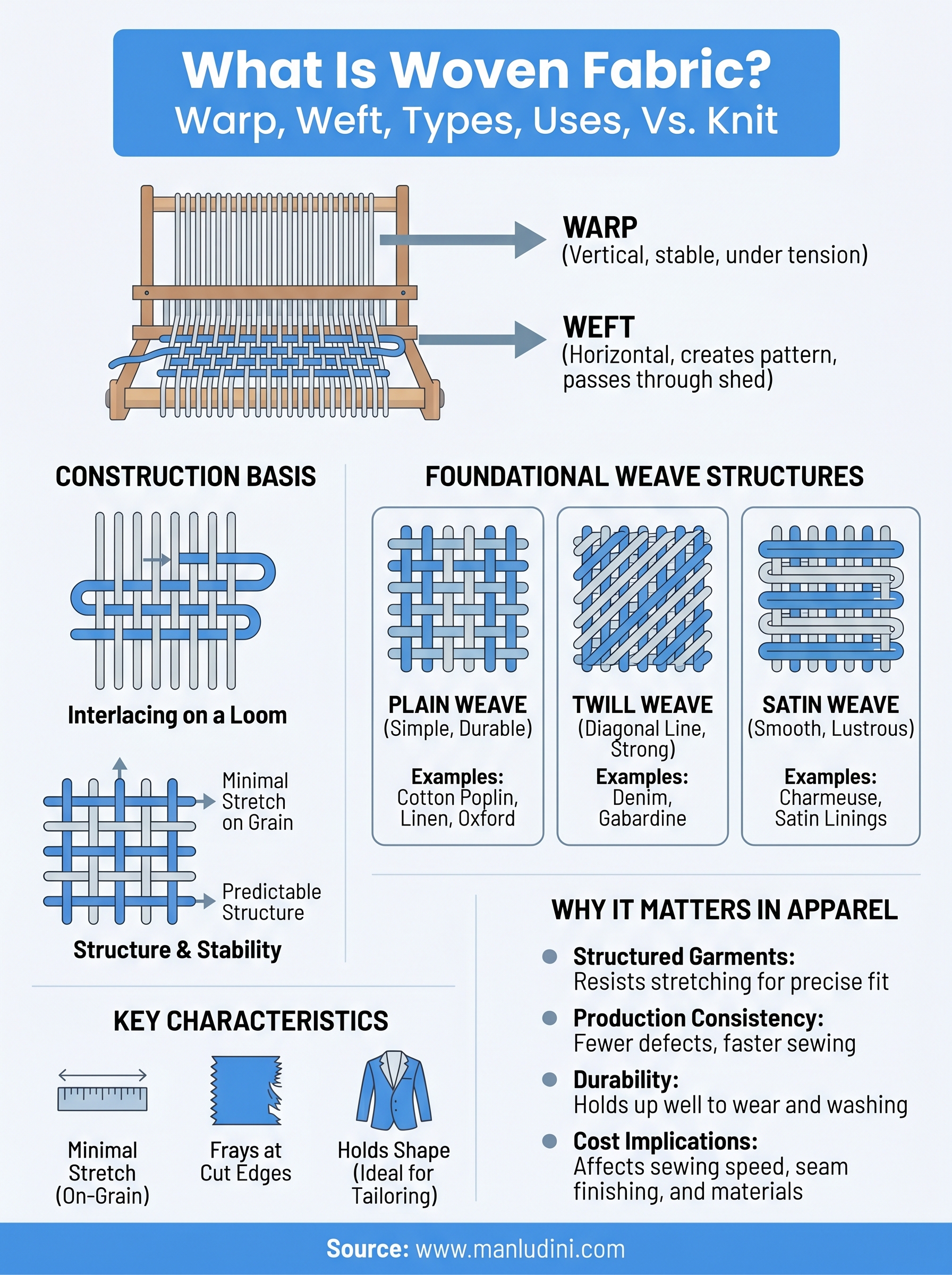
The warp threads run vertically along the length of the fabric, parallel to the selvage edge. These threads are held taut on the loom under tension and form the structural backbone of the weave. The weft threads run horizontally, crossing over and under the warp in a repeated pattern. The specific sequence of those crossings is what creates different weave structures and gives each fabric its unique texture and strength.
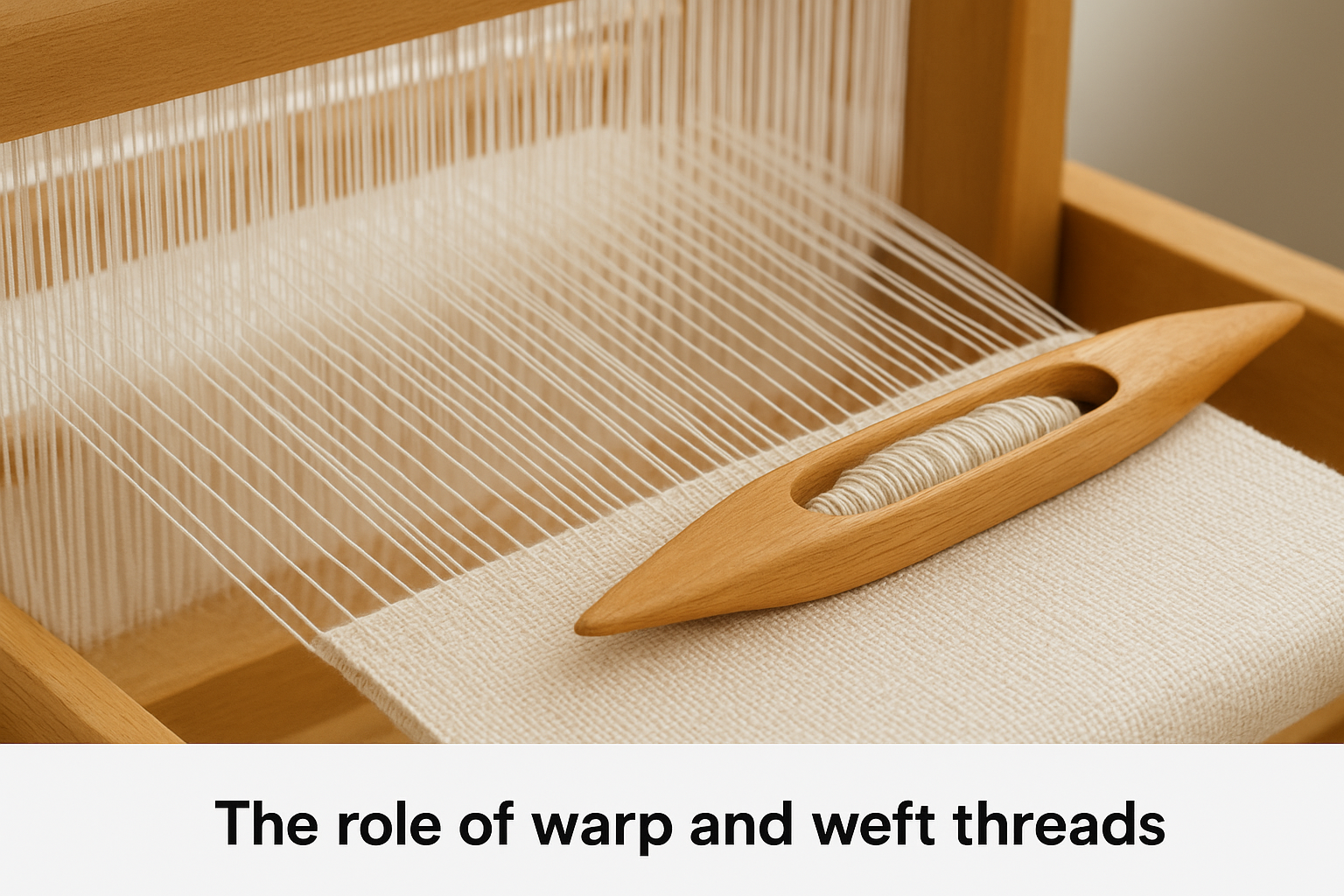
The warp direction typically has less stretch and greater tensile strength, which is why pattern makers usually align the grain line of a garment piece with the warp when precision fit is the goal.
How the loom brings it together
A loom interlaces warp and weft by lifting selected warp threads in a controlled sequence and passing the weft thread through the gap created, called the shed. Each pass of the weft is pushed firmly against the previous one, building the fabric row by row. Modern industrial looms do this at high speed using automated mechanisms, but the fundamental interlacing principle is the same whether you're working with a simple handloom or a high-volume rapier loom in a production facility.
The density of the weave, meaning how many warp and weft threads per inch, directly affects the fabric's weight, opacity, and hand feel. Higher thread counts generally produce a tighter, smoother fabric, while lower counts create a more open or textured surface. These variables are something you and your manufacturer will discuss when selecting fabric for your specific garment.
Key characteristics and how to spot it
When you know what is woven fabric at a practical level, you can evaluate any material quickly before committing to it for your product. Woven fabrics share a consistent set of physical traits that separate them from knits and non-wovens. Recognizing these in person means fewer surprises when your samples arrive from the factory.
Physical properties to look for
The most immediate sign of a woven fabric is its minimal stretch along the grain lines. Pull the fabric along the warp direction and then along the weft direction. You'll feel little to no give in either. Diagonal stretch, known as the bias, behaves differently. Woven fabrics stretch noticeably on the bias because no yarn runs in that direction to resist the tension.
This is why garments cut on the bias, like bias-cut skirts or cowl necklines, drape very differently than those cut on-grain.
You can also inspect the fabric surface closely to see the interlacing structure. Hold the material up to light or use a loupe, and you'll see a clear grid-like pattern of threads crossing at right angles. The edge of the fabric, called the selvage, runs along both sides of the warp direction and typically has a tighter weave or a narrow border. That edge tells your cutter the grain direction and helps align pattern pieces correctly.
Fraying as a construction signal
One reliable indicator of a woven fabric is fraying at a cut edge. When you cut across the weft threads, the loose ends have nothing holding them in place and pull away from the weave easily. Knit fabrics, by contrast, tend to curl at cut edges rather than fray because their loop structure holds together differently. If your swatches fray when cut, you're working with a woven, and your manufacturer needs to account for proper seam finishing in the construction spec to keep the garment clean and durable.
Types of woven weaves and common fabrics
Not all woven fabrics are built the same way. The weave structure you select determines how a fabric feels on the body, how it drapes, how durable it is, and how it responds to washing and wear. When you're asking what is woven fabric for your specific product, the weave type is one of the most important details to nail down early in development.
The three foundational weave structures
Three core structures cover most of what you'll encounter in garment production. Plain weave is the simplest: each weft thread passes over and under alternating warp threads in a consistent 1-over-1-under pattern. This produces a flat, even surface that's durable and easy to print on. Twill weave shifts each crossing by one thread per row, creating the diagonal line you recognize on denim, chinos, and gabardine. Twill fabrics are heavier, more flexible, and softer than plain weave equivalents at the same fiber content.
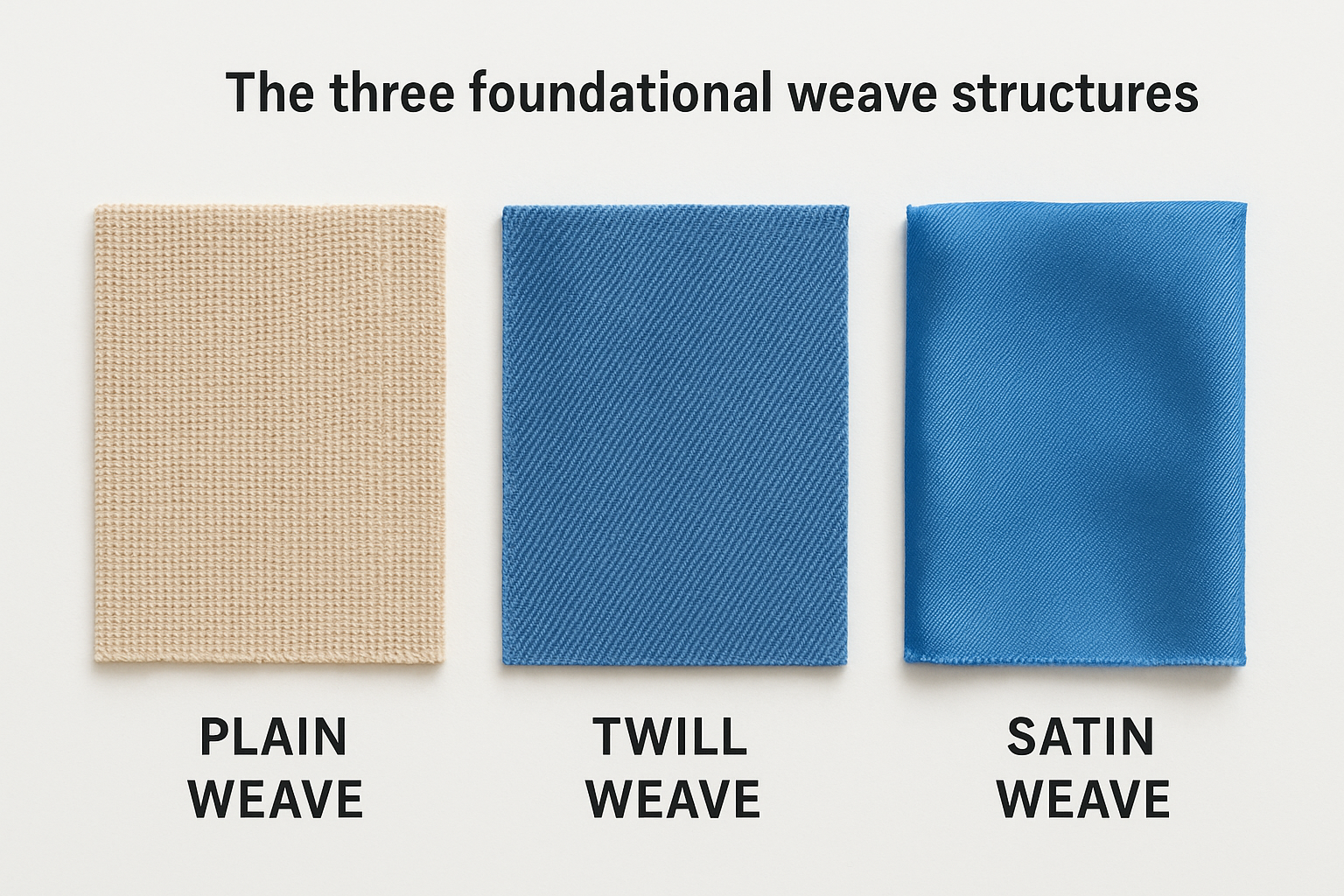
Satin weave uses long yarn floats to push most threads to the surface, which produces the smooth, reflective finish you see on silk charmeuse and polyester satin linings.
Common woven fabrics and where they fit
Understanding the weave behind each fabric helps you match material to application. Here are the fabrics you'll use most often in apparel production:
- Cotton poplin: plain weave, lightweight, crisp, ideal for shirts and blouses
- Denim: twill weave, heavy, strong, used in jeans, jackets, and workwear
- Gabardine: tight twill, smooth finish, common in trousers and structured outerwear
- Linen: plain or basket weave, breathable, slightly textured, used in warm-weather clothing
- Charmeuse: satin weave, fluid drape, works well for linings and eveningwear
- Oxford cloth: basket weave variation, casual texture, standard for button-down shirts
Each of these fabrics behaves differently at the cutting table and on the sewing machine, so your tech pack should specify not just the fiber but the weave structure your manufacturer needs to source correctly.
How to choose woven fabric for your product
Once you understand what is woven fabric and how different weave structures behave, you can approach fabric selection as a practical decision rather than a guessing game. The right fabric for your product comes down to three intersecting factors: end use, construction requirements, and budget. Getting all three aligned before you source your material saves you from costly sample revisions and late-stage changes.
Match the fabric to the garment's function
Every garment has a job to do, and your fabric choice needs to support that function. A structured blazer needs a fabric with enough body to hold the shoulder shape, like a wool blend or a tightly woven twill. A summer shirt needs something lightweight and breathable, such as a poplin or linen. Before you finalize a fabric, write down how the finished garment will be worn, in what climate, and under what conditions. Those answers will narrow your options quickly.
If your garment needs to hold a precise seam line or take a sharp press, always prioritize a fabric with a tight, stable weave over one with a looser, more open structure.
Consider construction and finishing requirements
Your factory's capabilities matter as much as your design preferences. Some fabrics require specialized equipment or slower sewing speeds, which affects your cost per unit and production timeline. Loosely woven fabrics fray more aggressively and need careful seam finishing, like bound seams or overlocking, to stay clean through the garment's lifespan. Talk to your manufacturer before committing to a material and confirm they have handled it before.
A quick checklist helps you align fabric choice with production reality:
- Weave type and thread density
- Required seam finishing method
- Pressing and shrinkage behavior
- Minimum order quantity from the fabric supplier
- Compatibility with any print, embroidery, or wash treatment you plan
Next steps for your fabric plan
Now that you know what is woven fabric, how it's constructed, and how different weave structures affect production, you can move forward with more confidence in your development decisions. Fabric selection is not a detail to sort out after sampling starts. The earlier you define the weave type, fiber content, and finishing requirements for each garment in your line, the fewer costly revisions you'll face down the road. Take what you've learned here and apply it directly to your tech packs before you send them to a manufacturer.
If you're building a collection and need a production partner who can guide you through fabric sourcing, sample development, and bulk manufacturing, Manludini works with brands at every stage of the process. Visit Manludini's apparel manufacturing services to learn how we can support your next project from the first sample to final delivery.
0 comments