
Picking the wrong fabric can unravel an entire collection. We've seen it happen, a brand falls in love with a textile that looks great on a swatch but performs terribly once it's cut, sewn, and worn. Understanding how to choose fabric for clothing is one of the most practical skills you can build, whether you're launching your first line or developing your tenth. Get it right, and your garments drape, breathe, and hold up the way customers expect. Get it wrong, and even the best pattern won't save you.
At Manludini, we work with fashion brands through every stage of production, from fabric sourcing and sample development to bulk manufacturing. That means we deal with fiber content, fabric weight, and construction types daily. We've put together this guide based on what we actually see working on the production floor, not just theory from a textbook.
Below, you'll find a clear breakdown of how fabric weight, drape, and fiber type affect the garments you're building. We'll cover how to match materials to specific clothing types, what to watch out for during sourcing, and how to make decisions that hold up from sample stage through bulk production and beyond.
What matters most when choosing fabric
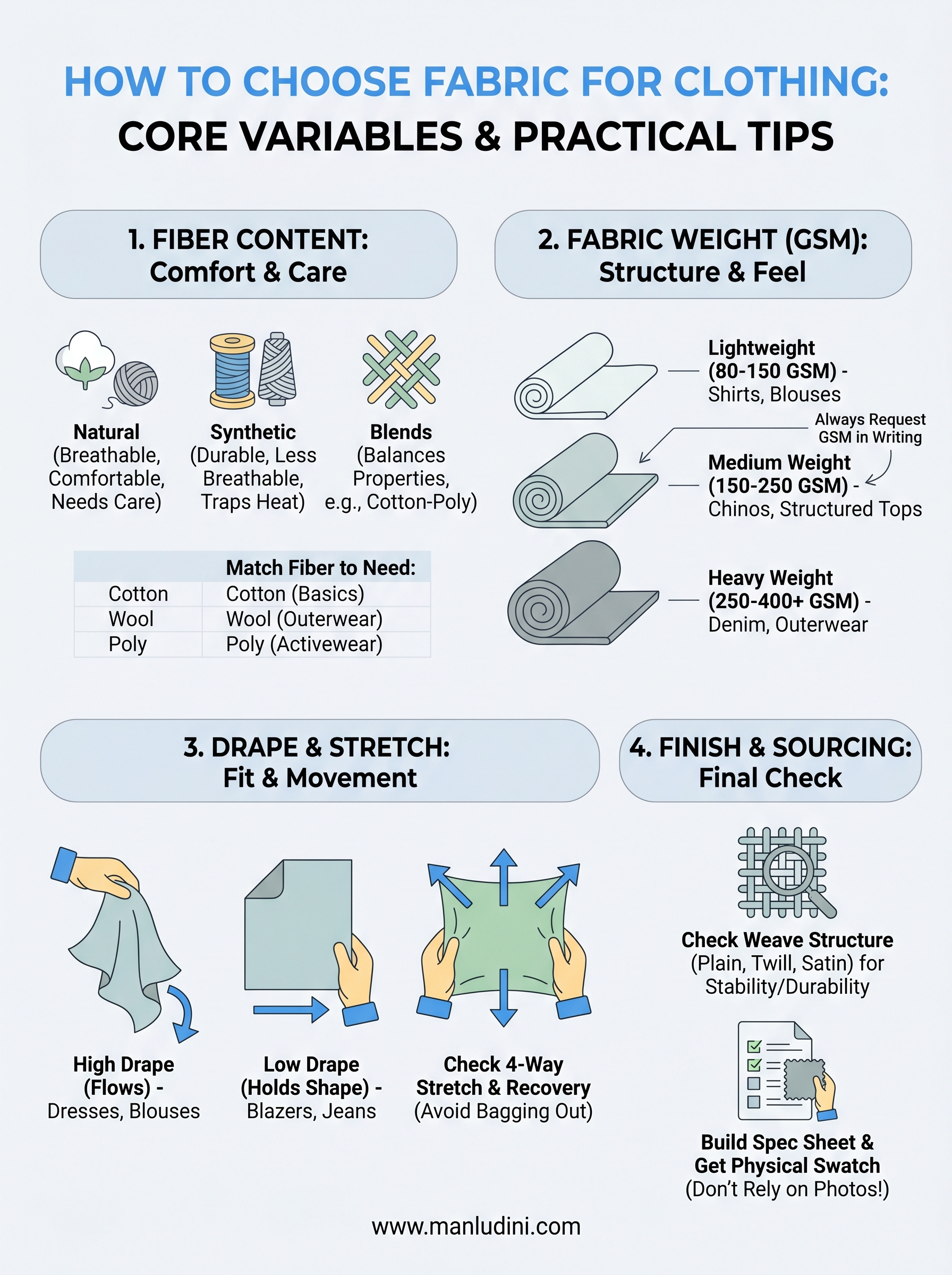
When you figure out how to choose fabric for clothing, the temptation is to focus only on what looks good in hand. But four core variables actually determine whether a fabric will work for a specific garment: fiber content, fabric weight, drape, and stretch behavior. Every fabric decision you make runs through these four factors, and understanding how they interact saves you from expensive mistakes at the sampling stage.
The four core variables
Fiber content tells you what the fabric is made from, whether that's cotton, polyester, wool, linen, or a blend. This affects how the garment breathes, how it feels against skin, how it responds to washing, and how much it costs per meter. Weight describes the density of the fabric, typically measured in grams per square meter (GSM), and it directly influences how structured or fluid your finished garment will look and feel on the body.
Drape refers to how a fabric falls and moves when worn. A fabric with high drape, like silk charmeuse or rayon crepe, flows and clings naturally. A fabric with low drape, like canvas or denim, holds its shape with more rigidity. Stretch behavior covers whether a fabric has any give, whether that stretch is one-way or four-way, and how well the fabric recovers its original shape after being pulled during wear or washing.
Getting these four variables right before you commit to a fabric is the single most reliable way to avoid costly rework after your first sample comes back.
Why no single variable works alone
These four variables don't operate independently of each other. A lightweight fabric can still have low drape if it has a tight weave structure, as you see with a crisp cotton poplin. Conversely, a heavier fabric can drape beautifully when the fiber content and construction support it, which is exactly what happens with a weighted silk satin used in formalwear.
Your fiber content choice also affects weight in ways that aren't always obvious from the label. A linen fabric and a polyester fabric at the same GSM will behave very differently because fiber density and internal structure change how each one drapes, stretches, and breathes. Blended fabrics add another layer of complexity, since they pull characteristics from multiple fibers that don't always average out in a predictable way.
What this means for your sourcing decisions
When you request fabric swatches from a supplier, ask for GSM, fiber composition, and weave type in writing before placing any order. Do not rely on visual or photo assessment alone, especially for remote sourcing. Request a physical hand-feel sample you can drape over your hand and stretch manually before approving anything for bulk production.
Even small variations in GSM or fiber ratio between two production batches from the same supplier can change how your finished garment fits, drapes, and holds up after washing. Building a clear fabric specification sheet for each style, covering fiber content, target GSM, weave or knit structure, and any finishing requirements, gives your manufacturing partner the precise reference they need to source consistently from batch to batch.
Step 1. Start with the garment and pattern needs
Before you look at a single swatch, you need to know exactly what the garment is supposed to do. Your pattern or tech pack contains critical information about how the fabric will be cut, handled, and assembled. When you understand how to choose fabric for clothing, the first move is always reading the construction requirements before you make any material decisions.
Read your pattern before you source
Most commercial patterns and professional tech packs list recommended fabric types directly on the spec sheet. These recommendations exist for a reason. A pattern designed for a structured blazer is drafted with a certain amount of body and weight in mind. If you substitute a soft, drapey rayon for a recommended medium-weight wool suiting, the finished garment will collapse at the shoulder seams and lose its intended silhouette entirely.
Your pattern's fabric recommendations are not suggestions. They reflect the construction logic baked into every seam allowance and dart in that design.
Look specifically for seam finish requirements as well. Some fabrics fray heavily and demand a serged or French seam, while others bond cleanly with a simple pressed seam. Knowing this before you source helps you avoid choosing a fabric that creates finishing problems at the construction stage.
Match the construction demands to the fabric
Different garment types place different structural demands on the fabric you choose. Use the table below as a starting reference when you match construction type to fabric behavior:
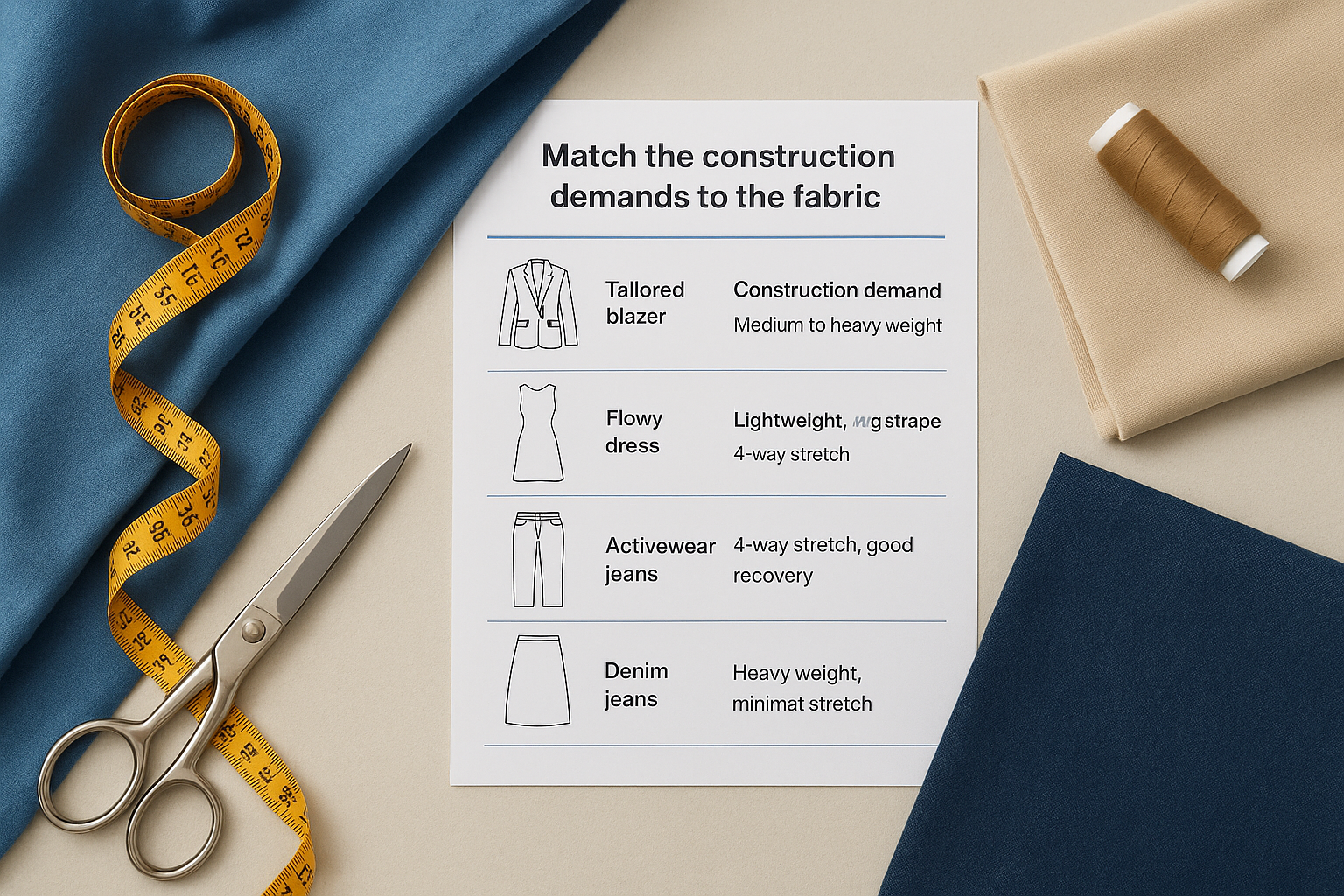
| Garment type | Construction demand | Fabric behavior needed |
|---|---|---|
| Tailored blazer | Holds shape at shoulders and chest | Medium to heavy weight, low drape |
| Flowy dress | Falls smoothly over body curves | Lightweight, high drape |
| Activewear | Moves with the body, resists distortion | 4-way stretch, good recovery |
| Denim jeans | Withstands repeated stress at stress points | Heavy weight, tight weave |
| Lined skirt | Needs to hang cleanly without clinging | Medium weight, minimal stretch |
Your construction method also matters. Garments with lots of topstitching, structured pockets, or bonded seams need fabrics that stay stable under repeated handling and heat. Soft, loosely woven materials tend to shift during sewing and cause alignment problems that slow down production. Before you finalize any fabric for a new style, pull the spec sheet for that garment and confirm the construction demands match what the fabric can actually handle.
Step 2. Match fiber content to comfort and care
Fiber content is where comfort, durability, and long-term maintenance collide. When you understand how to choose fabric for clothing, you need to think past how a fabric feels on day one and consider how it behaves after dozens of washes. The fiber your fabric is made from determines breathability, shrinkage risk, care label requirements, and how well a garment holds its shape across a full season of wear.
Natural vs. synthetic fibers
Natural and synthetic fibers solve different problems, and knowing which category fits your garment type saves you from sourcing something that looks right on the swatch but fails in use. Natural fibers like cotton, linen, wool, and silk breathe well and tend to feel comfortable against skin, but they often require more careful washing and can shrink if not pre-treated before cutting. Synthetic fibers like polyester and nylon are more durable, resist shrinking, and cost less per meter, but they trap heat and can feel uncomfortable in warmer climates or during physical activity.
Choosing a fiber purely on price without checking the garment's end-use requirements is one of the most common and avoidable sourcing mistakes brands make.
Use the reference below to match fiber type to garment need:
| Fiber | Best for | Key limitation |
|---|---|---|
| Cotton | Everyday basics, T-shirts, shirts | Can shrink without pre-washing |
| Linen | Summer garments, relaxed wovens | Wrinkles heavily with wear |
| Wool | Outerwear, suiting, knitwear | Requires careful washing or dry clean |
| Silk | Formal wear, blouses, lining | Delicate, higher cost per meter |
| Polyester | Activewear, linings, wrinkle-resistant pieces | Retains heat, low breathability |
| Nylon | Outerwear shells, performance wear | Less natural feel against skin |
Blended fabrics and what they offer
Blended fabrics combine fibers to balance their individual limitations. A cotton-polyester blend, for example, gives you the breathability of cotton alongside the wrinkle resistance and durability of polyester, which is why it works well for uniforms and casual wear that needs to hold up through regular machine washing.
Specify the exact fiber ratio in your fabric spec sheet before you send it to a supplier. A 60% cotton / 40% polyester blend and an 80% cotton / 20% polyester blend will behave differently in stretch, shrinkage, and hand-feel, and treating them as interchangeable will cause consistency problems across production batches.
Step 3. Dial in weight, drape, and stretch
Once you know what fiber you're working with, you need to pin down the weight, drape, and stretch of that fabric before sampling begins. These three variables translate directly into how a finished garment looks on the body and performs during wear. A fabric spec that skips any of these details leaves too much room for interpretation, and inconsistent interpretation is how you end up with a sample that doesn't match your design intent.
How to use GSM as a practical guide
GSM (grams per square meter) is the most reliable starting point for specifying fabric weight. It gives your supplier a measurable, objective number to source against rather than vague descriptors like "medium weight" or "light." Use the ranges below as a working reference when you develop new styles:
| Weight category | GSM range | Common uses |
|---|---|---|
| Lightweight | 80–150 GSM | Summer shirts, blouses, linings |
| Medium weight | 150–250 GSM | Chinos, casual dresses, structured tops |
| Heavy weight | 250–400+ GSM | Denim, outerwear, canvas bags |
Always request the GSM value in writing from your fabric supplier and include it in your tech pack so your production partner can verify it against the physical bulk fabric before cutting begins.
Reading drape and stretch before you commit
Drape and stretch are best assessed in person with a physical swatch, not from a digital image or a supplier's written description. To test drape, hold the fabric by one corner and let it fall freely. A high-drape fabric like rayon or silk will cascade smoothly, while a low-drape fabric like canvas will hold its shape near the fold.
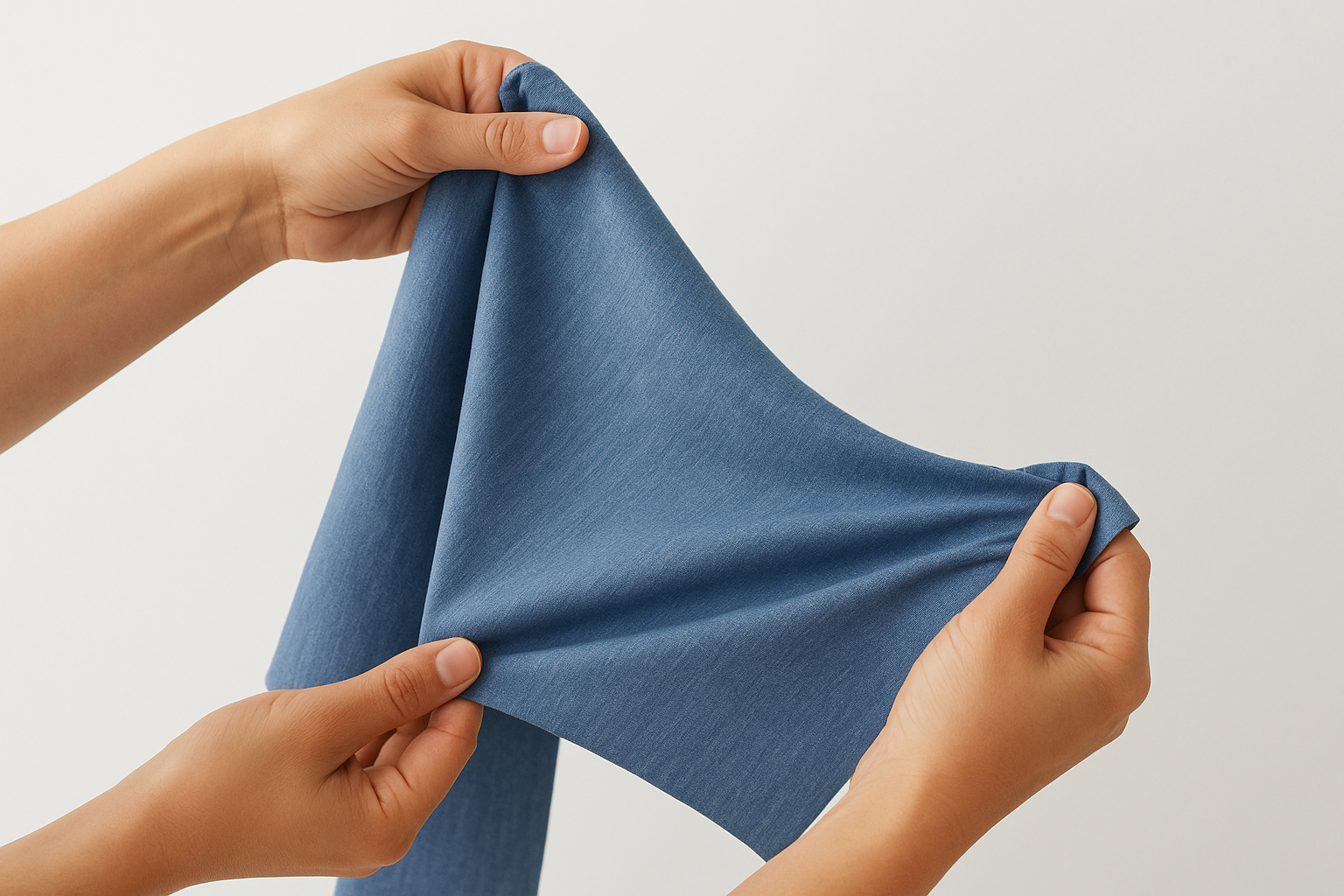
Pull the fabric both horizontally and vertically to check for one-way or four-way stretch, then release it and watch how quickly it returns to its original dimensions. Poor recovery means the garment will bag out at the knees, elbows, or seat after a few hours of wear. Understanding how to choose fabric for clothing means building these physical checks into your sourcing routine before you approve anything for production.
Never approve a fabric based on supplier specs alone. A two-minute physical swatch test catches problems that even a detailed spec sheet misses.
Step 4. Check weave, surface, and finish details
Fiber content and weight get most of the attention in fabric sourcing, but weave structure and surface finish can make or break the final garment just as easily. When you work through how to choose fabric for clothing, this step is often skipped under time pressure, and that shortcut shows up later as pilling, distortion, or an unexpected texture on the finished piece. Give yourself time to evaluate these details before approving any fabric for sampling.
Weave structure and what it tells you
Weave structure describes how the yarns in a fabric interlace, and that interlacing pattern directly controls durability, stability, and how the fabric behaves under a needle. A plain weave, like cotton poplin or canvas, interlaces yarns in a simple over-under pattern that creates a tight, stable surface well suited to garments with clean topstitching or sharp seams. A satin weave floats longer yarns across the surface, producing a smooth, lustrous face that drapes well but snags more easily. A twill weave, used in denim and chino fabrics, runs yarns diagonally, creating a fabric that resists wear at stress points and holds up under hard use.
Use the table below to match weave type to garment needs:
| Weave type | Key characteristic | Suitable garments |
|---|---|---|
| Plain weave | Stable, minimal stretch | Shirts, structured dresses, canvas bags |
| Twill weave | Diagonal rib, durable | Jeans, chinos, workwear jackets |
| Satin weave | Smooth surface, high drape | Formal wear, blouses, linings |
| Knit structure | Stretch in multiple directions | T-shirts, activewear, jersey dresses |
Surface texture and finish treatments
Surface texture refers to what you feel when you run your hand across the fabric face, whether it's smooth, brushed, ribbed, or textured. A brushed finish on cotton or flannel raises the fibers slightly and creates a softer hand-feel, making it suitable for casual knitwear and loungewear but less appropriate for tailored pieces that need a clean press.
Finish treatments applied at the mill can change how a fabric shrinks, presses, and accepts dye, so always confirm finish details with your supplier before you lock in your spec.
Chemical and mechanical finishes like water repellency coatings, anti-wrinkle treatments, and mercerization affect how the fabric performs after washing and should be listed explicitly in your fabric specification sheet so your production partner sources to the correct treatment standard.
Next steps before you buy
You now have the core framework for how to choose fabric for clothing that actually performs once it leaves the sampling room. Before you place any fabric order, build a one-page spec sheet for each style that covers fiber content, GSM range, weave type, stretch behavior, and any finish treatments your garment requires. Send that spec sheet to your supplier and request a physical swatch against it, not a photo, not a PDF. Hold the swatch, drape it, pull it, and wash it before you commit to bulk yardage.
Getting fabric right from the start protects your sampling budget and keeps your production timeline on track. Small decisions made early, like confirming GSM in writing or testing stretch recovery before cutting, prevent the kind of rework that pushes back delivery dates and adds cost. If you need a reliable manufacturing partner who handles fabric sourcing, sample development, and bulk production with clear communication, talk to the team at Manludini.
0 comments