
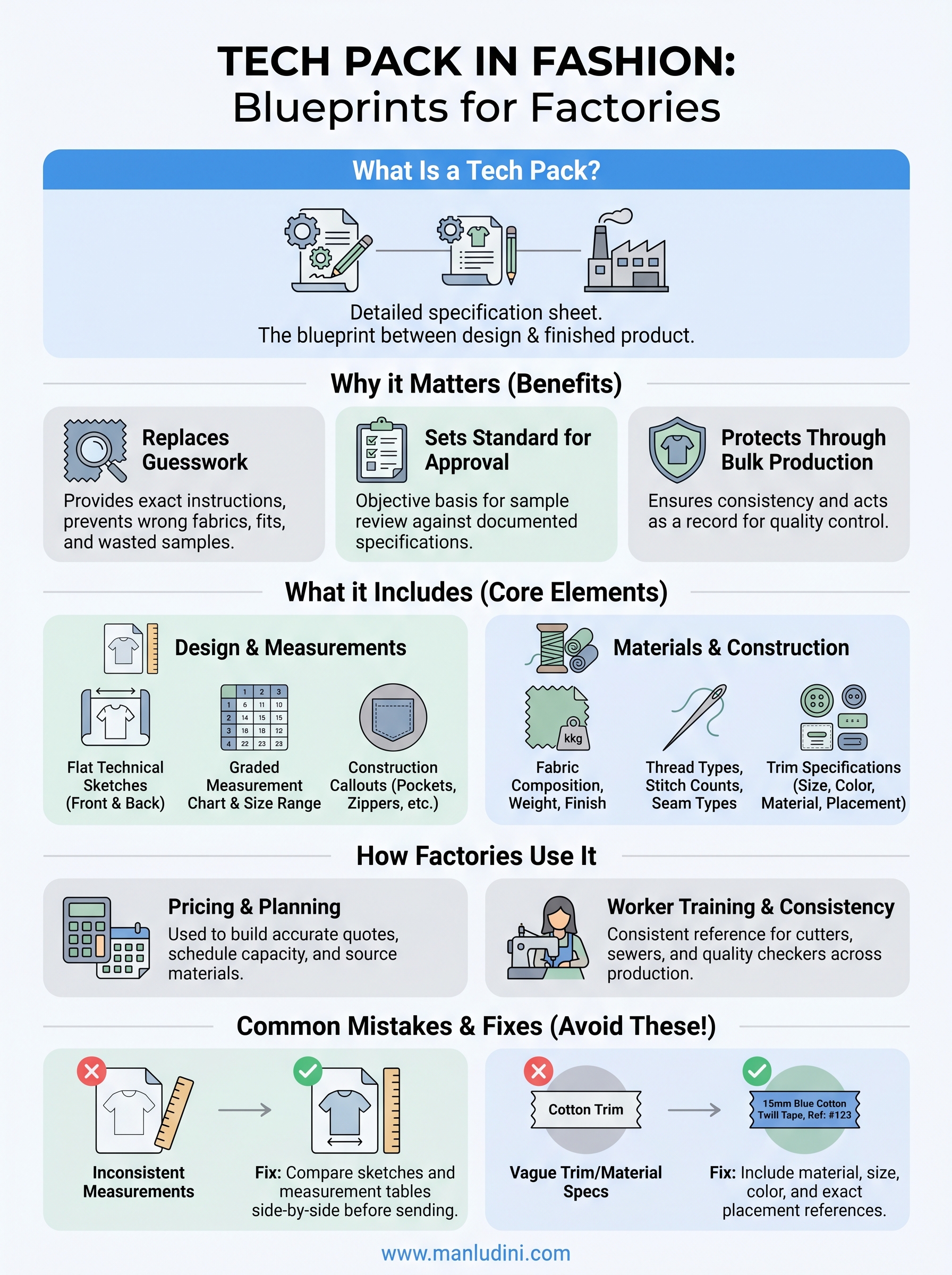
A tech pack is the single most important document you'll send to any garment factory. If you've ever asked yourself what is a tech pack in fashion, the short answer is this: it's a detailed specification sheet that tells a manufacturer exactly how to build your garment, from fabric and stitching to measurements, trims, and construction details. Think of it as the blueprint that sits between your design idea and a finished product.
Without one, factories are left guessing. And guessing leads to wrong fabrics, incorrect fits, miscommunicated details, and wasted samples. That's a problem whether you're producing 50 units or 5,000. At Manludini, we work from tech packs daily to develop samples and move brands into bulk production, so we see firsthand how much a well-prepared tech pack shapes the outcome.
This article breaks down what a tech pack actually includes, why each section matters, and how factories use it to turn your design into a real garment. Whether you're building your first collection or tightening up your development process, this guide covers what you need to know, written from a manufacturer's perspective.
What a tech pack does in garment production
A tech pack acts as the primary communication tool between your brand and any garment manufacturer. When a factory receives your order, the tech pack is the first document the production team opens. It tells them what fabric to source, what construction method to use, how each seam should be finished, and what measurements to cut to. Without it, even an experienced factory will produce something that doesn't match your vision, because they're working from assumptions rather than documented specifications.
It replaces guesswork with exact instructions
Every garment starts with decisions. What weight is the fabric? What's the stitch count per inch? Where does the label sit? These details feel obvious to you because you've been thinking about your design for weeks. But a factory in another country processes hundreds of styles every month, and verbal descriptions or rough sketches don't hold up across time zones, language differences, and large production teams. A tech pack converts every one of those decisions into a written and visual record that anyone on the factory floor can reference at any point during production.
Understanding what is a tech pack in fashion comes down to this: it's not just a design document. It's a production instruction manual. Every section exists to remove a possible point of failure between your idea and the finished garment.
When a manufacturer can answer every construction question directly from your tech pack, the chance of receiving a misbuilt sample drops significantly.
It sets the standard for sample approval
Before bulk production begins, factories build samples based on your tech pack. Those samples get measured, reviewed, and compared directly against your documented specifications. If a seam is in the wrong position or a measurement is off by two centimeters, you can point to the exact line in your tech pack where the correct spec was stated. This creates a clear, objective basis for requesting revisions and keeps the factory accountable to what was agreed.
Without a tech pack, the review process becomes subjective. The factory might argue the garment matches the reference photo you sent. You might disagree. Neither side has a written standard to fall back on, and that costs you time and money in rounds of back-and-forth correction that could have been avoided.
It protects you through bulk production
Once sampling is approved and bulk production starts, the tech pack continues to play a critical role. Large production runs involve multiple workers, machines, and shifts. Consistency across hundreds or thousands of units depends on everyone following the same documented instructions from start to finish. A tech pack gives the production floor a fixed reference point that doesn't change between the first unit cut and the last one shipped.
Your tech pack also functions as a record of what was agreed before production started. If a factory delivers garments with the wrong interlining or skips a requested wash treatment, you have documented proof of what was specified. This protects you in quality disputes and gives you clear grounds to request corrections or reject non-conforming goods before they leave the factory.
What a fashion tech pack includes
A complete tech pack covers every detail a factory needs before cutting a single piece of fabric. Understanding what is a tech pack in fashion means recognizing it's not just a sketch or a size chart. It's a layered specification document with multiple sections, each handling a different part of the garment's construction. When even one section is missing or unclear, the factory fills in the gap with its own judgment, and that's where production problems start.
Design and measurements
The first sections of any tech pack establish what the garment looks like and how it should fit. You'll include flat technical sketches of the front and back views, with callouts pointing to seams, pockets, zippers, and any construction detail that needs attention. Alongside those sketches, you'll provide a graded measurement chart listing the exact dimensions for every size you're producing, measured at specific points like chest width, hem circumference, and sleeve length.
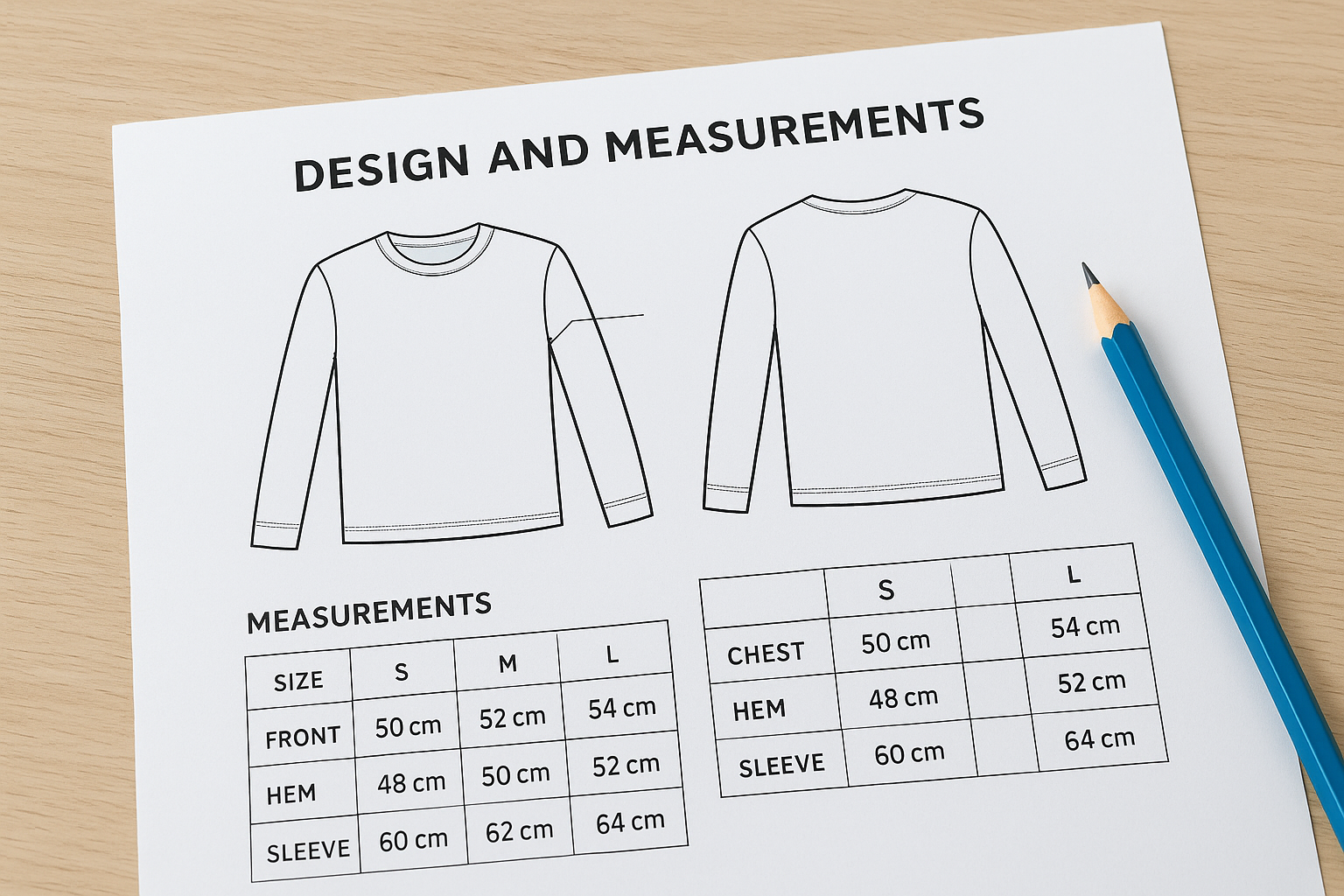
A measurement chart without callout sketches leaves too much room for interpretation, especially when a factory is working in a second language.
Your design section typically covers:
- Front and back flat sketches with construction callouts
- Size range and graded measurement table
- Close-up views of pockets, closures, or specialty stitching
Materials and construction details
This section tells the factory what to source and how to build the garment. You'll specify fabric composition, weight, and finish, along with any required certifications or testing standards. Thread types, stitch counts, seam types, and interlining specifications all belong here as well. Factories use this section to confirm whether they can source materials locally or whether you'll need to supply them directly.
Beyond fabric, you'll also document trim specifications covering buttons, zippers, labels, elastic, drawcords, and hardware. Each trim entry includes size, color, material, placement position, and a supplier reference if you've already sourced it. The more precise you are in this section, the less room the factory has to substitute a cheaper or incorrect component without your approval. Trims are often where corners get cut when specifications are loose, so treating this section with the same care as your measurement chart directly protects your final product.
Why factories require tech packs
Factories don't ask for tech packs to create paperwork. They ask because production decisions happen fast, and every question that goes unanswered before cutting starts either delays the line or gets answered by someone on the factory floor who doesn't know your brand. A tech pack removes that risk by putting your exact specifications on record before any work begins.
They price and plan based on your specifications
When a factory receives an inquiry, they use your tech pack to build an accurate quote. Fabric type, stitch complexity, trim count, and construction method all affect labor time and material cost. If you send a rough sketch instead of a full spec sheet, the factory either quotes based on assumptions or asks a long list of follow-up questions before they can respond. Neither option moves your project forward.
Beyond pricing, factories also use your tech pack to schedule production capacity and source materials ahead of your confirmed start date. Without documented specs, sourcing teams can't confirm lead times on fabrics or trims, and production planning teams can't allocate the right machines or workers to your order. Gaps in your documentation translate directly into delays before a single piece of fabric gets cut.
They use it to train the workers building your garment
Part of understanding what is a tech pack in fashion is recognizing that your garment passes through multiple hands before it reaches the packing stage. A cutter, a sewer, a quality checker, and a finishing worker all handle your product across different stations and shifts. Each of those workers needs a consistent, documented reference, and your tech pack is what provides it.
A factory building your garment from clear documentation produces fewer defective units than one relying on verbal instruction or memory.
Without a tech pack, critical details get lost between workstations. One sewer might finish a placket differently from another because no written standard exists on the floor. Those small inconsistencies accumulate across hundreds of units and create quality problems that are costly and time-consuming to fix after production closes.
How to create a factory-ready tech pack
Start with your garment category and work outward from there, because the sections a factory needs for a woven jacket differ from what they need for a jersey T-shirt. Knowing what is a tech pack in fashion in theory is straightforward, but building one that holds up on the factory floor requires a specific, structured approach. A factory-ready tech pack answers every production question before anyone needs to ask it.
Start with your measurements and flat sketches
The foundation of any tech pack is the measurement spec sheet paired with accurate flat sketches. Before you fill in any other section, get these two components locked down. Your flat sketches should show both the front and back of the garment with clear callouts marking seam positions, pocket placement, closures, and any construction detail that could be interpreted more than one way.
Flat sketches without measurement callouts leave room for the factory to interpret dimensions differently than you intended.
Inaccurate or incomplete measurements at this stage create problems that carry through every subsequent sample round, so treat this section as the most critical one you'll build before sending anything to a manufacturer.
Document your materials before you send the pack
Fabric specification and trim documentation belong in your tech pack before it leaves your hands, not after the factory asks for them. For each fabric in the garment, record the composition, weight in GSM, finish, and any required testing standards. For each trim, document the material, size, color, and exact placement with a position reference pointing to the corresponding area on your flat sketch. This level of detail prevents the factory from sourcing a substitute component without your knowledge, which is one of the most common causes of sample rejections.
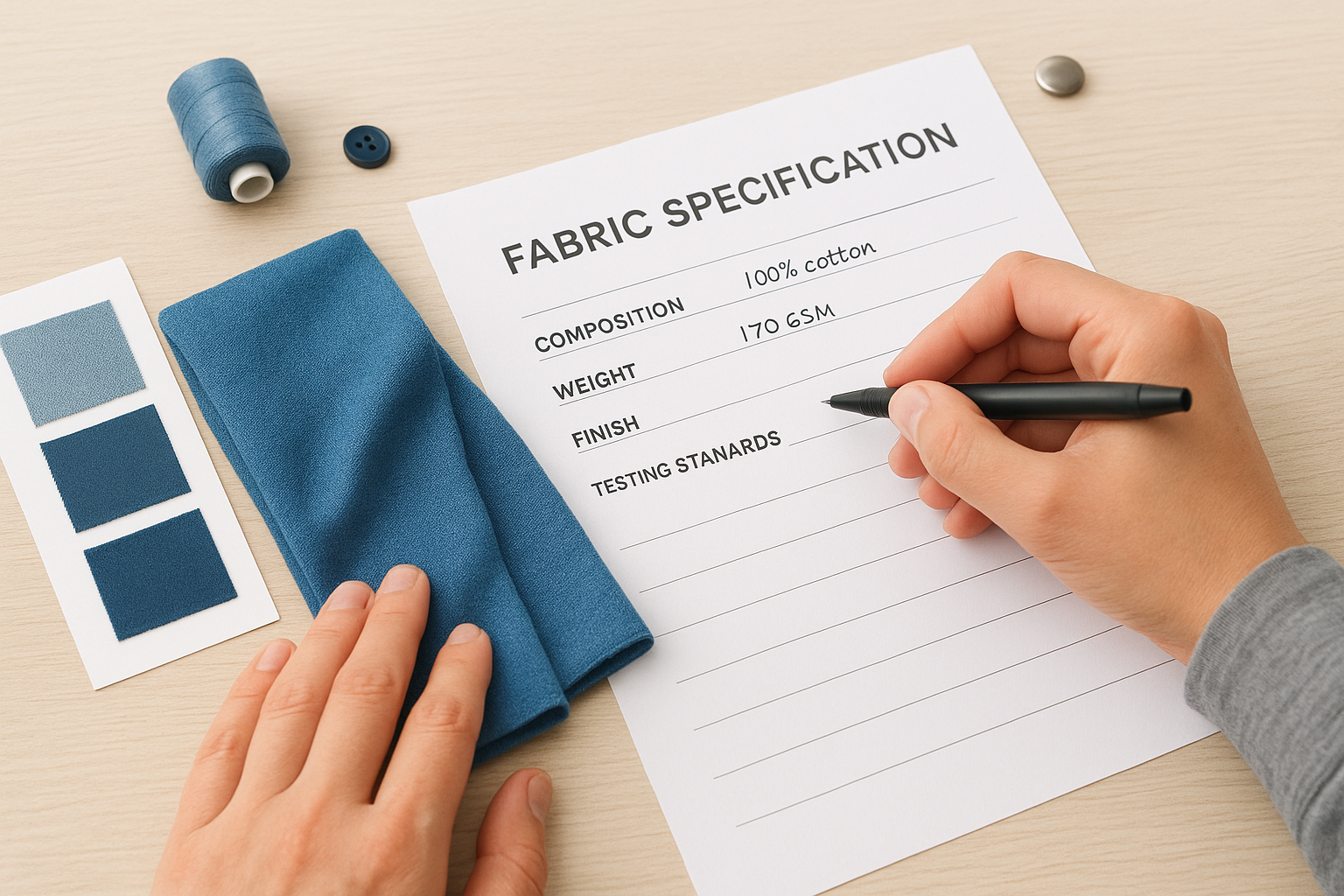
Gathering this information upfront also speeds up your project timeline significantly. A factory with complete material documentation can begin sourcing immediately after you confirm the order, rather than waiting on follow-up questions that add days or weeks to your production schedule before a single piece of fabric gets cut.
Common tech pack mistakes and fixes
Even brands that understand what is a tech pack in fashion still send documents that factories can't fully use. Incomplete specs and vague material descriptions are the two most common reasons a first sample comes back wrong. Catching these mistakes before you send your tech pack saves at least one full sample round, which cuts both your timeline and development costs before bulk production even starts.
Missing or inconsistent measurements
The most frequent error factories flag is a measurement chart that doesn't match the flat sketches. You might list a hem width in your size chart that contradicts the dimensions shown in your sketch, or you might skip a measurement point entirely because it seemed obvious to you. Neither assumption holds on a factory floor where workers follow written specs, not intuition.
Fix this by comparing your flat sketches and your measurement table side by side before sending anything. Every dimension referenced on a sketch callout should appear in the measurement chart at the matching point. Any measurement that could affect fit or construction belongs in the document, even if including it feels redundant.
Leaving out a single measurement forces the factory to estimate, and an estimated spec becomes the new standard for every unit they cut.
Vague trim and material specifications
Trim entries with no size, color code, or placement reference are one of the fastest ways to receive a sample with wrong components. Factories source trims locally when none are specified, and the substitute often doesn't match your intended look or quality level. The fix is direct: every trim in your tech pack needs a material, a size, a color reference, and a position callout linked to your flat sketch.
Fabric descriptions that only state "cotton" or "polyester" without weight or finish create the same problem. A factory choosing between a 150 GSM and a 280 GSM fabric based on a single-word description will pick whichever is available or most cost-effective. Lock down GSM, composition percentage, and any finish requirements before your tech pack leaves your hands, and your first sample will land significantly closer to what you actually intended.
Next steps after you finish your tech pack
Once your tech pack is complete, the next move is finding a manufacturer who can work from it accurately. Understanding what is a tech pack in fashion only takes you so far. What matters next is partnering with a factory that reads your documentation carefully, asks the right questions upfront, and builds your first sample against your exact written specifications rather than assumptions.
Send your tech pack before discussing pricing. A factory that reviews your full document before quoting will give you a more accurate number and a clearer production timeline than one working from a rough brief. From there, your tech pack drives every sample round and quality check until you reach bulk production approval.
If you're ready to start development, send your tech pack to Manludini and get direct feedback from a manufacturing team that builds samples from documented specs every day.
0 comments